




Out of the BoxLelit Victoria
The Lelit Victoria comes double boxed for protection, a good thing. The main box is black and fairly basic, but still features the outdated glossy painted finish that Lelit would do well to update to more environmentally friendly bits.
Inside, it doesn’t get much better: the machine is cocooned between two plastic-wrapped styrofoam forms. As always, we encourage companies to go 100% environmentally friendly packaging, ditching polystyrene, styrofoam, and other chemical-based materials. Plant-based is the way to go. Breville has now done it with their Oracle machine, Rancilio does it, time for Lelit to get on board here.
Pulled out of the box and styrene-y type materials removed, the Victoria is wrapped in more plastic, easily removed. On top of the machine is a thick manual, and a cardboard box holds most of the accessories; it is taped and saran-wrapped to the drip tray area. There’s also more goodies inside the reservoir area. Lastly, the plastic wrapped cup riser is also included.
With bits of tape removed, all that comes with the machine is revealed, including portafilter, baskets, a tamper, water filter starter kit, coffee scoop, blind filter and a power cord.
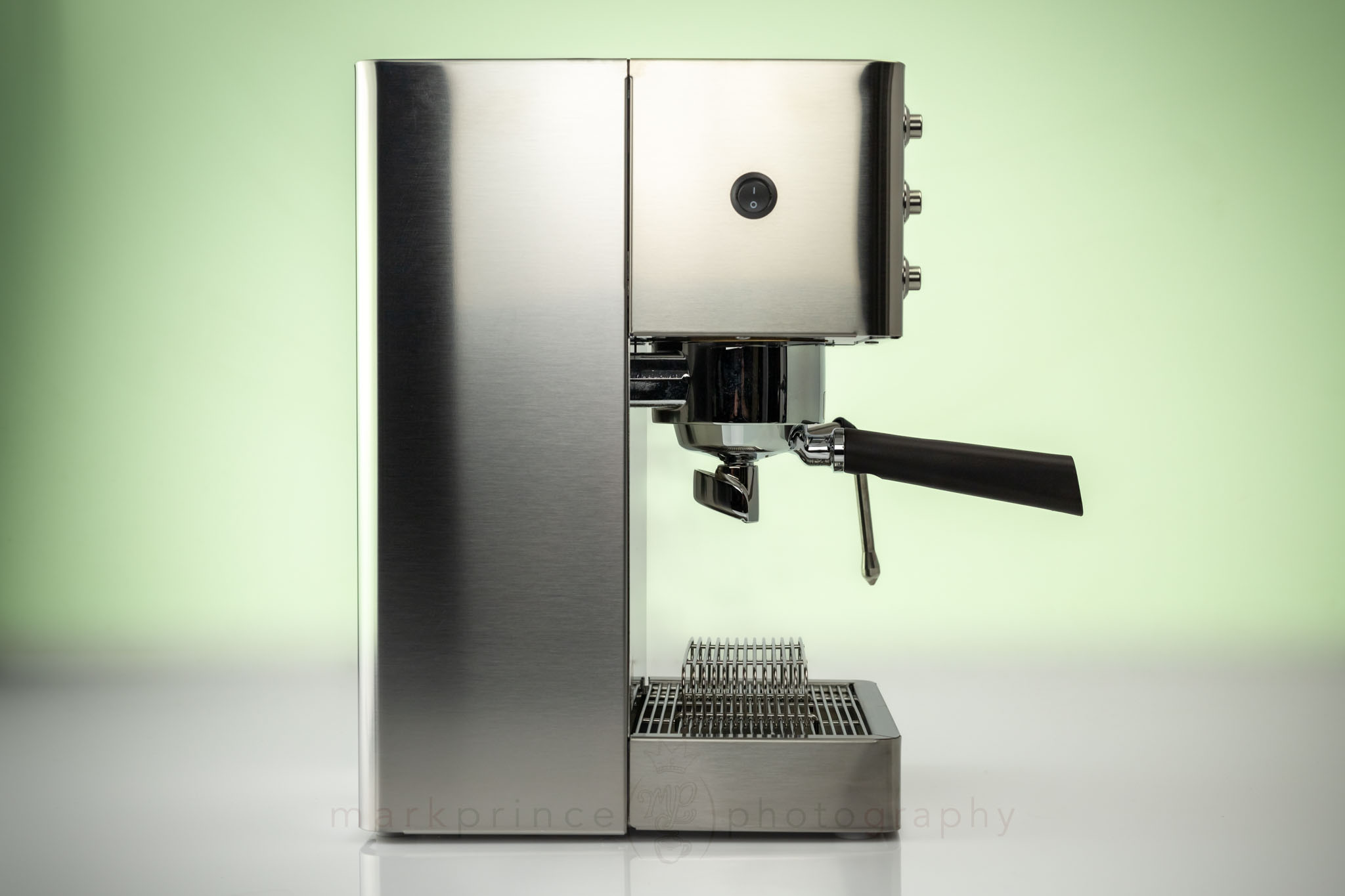
The “look” of the Lelit Victoria is industrial chic. I just made that up. It actually reminds me a lot of the grand daddy of overbuilt consumer espresso machines, the Rancilio Silvia. Brushed metal finish, hard angles, lots of metal. In some ways, it’s what many of us wish the Rancilio Silvia had evolved into today.
Up top, the brushed steel cup warming tray actually warms cups and has a large surface area. The reservoir has a matching steel lid for the back of the machine, with a plastic handle formed into the middle. The cup tray also has a rubber seal all around it to prevent any liquid from ingressing into the electronics and boiler area, in case you put wet cups on top of the machine.
Up front is the controls, pressure gauge, PID controller / OLED display panel and the red Lelit logo. When you power on the machine (via a rocker switch on the left side), the display panel lights up showing the firmware and startup sequence, and the three control buttons – brew, steam activation, hot water – all have their round LED rings light up. When you press one of the buttons, that one stays lit, and the other two turn off.
Unlike Lelit’s less expensive machines, the control buttons on the Victoria look premium (and in fact are the same as some of the push buttons on their flagship Bianca machine). They do have a slightly mushy feel when pressing, but the construction is all metal.
The pressure gauge and display panel – called the LCC (or LECS) system (Lelit Electronic Control System) – is the same diameter as the gauge, which gives the machine a good aesthetic look. The pressure gauge is black, with white numbers and a red dial; it matches the look further of the LCC. The gauge lights up when the machine is pulling a shot.
On the right side of the machine is the steam knob. It is one of the cheapest and most mismatched steam knob dials I’ve seen on any espresso machine. It’s almost as if they said “we give up” when they got to this component, especially when compared to the rest of the machine’s fit and finish.
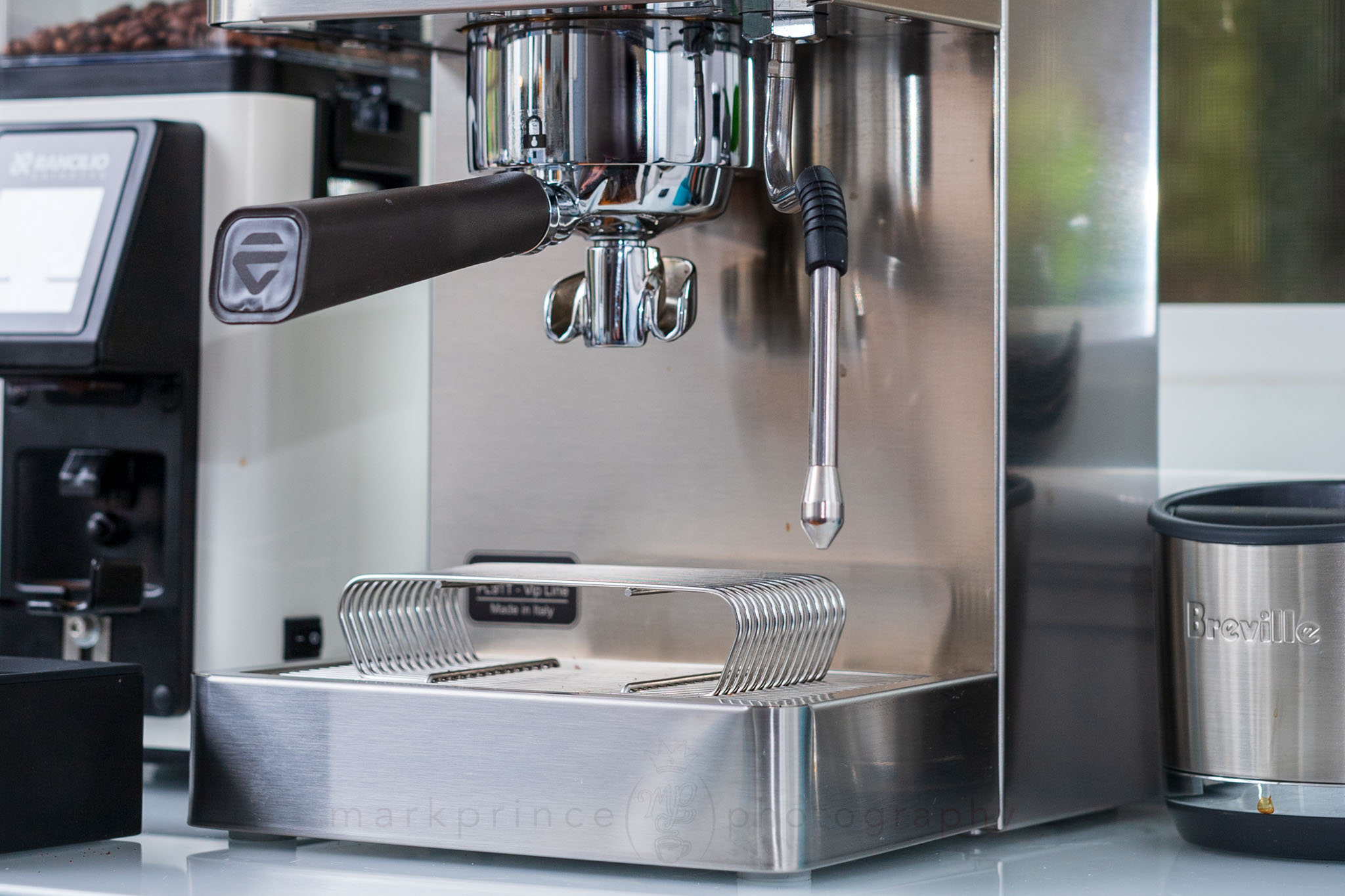
Moving down the front of the Victoria, there’s the grouphead and steam wand, which doubles as a hot water tap. The wand is fully extendible, and also rotates a full 360 making it very easy to use. It is not a cool touch wand, but does have a silicone sleeve at the bend for handling during use. The wand is a single hole type, important since it also dispenses hot water.
The grouphead is directly attached to the boiler, and Lelit claims it is a “saturated” grouphead (what that means in this case, I’m not sure, as I do not think boiler water is flowing around a cavity in the grouphead; it is too small to do that). Being directly attached, it aids in temperature stability and gets the grouphead heated up to the boiler’s temperature. This means even stability in temperatures through the shot, and good recovery times between shot pulls.
Lelit includes a high end portafilter with a lower-end handle with the Victoria. It’s the same PF steel parts as the flagship Bianca’s PF, but instead of a nice wooden handle, it is an angular plastic model that’s weighted. I’m not a fan of the handle. It is angled, which, in conjunction with the wraparound spouts and flat base on the portafilter, let it sit flat on the counter when tamping.
The backsplash is plain and brushed metal, with a black anodized sticker showing the machine name and type. The drip tray is voluminous and all steel. Lelit cut some minor corners on the drip tray by not fully finishing the welds at the back, but they’re hidden most of the time. The drip tray cover is Lelit’s signature grid wire bars. I’ve seen some complaints about the grid-wire look of Lelit’s drip trays on many of their machines, but if I’m honest, I love the look. I also like how the espresso cup riser looks when placed on top of the main drip tray.
The back of the Victoria features a tastefully embossed Lelit L logo, two rather ugly product spec and certification stickers, and the power outlet at the middle bottom of the machine. Everything is very boxy, but it also is well put together and finished nicely.
When you buy a Victoria, it comes with a single and double filter baskets (both high end IMS baskets!), a blind filter, a water filter system, a thick manual, and a tamper and scoop. Surprisingly, it does not come with any cleaning tabs, or water hardness testers.
Both the scoop and tamper are basic plastic, and while these may have been acceptable with a machine in 2003, but in 2024, not so much. I don’t expect an ultra-premium tamper, but this doesn’t cut it. I’m hoping that Breville’s ownership of the company will see them upgrade this down the road, and possibly also include an entry level steam pitcher.
Lastly, some specs. The Lelit Victoria is 23cm wide (9”), 27.5cm deep (11”), and 38cm tall (14.8”). The machine weighs 11.4kg (25lb). Drip tray capacity is 950ml (30 fl.oz). The reservoir is listed as a 2.5l size, but I’ve measured it at 2.85l. It draws 1200W for the boiler, and another 100 or so for the pump and electronics. The warranty is 1 year, though I hear extended warranties may be available soon from the company if you buy direct.
Subscribe to
Coffee Pulse
Join the 12,850 other coffee lovers who receive CoffeeGeek's premier newsletter. Each issue dives deep into one coffee or espresso based subject. Subscribing is free, and your personal information is never shared.

Support CoffeeGeek
If you enjoy and learn from this resource, please consider making a one time or recurring donation to help support our work and fund purchases for future reviews.

Features of theLelit Victoria
The featureset for the Lelit Victoria is an impressive read. On top of the general build quality and materials built in, Lelit’s LCC offers a lot of advanced customizations and automations. Let’s go through the features, section by section.
LCC Controls
The brains of the machine offer a lot of control through the front display panel and the two soft-press button controls. Definitely a “read the manual” situation to get the most out of it.
-
Full PID control of both brew and steam temperatures
-
Temperature control down to 1F / 1C, with a programmable offset
Offers Granular Control
-
Programmable preinfusion mode (including run time and pauses)
-
Visible shot timer during espresso brews
-
Visible steam timer during steaming sessions
-
Machine status updates (power on, warm up time, recovery time, cool down status, etc) via LCC
Displays active progress bar
Water Management
The Victoria comes with a very poor design for the actual water reservoir (more on that later) but has some brilliant water management controls built in.
-
Auto purge function, going from steaming to brew temperatures
Easy to steam first, brew later
-
“Reserve Mode” is basically a two stage water level indicator, that will (almost) always complete your shot if the reservoir is running low.
Usually found on higher end machines like the La Marzocco GS3
-
Auto fill function for the boiler, will never let the boiler run dry
-
Auto steam mode “off” function (30min) to protect the boiler if you leave the machine in steam mode accidentally
-
Hot water functionality via steam wand
For Americanos and Tea
-
Water filter system included
-
Nearly 3l reservoir
-
Drip tray with a 900ml+ capacity
Yeowsa, that is a lot of features. And many of them not found on the Profitec Go, such as auto-fill, auto-purge, hot water functionality, and programmable pre-infusion.
Despite both machines having nearly the same footprint, the Victoria offers much better visibility and cup clearance between the portafilter and drip tray, even including a grid stand to adjust cup height; a feature lacking in the Profitec Go. In fact, that’s one of the Go’s sore points: the spacing between the spouts and the cup tray is nearly as short as it is on a Gaggia Classic (that’s not a good thing).
It’s Not Perfect
The Lelit Victoria has its downsides. It is relatively loud, likely due to basic pump mounting. The vibration of the pump causes the reservoir lid and drip tray to rattle, to the point where your espresso cup dances across the drip tray grill during shots. It really is a problem, and we ended up purchasing tiny silicone sticky-bumpers to install between the drip tray and grid cover to reduce this issue; we’ll cover this more later.
The water reservoir is also problematic. Though it holds 2.8+ liters, it’s set deep inside the machine, making filling difficult without spilling. Removing it for sink filling is tricky due to the fill and overflow tubes, and water filter positioning. The design here could be much better.
The IMS baskets are a welcome upgrade, but the cheap plastic tamper with rough edges is a letdown, likely to keep the price under $1,000. Lastly, the Victoria’s design is very industrial, similar to the Rancilio Silvia. If you’re after multiple color options or a sleeker look, the brushed metal might feel too stark.
Using theLelit Victoria
The Victoria has a lot of automations built in, including the auto fill feature for the boiler, the first time you use the machine. It’s pretty straightforward: wipe everything down, fill the reservoir, turn the machine on, and let it do its thing. Press the hot water button after and open the wand to let more water flow through and flush out the system before its first use making coffee.
The preinfusion can be turned on or off, and programmed. I set our test unit up with a 4 second initial pump run, a 5 second pause, then full power for the rest of the manually controlled shot. Water flow in that first four seconds is gentle, and barely builds up pressure (to maybe 1.5 bar),
Water debit on this machine is nice and gentle, and we’ll measure that for the Full Review. What this means is, 4 seconds of pump action before pausing in the preinfusion mode won’t build up too much pressure before the pause. Even 3 seconds is enough to give a decent saturation of the bed of coffee.
I measured heat up times from a cold start on three occasions, and each time it took the machine about 9:30 to be stable at 201F. Because the grouphead is married to the boiler, the machine is good to go at 10 minutes in.
The PID was set to 201F and I didn’t fool around with the offset, figuring Lelit sets it properly at the factory. The double IMS basket is well suited for pulling 18-19g doubles. Honestly, my first shots with the machine were spot on. The machine just works. The pump noise is loud and could be dampened more by Lelit.
More annoyingly, out of the box, your espresso cup will ‘dance’ across the drip tray because it vibrates when the pump is operating. It was so bad, if left unattended, chances are the espresso streams will miss the cup entirely. I ended up buying some small sticky silicone bumpers to place on the ridges of the drip tray where the drip tray cover sits, and this remedied the issue.
What’s interesting here is that Lelit put some rubber bumpers between the frame of the machine and the removable drip tray, but didn’t further dampen the metal on metal contact between the drip tray and it’s wire grid metal cover. I can only imagine how bad the noise and vibrations would be without those factory installed rubber bumpers. I also think a lot of this could be solved just through better dampening of the machine’s vibratory pump mount.
Advanced Shot Pulling
The Lelit Victoria is one of several machines on the market that allow you to pull water through the steam arm nozzle when the pump is active for pulling a shot. You can’t do this on many machines, because various 3 way solenoids inside of them shut off the path to the wand (or hot water tap) anytime the pump is activated to make espresso.
Why is this notable? Because, in conjunction with the front pressure gauge, you can pressure profile your espresso shots and get a bonus of reducing brew temperature towards the end of a shot (that’s a good thing!). It works this way:
Set the machine up as normal for making espresso. Start your shot, let it run and build; at around the 25 second mark, with the steam wand pointed into the drip tray, slightly crack open the steam knob. Some pump-driven water will redirect out the steam arm, and you’ll note the pressure being measured in the grouphead starts declining, according to the pressure gauge. Open it gradually more towards the end of the shot, reducing the final shot pressure.
This also introduces more room-temperature water into the boiler than just through pulling a normal shot, which is a good thing: reducing the shot temperature towards the end will reduce the amount of bitters extracted from the coffee.
All this is ripe for experimentation and shot profiling by folks wishing to move into advanced barista technique territory.
Steaming Ability
The Lelit Victoria isn’t as good as a thermojet-equipped machine from Breville when it comes to steam performance. It’s not even as good as some thermoblock machines. After all, it is a 300ml boiler, and there’s only so much headspace in there to produce steam for milk.
That said, it’s better than a Rancilio Silvia at steaming milk (another machine with a 300ml boiler). Way better than the Gaggia Classic. And it seems even better than the Profitec Go in terms of steam performance. The only area the Profitec Go beats the Victoria is in actual steam heat up time: on the Victoria, I’ve timed it around 90 seconds; the Go takes about 75 seconds.
The Lelit Victoria also does two things that further enhance steaming.
First, when you put the machine into steam mode, the new boiler temperature target appears on the machine’s LCC, as well as a progress bar below it. This visual display can let you “supercharge” the steam power by beginning your milk steaming just before the progress bar fills out. What happens? This essentially forces the machine to leave the heating element on, as you use up the steam it’s producing. If you wait for the progress bar to end, the heating element would shut down for a short time, reducing the production of steam.
The only downside to this is you won’t see a steam timer, because the machine still thinks it’s getting up to steam temperatures.
Second, the machine has an auto-purge function after steaming, to quickly return the boiler water temperatures back down to brew temperatures. And it does so while displaying the progress on the LCC, again via a progress bar. This means the machine is well set up for steaming first, then brewing your shot second; the transition time is only around 30-45 seconds, and even less if you open the steam wand to purge out hot liquid into the drip tray to speed things up.
Long story short, this is a machine tailor made, with added functionality, to steam first, and brew second for the fastest cappuccino and latte drink builds.
Hot Water
I firmly believe every single espresso machine designed for consumer use should have a hot water function. Not only to help pre-heat cups, but for americanos, and for heated tea water. The Profitec Go does not have a hot water function. The Ninja Luxe Cafe, very bizarrely, does not either. But the Lelit Victoria does. I ran some tests to see how good it was.
In short, averages about 184F water in the cup for volumes less than 90ml (the water dose for an americano). I ran five tests, opening the steam valve to full open, and got measurements between 182.5F, and 186.3F across the range, filling a pre-heated cappuccino cup.
My second test was to pump out 200ml, and the results there were lower: about 164F in 3 tests. This is because the boiler is filling with room temperature water from the reservoir, and the heating element can’t keep up with heating the water.
However, the Victoria offers a trick up its sleeve: you can modulate and reduce the flow of hot water out of the steam wand, allowing the boiler to in effect “keep up” with the constant introduction of water from the reservoir. Reducing the flow rate to less than half, the 200ml cup fill averages 174.5F, a better result for tea or hot beverage use.
The Reservoir
Lelit’s design of the reservoir on the Victoria is the machine’s worst aspect. I suspect they just use the same plastic reservoir tank in all their non E61-equipped machines, and had to go with the shortest design that could fit their smallest machine (the Anna). Because of this, the reservoir tank sits very deep inside the Victoria’s reservoir cavity.
You can’t easily see the water level (I’ve taken to using a flashlight to check it, even in daytime, pointing down inside the reservoir). Refilling it is a huge mess if you just try to pour water from a pitcher directly into the reservoir’s small fill hole. Keep in mind, the power supply entry point is right below this reservoir, so there is potential for water damage. Removing the reservoir to fill at the sink is also a challenge, because you have to remove all the hoses etc from it before removing it from the machine.
My solution is definitely not elegant: I use a funnel to fill the reservoir. Even then, it’s hard to see the water level as this is going on, so I have to stop often, remove the funnel, check the water height, reinsert the funnel, and continue guessing at the top fill amount. (nb, I will include photos of this setup later).
Lelit needs to completely redesign this reservoir for the Victoria.
The only positives here is that the machine has a low-water sensor, with the aforementioned reserve, so at the very least you won’t run out of water in the middle of a shot. And the front panel tells you when you need to refill the reservoir.
ComparisonsLelit Victoria
For this First Look, I’ve decided to limit the comparisons to other machines, saving that for our Full Review of the Lelit Victoria. That said, I did do some very rudimentary head to head tests, mainly against the Profitec Go, but also against the Breville Infuser (a machine that’s half the price).
Vs. Profitec Go
I have a love-hate thing with the Profitec Go, and don’t quite understand the wild popularity of the machine. The two main issues I have with it is a) the limited cup height, and b) the lack of hot water delivery from the machine. I feel the latter is a serious omission, especially on a machine that retails for $1,200 or more.
The Victoria wins in terms of cup height, overall features (it has a lot more, detailed in a previous section), easier visibility of the pressure gauge, more advanced pre-infusion modes and the auto purge and reserve reservoir functions. The machine also comes with a water filter system, something the Go doesn’t have.
That said, the Profitec Go wins in several categories, first and foremost in style: it’s a much better looking machine than the Victoria, and comes in a wide range of colour choices. This is important to people in this day and age. A standout feature is the ability to change the machine’s OPV valve directly from the top of the machine. Also, the Go has better portafilters, comes with a better tamper, has a larger boiler (400ml), a faster claimed heat up time (the unit we have doesn’t have this feature), and has a 3 year warranty from some select vendors (the Lelit Victoria is 1 year).
Between the two, the Lelit Victoria is the clear winner for me. I just wish it came in different colour choices.
Vs. Breville Infuser
So this is an interesting choice because the Infuser is like the red headed stepchild (can I still use that phrase?) of the Breville lineup, but in many ways, is a machine that punches way above its weight class. And while it is half the price of the Victoria, it offers some features the Lelit machine can’t touch.
For instance, the Infuser turns on and heats up quicker because it is thermoblock-based. It also transitions from brew to steam a lot quicker, and has more powerful, sustained steaming ability. The Infuser also has a dedicated hot water tap, a much better water reservoir design, and is quieter in operation. Like the Victoria, the Infuser has a visible pressure gauge, but also has volumetric shot controls with Breville’s well tuned preinfusion mode that can also be used manually.
The Victoria moves past the Infuser in other ways. Where the Infuser only lets you set 5 brew temperatures up or down 1C, the Victoria lets you program in a wider range in more granular fahrenheit settings, and you can also set it for the steam temperatures. The Victoria has automatic shot timers, low water sensors, a “reserve” mode for the water tank, and much more advanced water management systems built in. The preinfusion system is more robust with more programming options, and the overall build quality and materials are much better, inside and out.
And of course, the Victoria is based on a 58mm commercial grouphead and portafilter system, not the 54mm found on the Infuser.
In our Full Review, we’ll have more on how the Victoria competes against these machines and others.
ConclusionLelit Victoria
With features like a 58mm high-end portafilter, advanced LCC controls, and automations such as auto-fill, auto-purge, auto-standby, and steam mode shutoff, the Lelit Victoria is undeniably a prosumer machine. Its all-metal construction and top-tier internal parts solidify its place in this category.
This machine is built to last for decades with proper care. Using water filters, especially aftermarket magnesium for calcium swapping systems like BWT, can help minimize scale buildup and extend the life of gaskets and o-rings. Even if repairs are needed, they’re easy for local service centers or can be done yourself with some help from YouTube.
The Victoria is an investment too: offering an amortized cost of about $75 per year over its projected lifespan, and that includes occasional service and repairs. They also have a good resale value when kept in good condition, often as much as 70% of the original cost.
The Victoria delivers exceptional, temperature-controlled espresso and reliable steaming for a few drinks per session; if you want more volume, you have to start looking at dual boilers, thermojet systems, or heat exchanger machines.
With its small footprint, impressive features – many rare in machines under $1,000 – and outstanding temperature stability, the Lelit Victoria is a top contender for anyone ready to level up their espresso game. We’ll be showcasing this machine to a select group in our focus groups going forward, and will do more regimented tests against competing machines, and will report back at a later date on these findings, along with a full score for the machine. Right now, I feel very comfortable recommending this machine, and it will be in our 2025 Best Espresso Machines guide.
If you’re already sold, consider buying it directly from Lelit USA via this link. Lelit has joined our pilot Affiliate Program, so purchasing it directly from them provides us a small commission (at no additional cost to you) which helps keep this website viable. But there’s other reasons to consider buying it direct from the manufacturer, including free shipping, better Tier 1 support for the machine, extended warranty options, and improved access to replacement and repair parts down the road.
We use affiliate links to a) Amazon, and b) manufacturers only. Any links to vendors (including CoffeeGeek Sponsors) are not income generating links. Further details about our commission and affiliate link policies can be found on our Terms and Conditions Page. The use of any affiliate links have no effect on our editorial policy or review objectivity.
Subscribe to
Coffee Pulse
Join the 12,850 other coffee lovers who receive CoffeeGeek's premier newsletter. Each issue dives deep into one coffee or espresso based subject. Subscribing is free, and your personal information is never shared.
Mark has certified as a Canadian, USA, and World Barista Championship Judge in both sensory and technical fields, as well as working as an instructor in coffee and espresso training. He started CoffeeGeek in 2001.
- Mark Prince
- Mark Prince
- Mark Prince
- Mark Prince