
Out of the BoxLuxe Cafe Premier
Ninja is of course a company born of the infomercial.
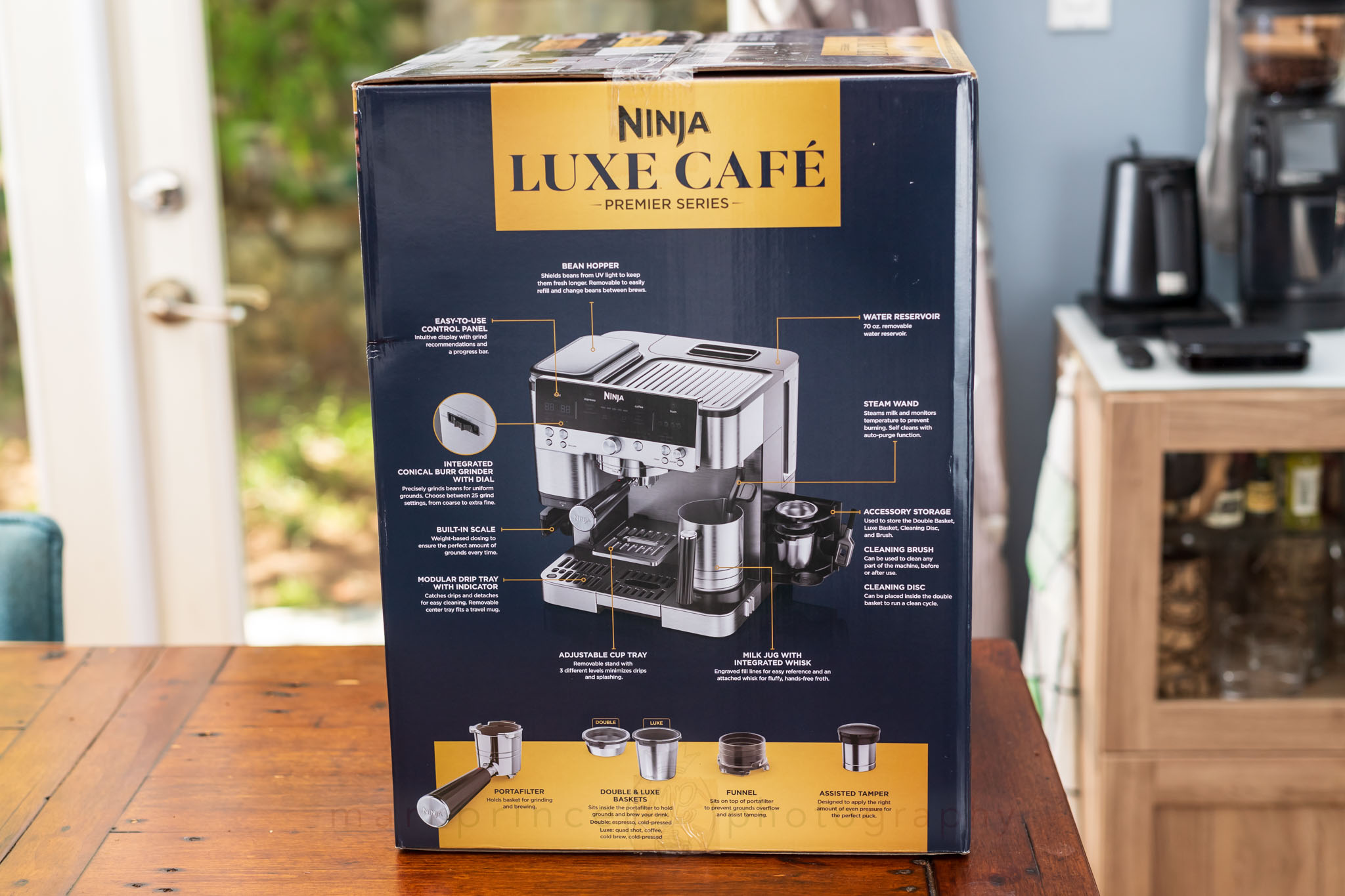
Shark is the parent company, and they got their start pushing vacuums on late night TV. Ninja is similar. So their product box for the Luxe Cafe Premier model has a very “As seen on TV” vibe to it all. Lots of details, lots of splashy, colourful graphics, lots of product details. You can learn pretty much most of the machine’s functions (and there are many) just from reading the box.
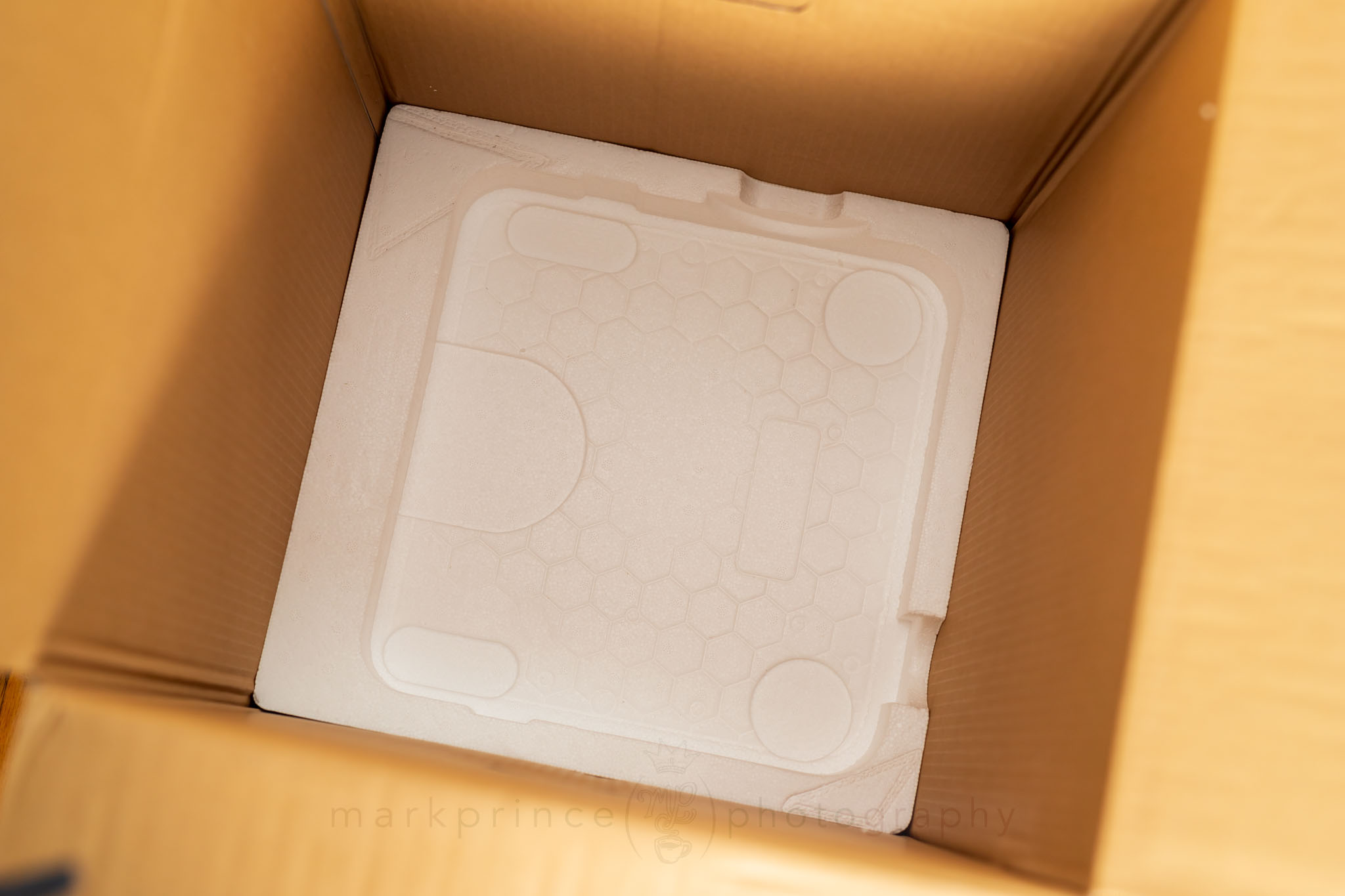
We cover this at CoffeeGeek because it’s crucial: there’s too much styrofoam in the Ninja Luxe Café’s packaging. It would be great to see the company switch to more eco-friendly materials. If Breville can ship the Oracle Jet and Rancilio can package their machines using all paper-based protection, Ninja can do the same with the Luxe Café. Make an environmental statement, Ninja, and be a leader!
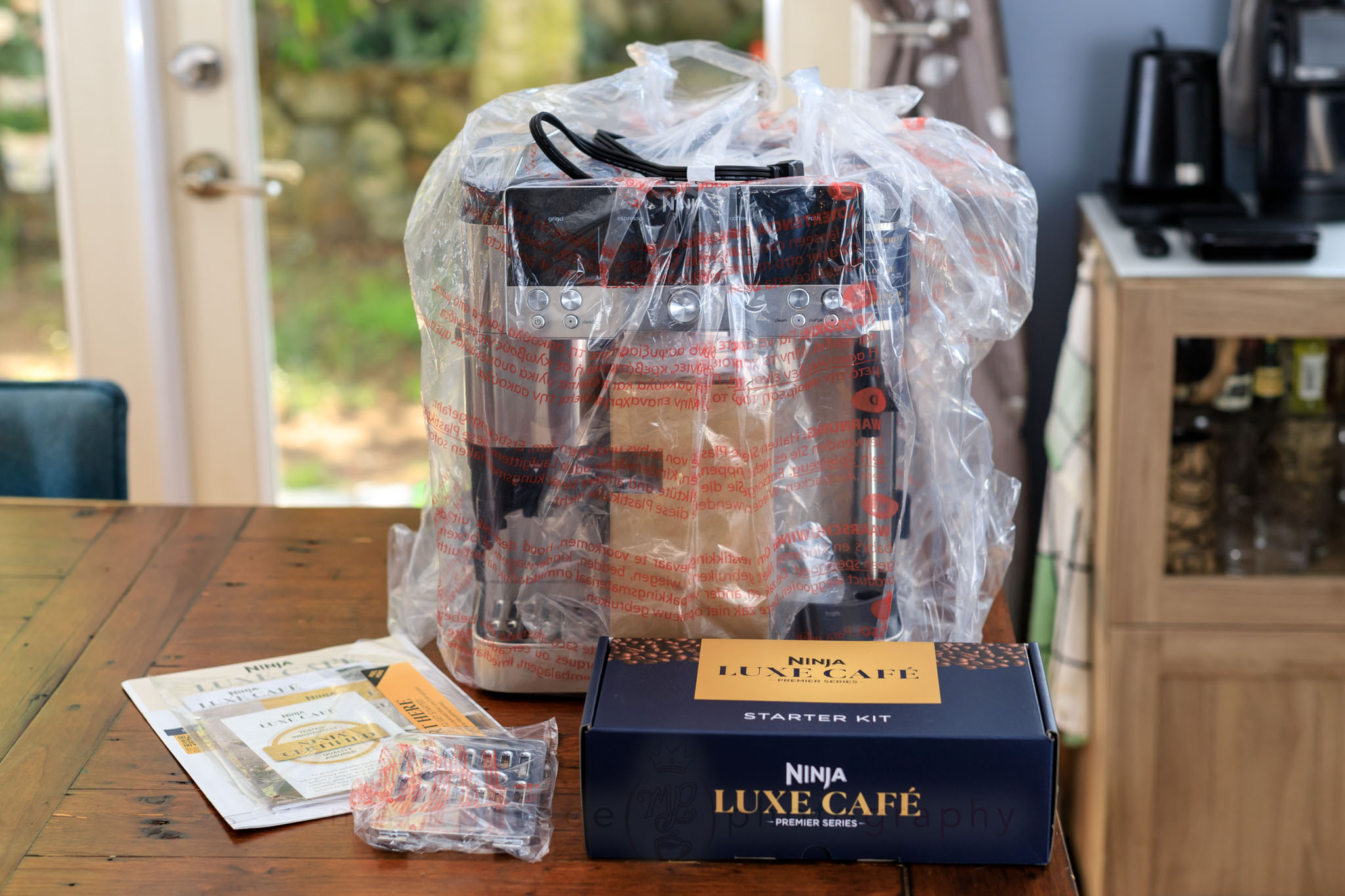
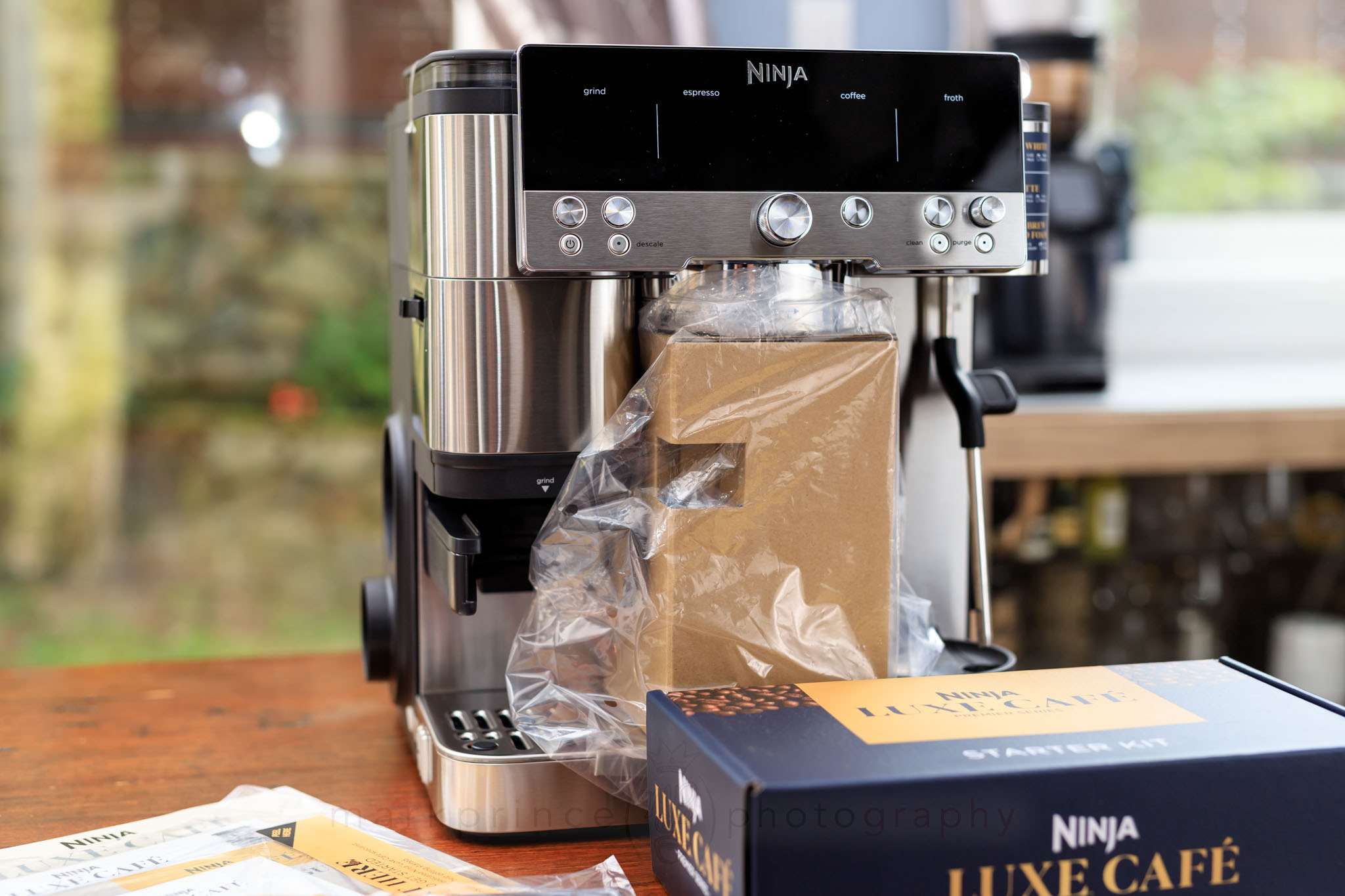
After removing the paperwork, you’ll find a chromed metal cup tray, and the Luxe Café Starter Kit nestled in styrofoam. Once those are removed, the machine itself is revealed, wrapped in plastic.
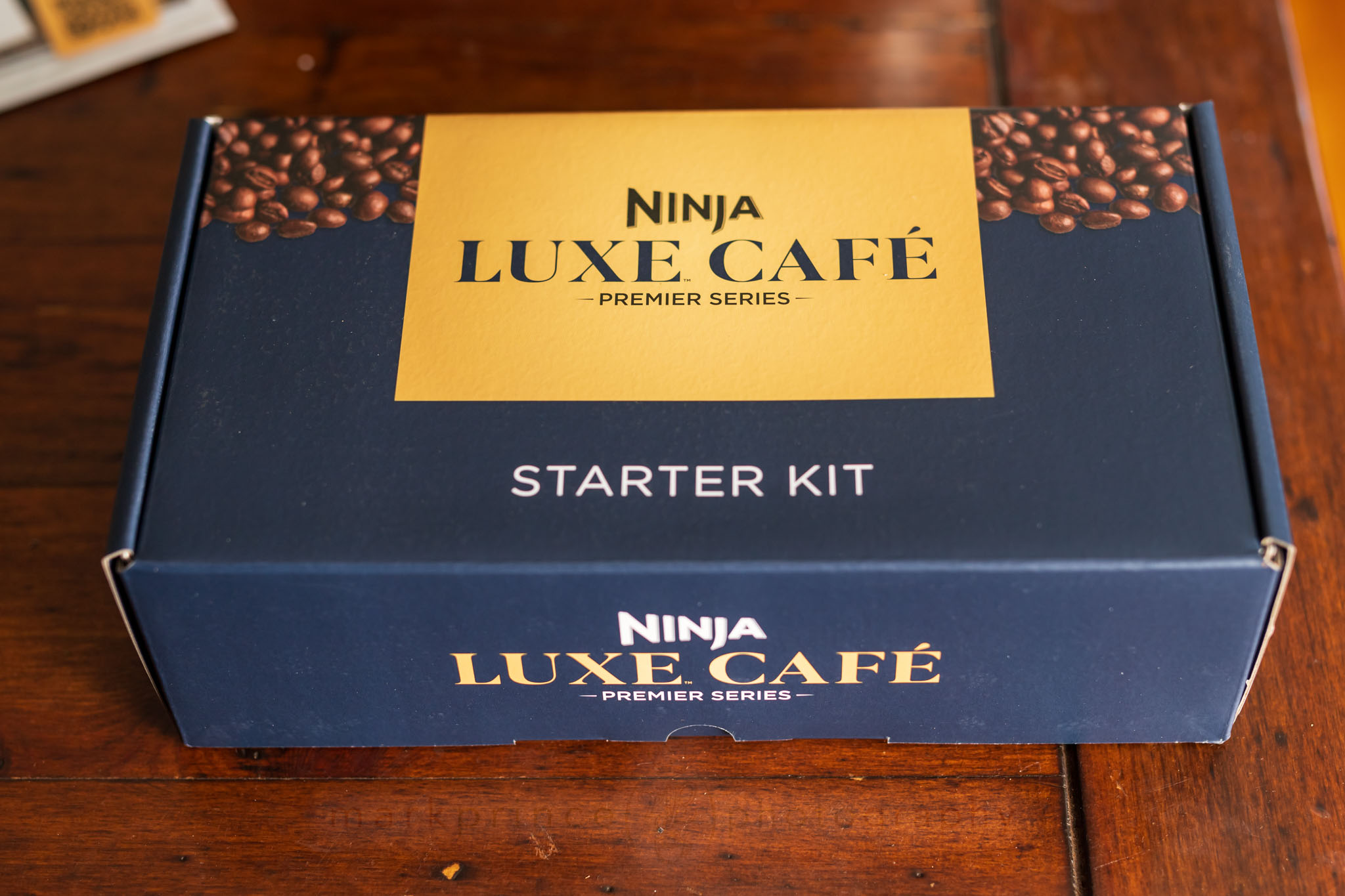
The Starter Kit box contains the Luxe Cafe unique portafilter (more on that later) with the standard double basket, the oversized Luxe basket (both baskets are thankfully unpressurized), a very unique click pillar tamper, the dosing collar, and a box with starter cleaner supplies, the blind filter insert (for backflushing), and a brush. Missing, gratefully, is a double scoop.
With the machine out, you’ll find a box under the grouphead containing the unique milk frothing pitcher, which has a magnetically held, removable frothing whisk in the bottom.
There’s quite a bit of tape securing parts of the machine, which need to be removed. The machine’s overall appearance is appealing, with real brushed steel plates on the front, top, and sides, complemented by high-quality dark grey-brown plastic for the rest.
Let’s now look at the machine in more detail.
Machine, Top to Bottom
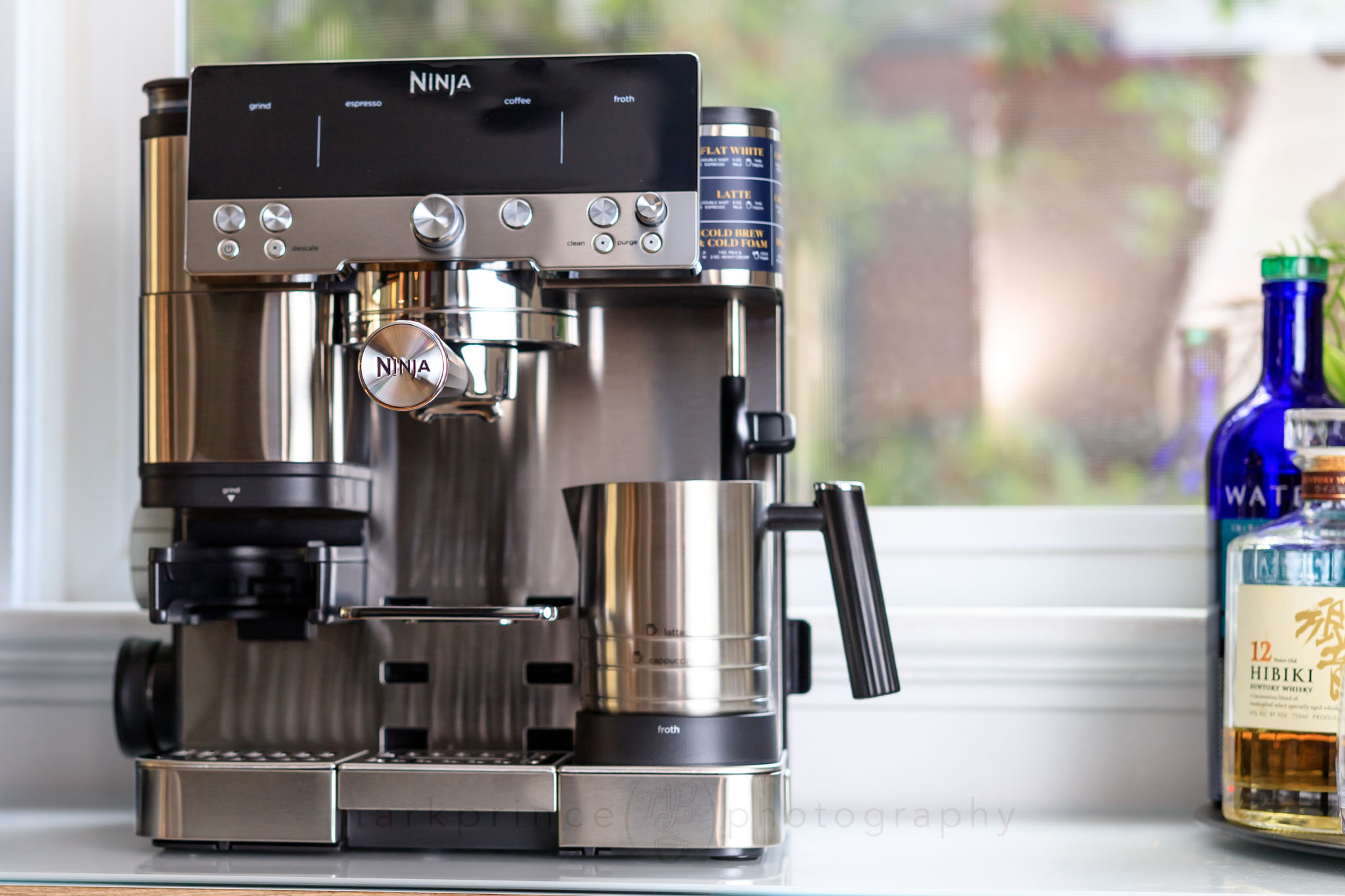
There’s a lot to cover with the Ninja Luxe Cafe, but I’ll let our photos speak for themselves, aside from the detail we get into with the control panel.
At the top, you’ll find the bean hopper for the grinder, a cup warmer, and the lid for the removable reservoir. The grinder hopper low-profile design is a nice touch, making it more under-counter friendly. The cup warmer is large and features a brushed stainless steel ridged plate.
The reservoir holds 2 litres of water and has a low water sensor (something missing from the Breville Barista Express). However, it lacks a built-in water filter, which is surprising since all espresso machines should have one, and it would be a long-term profit opportunity for Ninja.
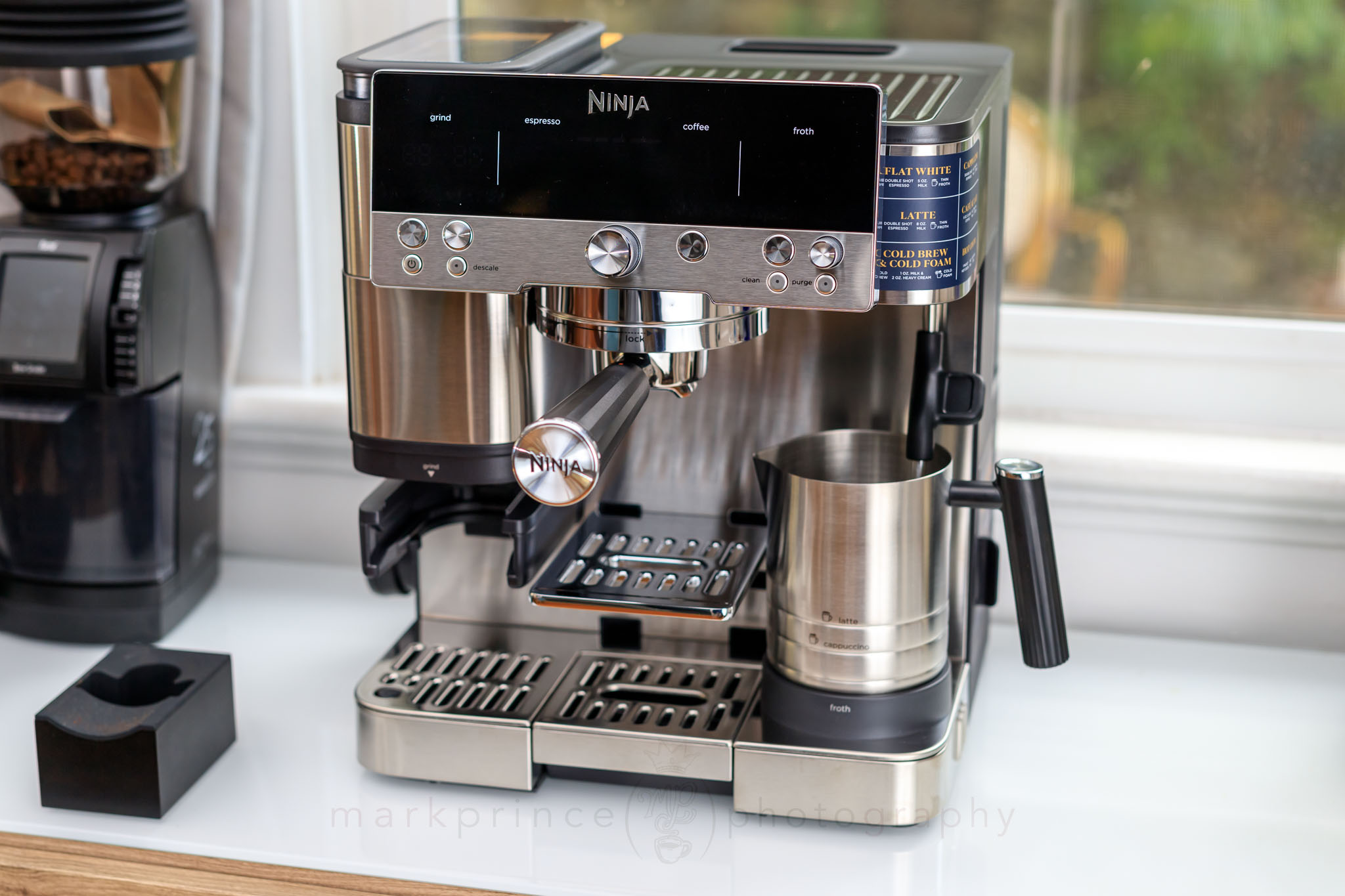
Moving down the front of the machine, you’ll find the Luxe Cafe’s rather imposing control panel, which has many lights and indicators. While there’s no OLED, there are LEDs and plenty of light-up features. It may seem confusing at first, but it becomes intuitive after a few weeks. The upper portion is glossy black glass, while the lower section features brushed steel with buttons and knobs.
The control panel is divided into three areas. The left side controls the grinder and includes options for setting espresso temperature (three choices) and a descale button. It also shows your grinder setting and recommends one based on your drink. It reminds you to tamp the coffee for espresso and the larger (16-18oz) brewed coffee drinks, after grinding.
The middle section handles drink selections and displays the brewing status. A rotating knob allows you to choose drinks like espresso, quad shot, cold pressed espresso, and various hot and cold coffee brewing methods. The machine suggests which filter basket to use and allows coffee brewing size selection from 6 to 18 fl. oz via a button push. A long press on this size button accesses the advanced menu, which is covered in the manual.
The right side is dedicated to milk frothing, with four options: no froth, low, high, and cold froth. “No froth” is also used for manual steaming (the spinning whisk mode is disabled), while cold froth uses no steam at all – only the magnetically spun whisk. You’ll also find controls for milk type selection (dairy or plant based), foam type, a clean button, and a purge button for quick steam wand purging before use.
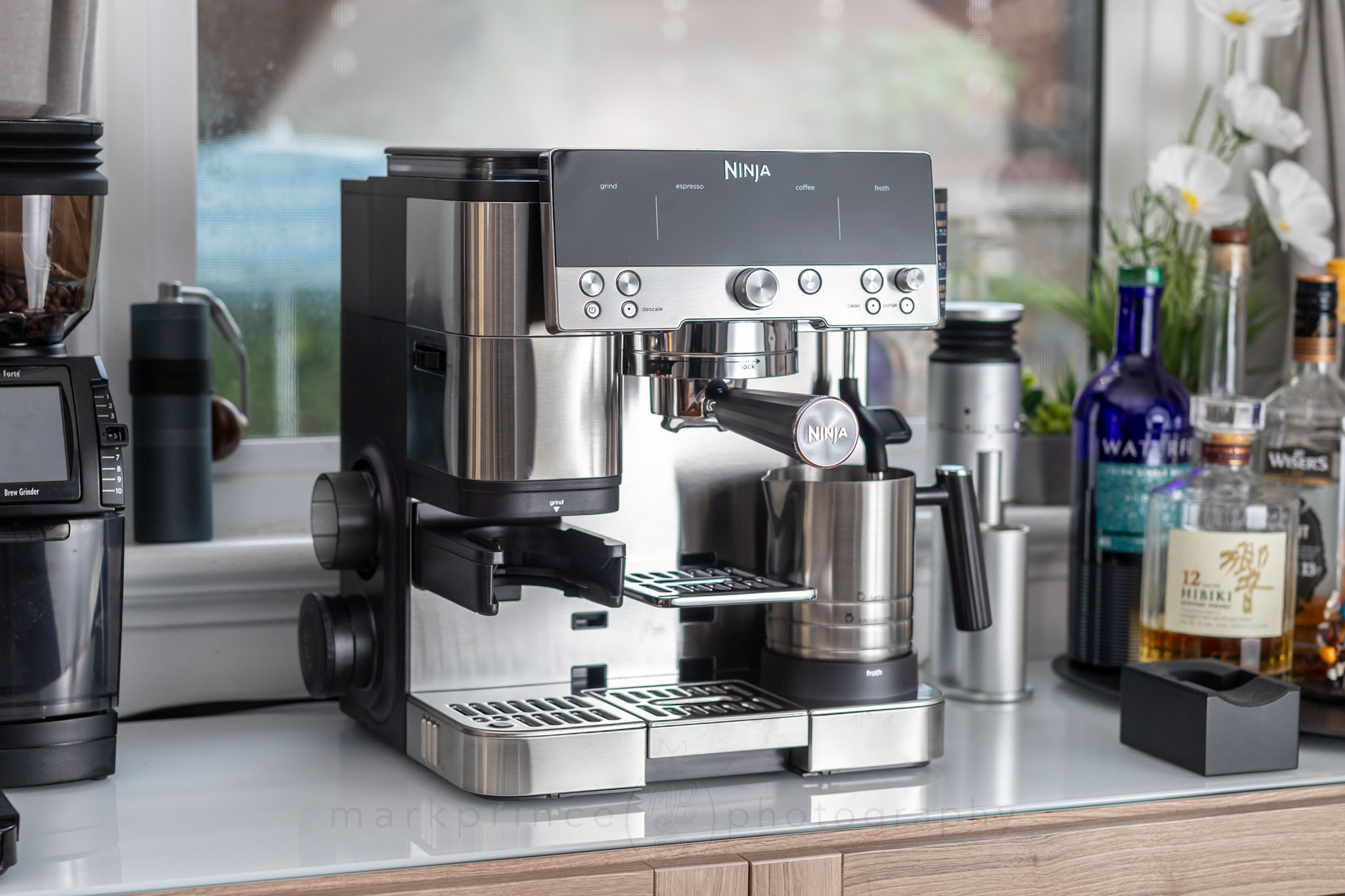
Continuing down the machine, you reach the main “business” area: the grinder doser, grouphead brewing area, and steaming platform.
The grinder only works with Ninja’s dosing collar; if you insert the portafilter into the grinder cradle without it, the machine won’t operate and alerts you on the display. The doser cradle includes a built-in scale, an entirely unique feature for home espresso machines as of this writing.
The grinder and burr assembly resemble the Barista Express, though there are differences. It features a removable conical top burr but cannot be micro-adjusted like Breville grinders. The grinder is fast, and the removable hopper holds up to 12 oz of coffee (350g). It features a bean shut-off system that works well for its purpose.
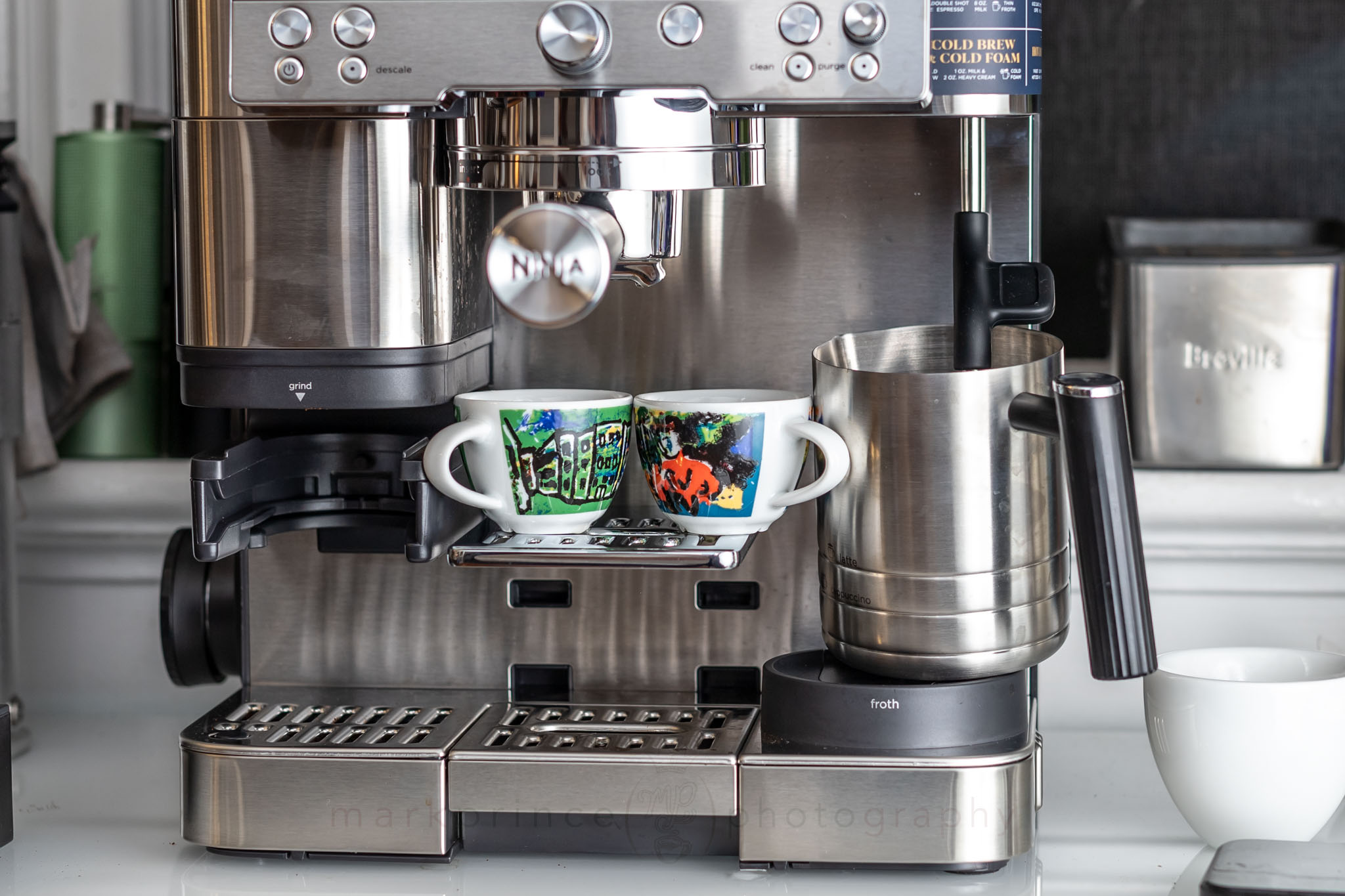
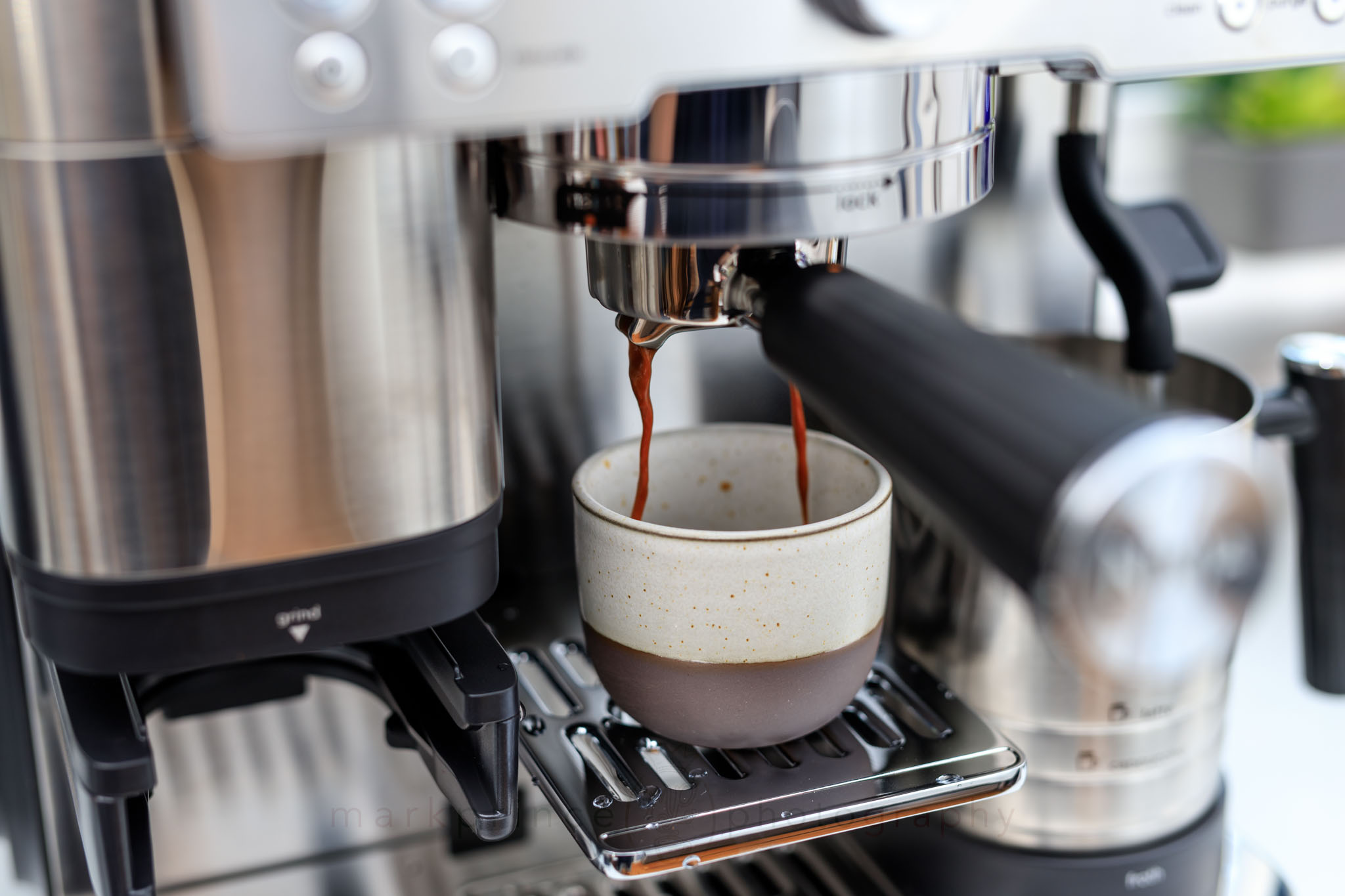
Another unique element of the Luxe Cafe is the grouphead and portafilter. The 54mm portafilter, possibly chromed brass (waiting on confirmation for this), is extremely deep with two spouts cast into its design. Why it has two spouts is a mystery, because you cannot fit two espresso (or larger) cups on the elevated or base drip trays. The handle is weighted, featuring a metal Ninja logo at the end cap. While it shares the triple bayonet design of Breville’s 54mm portafilters, they aren’t compatible due to the recessed grouphead designed for the deeper portafilter.
Ninja’s filter baskets are also incompatible with standard 54mm Breville baskets or aftermarket baskets made for Breville machines. The Luxe Café baskets feature rubber insets, fitting only one way into the portafilter. The machine includes two baskets: a standard double basket for up to 18g of coffee and an extra deep “Luxe” basket, holding up to 45g. Thankfully, nether are pressurized.
And there’s still more unique design choices to explore on the Luxe Café: its dual cup tray designs. A removable “mini” tray fits into the main drip tray. This allows the machine to accommodate large 18-20oz insulated cups by removing the mini tray and placing the cup directly on the counter. Since the Luxe Cafe uses a 3-way solenoid valve to release pressurized water after a shot, the main drip tray catches this purge water even when the mini tray is removed.
The second removable cup tray, made of thick metal, can be slotted into one of three positions, allowing you to move your espresso cup closer to the two spouts (again, why does this machine have dual spouts?)
On the right side of the business area is the milk station with a cradle for the Ninja Luxe Cafe pitcher. It includes a temperature sensor, a purge hole directing steam wand water to the drip tray, and a hidden magnetic stirrer to spin the frothing whisk inside Ninja’s steam pitcher at different speeds.
The pitcher has markings for milk levels, and the frothing whisk is easily removable due to its magnetic attachment.
On the left of the machine is the grind adjustment dial and slots for the tamper and dosing collar.
More innovation can be found in the grinder adjustment settings: as long as the portafilter and doser collar are in the grinder cradle, each click finer you set on the grinder activates the motor for milliseconds, to purge some grinds and prevent damage to the burr carrier. This is kind of brilliant.
You can also further purge the grinder of any left over grinds by pressing and holding the front mounted grinder button.
The tamper is a pillar design, and has a click effect with about 30lb of pressure applied. It is designed to work with the dosing collar, and using both ensures a very level pack on the ground coffee.
On the right side of the machine is a door that opens to a storage area for filter baskets, the blind filter insert, and the cleaning brush. You can also view the water reservoir level visually on the right side of the machine.
At the bottom is the drip tray system, primarily designed to collect purge water from the machine and steam wand. It has a pop-up indicator when full. The drip tray includes a plastic cover to keep coffee grounds out of the purge water and a steel top grate with part of the steam pitcher platform attached.
The mini central drip tray is separate from the main drip tray, with each being self-contained.
The Ninja Luxe Café Premier model is a bit smaller in real life than it looks in photographs. It sits just 37cm tall (14.5”), and will have no problem sitting under most kitchen cabinets. It is 34cm wide (13.25”) but you need a bit more clearance on the side for the tamper and dosing collar storage. Back to front it is just 33cm (over a foot at 13”). The machine weighs 12.5kg (around 25lb). It runs at a full 1650W when doing everything, but my initial tests with a Kill-a-Watt meter show it manages that power well and is pretty efficient, drawing low power most of the time. The cord is 1m long, which to me is a perfect length for most kitchens, but some might find it too short.
Lastly, the warranty is one year, though there are options to extend that.
Subscribe to
Coffee Pulse
Join the 12,850 other coffee lovers who receive CoffeeGeek's premier newsletter. Each issue dives deep into one coffee or espresso based subject. Subscribing is free, and your personal information is never shared.

Support CoffeeGeek
If you enjoy and learn from this resource, please consider making a one time or recurring donation to help support our work and fund purchases for future reviews.

First UseLuxe Cafe Premier
A few things you should know about the Ninja Luxe Café: it won’t let you grind into the portafilter unless you also attach the dosing collar stored on the side of the machine (it’ll even tell you on the display to use it), and there isn’t a lot of “play” in terms of the shot you can pull. If you dive deep into its advanced menu (more on that below), you can set your espresso shot ratio to 1:2, 1:2.5, and 1:3.
You also cannot change the dose. It will grind about 17.5 to 18g of coffee for every double espresso shot. I’ve measured this repeatedly, and the dose usually sits at 17.8g, give or take .15g, across 10 measurements.
To touch on this a bit more: I speculate that the built in grinder works in conjunction with a timer system. I’ve done a lot of weight measurements with this machine, and I noted that anytime I changed the coffee, or did a major adjustment to the grind size, the first dose for espresso is a bit off: by as much as 1g. The next dose is back up around the 17.75-18g mark, as are the subsequent ones.
This leads me to believe (and Coffee Kev, of Youtube also believes this) that the grinder scale only measures the finished weight of the coffee; it doesn’t actively measure the ongoing weight build up, but instead bases how long the grinder runs on an internally-set timer. When the machine’s programming notes the final weight is off, it adjusts a timer for the grinder accordingly so it grinds for a shorter or longer time the next use.
I say “speculate” because I am trying to confirm this with Ninja.
Back to operating the Luxe Café Premier: the machine doesn’t need any preheating time to brew its first shot of espresso for the day: no 15 minute heat up time, no massive blank shot count to warm up the grouphead, nothing. It actually goes through its own preheating routine, after you grind coffee. There’s also a coupling wire attachment to the grouphead that I spied when looking inside the machine, which leads me to believe the grouphead is actively heated (I need to confirm this).
Before diving into a true first use, I like to season grinders before really testing machines, and the Ninja Luxe Café is no different. A local roaster had just gifted me 5kg of stale, old coffee (he knows I need those supplies for this purpose), so I was able to put 3kg through the Ninja’s grinder over a 2 day period, in 250g batches. For the most part the grinder in the Luxe Café handled it like a champ, though the machine was obviously disappointed that I wasn’t brewing espresso (I would have to turn it off and on to reset the grinder).
Once fully seasoned, I got to work. Our lab coffee – Social Coffee’s People’s Daily Blend – went into the Luxe Café hopper, and even though the machine starts you off at “12” as a suggestion for espresso grinding, I set it to 7. I didn’t change any other parameters: default dose, temperature, brew volume were factory stock.
The first shot ran fast, and the Luxe Café suggested going down a click. I went down 2, to “5”. Repeated the process (after purging the grinder, and let the machine do its thing. The resulting 1:2.5 ratio shot I got?
Tasty. Fine. Good. 3 star shot (out of 5). Not bad at all. Perhaps a slight tad sour.
Dialed the Luxe Café grinder down to 4, and set the brewing temperature higher via the front panel button. Purged the grinder, and set up the next shot. Better. Really good. Possibly a 3.5 to 3.75 star shot. Good volume, good looking, no sour notes. Impressive.
Repeated the process. Got a near identical shot. Repeated again. Ditto. This was looking very good. I shot some rough video of the process.
(video coming soon)
Right out of the gate, the Ninja Luxe Café produces a better shot of espresso than a cold-start thermojet-equipped Breville machine. Yep, I said it.
Because you don’t have to go through the same pre-heat kerfuffle you do with the Breville thermojets. Don’t get me wrong, the instant on, instant steam ability of those machines is fantastic. The amount of blank shots and preheating you have to do with them? Not so much. You don’t have to preheat the Luxe Café. It does it automatically. You can hear it during the start up time after you grind coffee.
When it comes to Breville’s older espresso machines – the Barista Express and the Infuser (beloved here on CoffeeGeek), things are closer. I’ll cover this more in the comparisons below, but in the hands of a well seasoned home barista, the Express (and Infuser) should deliver better coffee, almost every time.
That said, the Ninja Luxe Café produces a very good shot of espresso, and more importantly, it does so consistently with minimal “crafted input” from the home barista. This kind of thing will appeal to many folks.
There is one thing, mentioned in the unboxing, that still perplexes me about this machine: there’s no hot water tap, or hot water function out of the steam wand. Ninja prides themselves on their swiss-army knife approach to appliances, so this seems like a major miss. Hot water would turn this machine into a complete hot and cold beverages system for your home, giving hot water for tea use, for americanos, and for just preheating and rinsing cups. I am boggled by their decision to omit it.
In our Full Review, we’ll talk more about this entire drink building process with the Luxe Café and dive more into the details on the “barista assist” decisions the machine makes for you, good and bad.
Drink Options on theLuxe Cafe Premier
Ninja is known for packing in features on their small appliances, and the Luxe Café is no different. After testing it for two months, this machine’s varied drink options are all presented with acceptable to excellent results. Let’s break it down:
Espresso
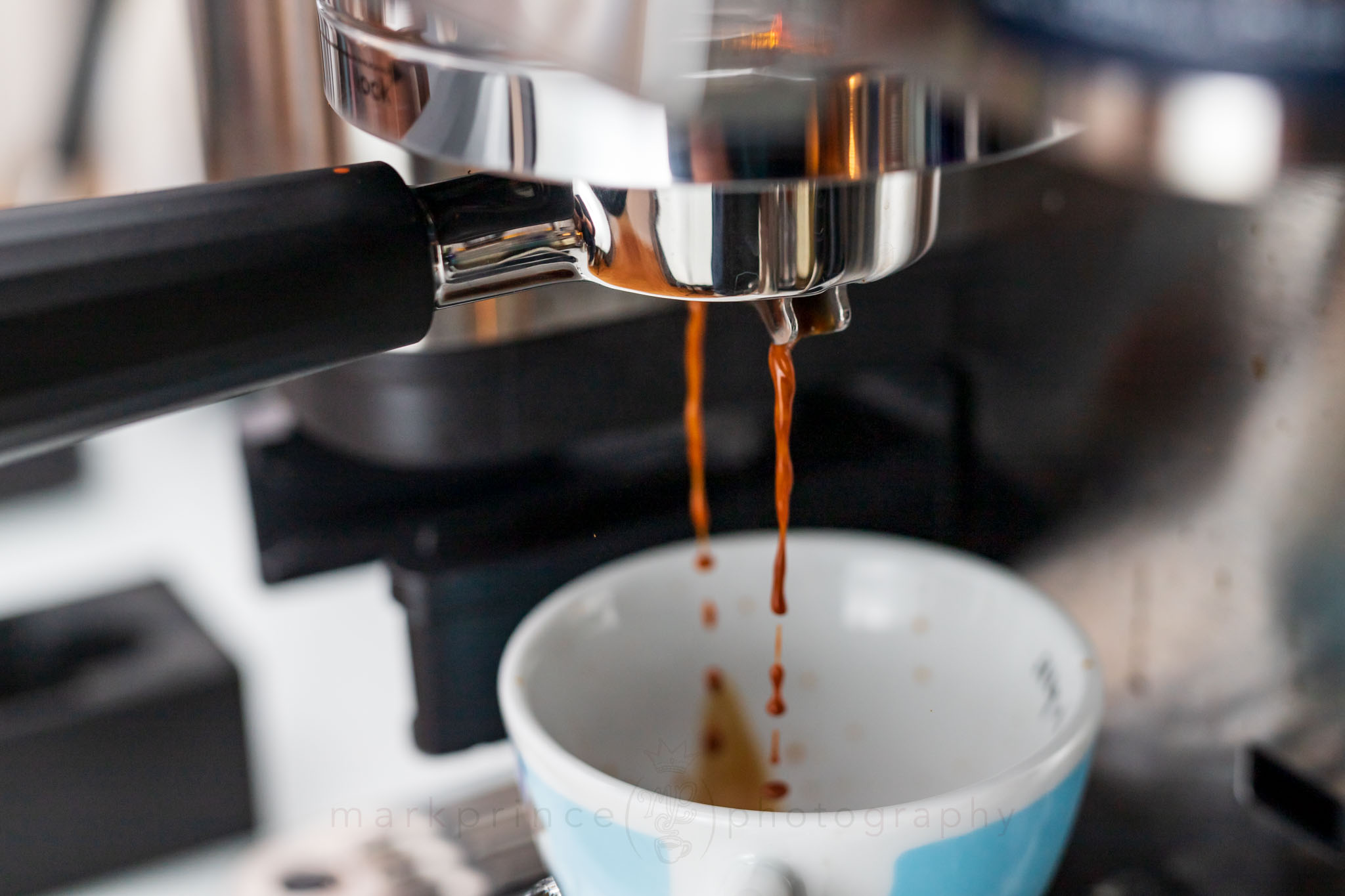
Luxe Café semi-automates espresso brewing to SCA-level standards (it is not SCA approved, but Ninja’s engineers have clearly done their homework). Out of the box, it will use roughly 18g of coffee to deliver 45g of espresso in the cup.
You can adjust the brewing temperature, and shot ratio (1:2, 1:2.5, or 1:3), but not the grind volume. The machine sticks to 18g of coffee, and honestly, I’m good with all of that. 18g is what most people use these days to brew coffee. A 1:2 ratio is also what many advanced home baristas like their machines to pull (that means if you’re using 18g of coffee, you get 36g of espresso liquid out). The machine can also deliver CoffeeGeek’s preferred ratio (1:2.5), so I’m happy the machine lets you do that as well.
This isn’t a machine for wild espresso experiments; it’s built to deliver a solid double shot with just the right amount of finesse control available to the operator if they want to do some tweaking..
For most coffee lovers, these tweaks are more than enough. The bottom line is, the Luxe Café is super consistent in its output, shot after shot, and that’s a big win. Use excellent water and good, freshly roasted coffee, and you’ll often get better espresso than most cafes can deliver these days.
The Quad Shot
I haven’t played around with this feature much yet, but I’m here for it. When I’m heading out to Vancouver Island’s epic shorelines for a walkabout with my partner and our pups, I usually prep a thermos with a few doubles of espresso and some hot water for a giant to-go americano. It’s a bit of a hassle though, brewing back-to-back shots, dumping the portafilter, wiping it down, and grinding again.
With the Luxe Café, that’s history. Just pop in the deep filter basket, select Quad Shot, and the machine does its thing, giving you 100ml of espresso in one go. It uses a different brewing process than a double shot, with a different preinfusion, and a different pulsing “timbre” to the pump action. The brew time is longer too, natch.
The downside? No hot water option, so you’d need a kettle for your americano. But if you’re craving a XXL cappuccino for your walk, the Luxe Café has that on lock with the automated frothing system capable of doing up to 20oz of milk.
As for the taste, it’s decent. Not as balanced or sweet as the double shot the Luxe Café produces, but totally drinkable.
Hot Brewed Coffee Modes
The Ninja Luxe Café has two hot coffee brew modes: Classic and Rich, with brew sizes from 6oz to 20oz (in 2oz jumps). You can’t control the weight of the machine’s preset choices for coffee grounds, or the water temperatures directly. You do control the grind level, and “Rich” uses more coffee and adjusts the flow for a stronger brew.
Both modes use Ninja’s deep “Luxe” filter basket, and no need to tamp unless you’re making an 18 or 20oz brew, which really packs in the grounds. They both leave a messy spent puck in the filter basket that needs a bit of cleaning
I’ve mostly been rolling with the Rich mode, and honestly, from a cold start, you can get a really solid cup of coffee in under 5 minutes. It’s not quite handmade, pourover coffee levels of cup quality, but better than any “single cup brew mode” I’ve tried in a variety of big brand auto drip coffee makers.
One note though on grind settings: whatever the Luxe Café suggests you set for the grinder, go at least 3 or more clicks finer. It always suggests 25 for these modes, and I roll it at 21 or 22. 25 is just too coarse. 21 gets the particle sizes down below 900um in my brief measurements.
The Luxe Café mimics pour-over techniques, with pauses and a low-flow pump to optimize extraction, and it pays off with a rich, tasty cup every time. I’ve measured the TDS and it consistently hits the SCA approved sweet spot of 1.35-1.40% extractions; more importantly, it just tastes good, and is very acceptable for such a hands-off brewing mode.
Cold Coffee Modes
The Ninja Luxe Café has two cold brew modes: one is like the Japanese Iced Coffee Method we champion a lot on CoffeeGeek, and the other mimics slow drip cold brew. The first keeps most of the coffee’s flavors and acidity, but can be a little bitter. The second chills out on the acidity and delivers a sweeter, smoother taste, missing some of the coffee’s more delicate flavours and aromas.
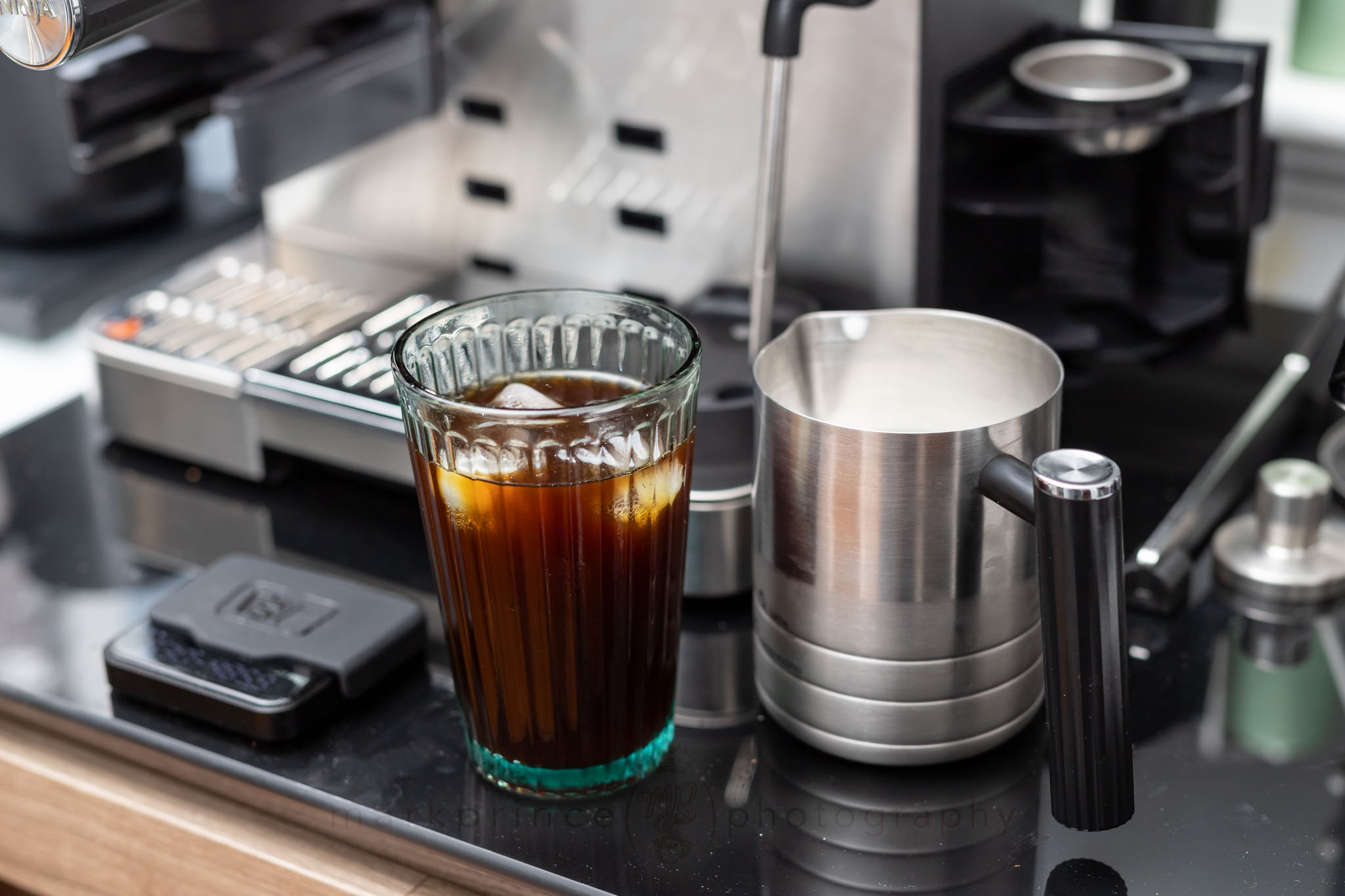
“Brew Over Ice” is the Luxe Café’s take on Japanese iced coffee. It uses hot water but tweaks the game: more coffee per ounce, longer brew and steep times, and it cuts back on the final liquid output so you get concentrated coffee that mixes with your ice. For a 20oz brew, the Luxe Café will dish out about 9oz of coffee, assuming the ice will melt and bring you up to the finished 20oz brew..
Cold Brew skips the heat and uses reservoir temperature water, with the pump doing slow pulses for a mellow extraction. Like the Brew Over Ice option you’ll end up with about half the liquid you select – like 8oz for a 16oz brew – and the rest is filled by ice.
Between the two, I’m on Team Cold Brew. It’s smooth, low on acidity, and rarely needs sugar, unlike Brew Over Ice, which sometimes needs a little kick of external sweetness. And I have a pro-tip for you, that other reviews of this machine and its cold brew mode have missed: fill the reservoir with ice-cold water for an even colder extraction.
Milk System on theLuxe Cafe Premier
Ninja’s milk frothing system is pretty unique, but still gives you the option to go fully manual with the steam wand. You can get pro-level microfoam for latte art—but only if you go manual. The automated frother system Ninja designed doesn’t quite nail it.
The Luxe Café’s milk system has three parts: the wand, the base, and the pitcher. The wand works like a traditional steam wand, though it’s pretty basic and doesn’t have the fancy internal features you’d find on some Breville Barista MilQ systems. It’s not super flexible either—just moves straight out for manual frothing.
Now, the base is where things get interesting. Like Breville’s setups, it has a temp sensor for milk, but it also includes a magnetic stirrer, kind of like what you’d see in a science lab. This spins a whisk in the pitcher to create foam at two different speeds, depending on if you chose low foam or max foam on the front panel. There’s also a “no foam” mode, which disables the stirrer completely. (this mode also is the one you use for manual frothing).
The frothing pitcher has a removable whisk that spins to foam your milk. Creates foam in most milk and plant based “milks”. The downside? It creates that airy, fast-dissipating foam you’d expect from any whisk stick frother.
One big flex of the Ninja Luxe Café is its ability to froth cold milk for iced coffee and espresso drinks. The built in whisk does a solid job here, making dense, pourable ice cold foam that holds up well. Add some sugar, and you’ve got a whipped cream-like topping. No other machine available today can touch this feature.
And yeah, if you prefer to steam the old-school way, the steam wand works great. It has decent power, and you can totally get “pro calibre” microfoam for latte art with some practice.
All in all, the Luxe Café offers some choices here. If milk frothing isn’t your thing, Ninja’s got your back with automatic settings. If you love iced drinks, it’s the only machine available today that froths cold milk like a boss. And if you’re trying to level up your barista game, and practice to become the next latte art champ of upstate New York, the manual steam wand can provide you the tool for that.
Competing ProductsLuxe Cafe Premier
You’re probably wondering: Is the Ninja Luxe Café a better machine than the Breville Barista Express, the best-selling espresso machine on the planet? Ninja certainly seems to think so, given their direct marketing comparison.
In short, no. The Barista Express can deliver better espresso shots and superior milk texture from its steaming system. You get to control elements that improve espresso, including brewing temperatures, dose, a more refined puck prep, shot volumes, and preinfusion levels. Plus, it has a hot water option, something the Luxe Café lacks.
But the real answer is a bit more nuanced than that. The Barista Express is designed for a hands-on, traditional espresso experience, which means the quality of your completed drink depends a lot on your skill. If you make mistakes – like incorrect dosing, grind size, or bad puck prep – the machine won’t compensate, and the result will be subpar.
The Luxe Café, however, takes a different approach. It’s more user-friendly, controlling aspects like coffee dose, temperature range, and shot volume for you. Ninja’s engineers have set it up to deliver consistently good results, provided you use fresh coffee and filtered water. It’s hard to mess up on this machine, whereas the Barista Express gives you plenty of ways to go wrong.
If your goal is to develop serious barista skills, the Barista Express might be the better option. But if you want consistently good espresso with minimal effort and a variety of drink options, the Luxe Café is the better fit.
A fairer comparison might be between the Luxe Café and Breville’s assisted machines, including the Barista Touch Impress, Barista Touch, or Barista Express Impress. Or even the Oracle Touch or Oracle Jet machines. The thing is, price is a big factor in these comparisons. The Barista Touch Impress, for example, does almost everything the Ninja machine does (and has more features like various automated drink builds) but costs about three times as much as the Luxe Café. Is it 3 times the value? Most likely not.
We’ll dive deeper into these comparisons in the full review.
ConclusionLuxe Cafe Premier
The Ninja Luxe Cafe Premier espresso machine is a new venture and territory for Shark Ninja, and the first of three Luxe Cafe models planned (the other two, the Essential, and Pro models, will be coming later this year and next). They sure ticked a lot of boxes in the correct category with the Premier machine’s launch.
I’ve seen a lot of criticism online about this machine, mainly because “well, it’s from Ninja” Some believe their machines and products only last a year or two. Even the Hoff, in his video, implied this. But Ninja are very serious about this product and its potential to build and improve the company’s rep.
For instance, they list and sell a lot of parts for the Luxe Cafe Premier. All at excellent prices. Heck, even the full and complete drip assembly is only $50. You can buy spare baskets, portafilters, dosing cradles, even steam tips. (I’d recommend buying a spare dosing cradle and baskets). That means the company wants this product to last more than a year or two.
The Luxe Cafe Premier is packed with unique features and abilities. From the ice cold froth ability, to the grinder with built in scale, to the super deep 40+g basket, to the well designed tamper and dosing collar combo, there’s a lot going on with this machine.
I especially like that the Ninja Engineers really paid attention to modern, specialty coffee wants and desires for espresso and brewed coffee with their barista assist choices. Settling on a 1:2.5 dose ratio for espresso is exactly the standard we preach here at CoffeeGeek. The more common 1:2 ratio is also available.
This is a First Look, but we have enough time with the Ninja Luxe Cafe Premier to put it into consideration for Espresso Machine of the Year, and it is definitely a worthy addition to our Best Budget Espresso Machines Guide.
We’ve covered a lot in this First Look, and going forward, we’ll be doing more direct temperature, timing, and grind quality tests, more direct comparisons with other machines, and organizing a focus group to scope out the machine fully from various consumers’ standpoints. But for now, this is an excellent addition to the world of specialty coffee and espresso, and a machine you should consider, especially if you’re looking for an all-rounder, first serious espresso machine to buy.
We use affiliate links to a) Amazon, and b) manufacturers only. Any links to vendors (including CoffeeGeek Sponsors) are not income generating links. Further details about our commission and affiliate link policies can be found on our Terms and Conditions Page. The use of any affiliate links have no effect on our editorial policy or review objectivity.
Subscribe to
Coffee Pulse
Join the 12,850 other coffee lovers who receive CoffeeGeek's premier newsletter. Each issue dives deep into one coffee or espresso based subject. Subscribing is free, and your personal information is never shared.
Mark has certified as a Canadian, USA, and World Barista Championship Judge in both sensory and technical fields, as well as working as an instructor in coffee and espresso training. He started CoffeeGeek in 2001.

- Mark Prince
- Mark Prince
- Mark Prince
- Mark Prince


7 Responses
Excellent, detailed write up! Two 👍👍
Now, just to be clear, espresso cups can be different shapes and in fact two espresso cups can fit on the tray under the spouts.
It seems the North American reviewers have never purused the internet for espresso cups!?!?
Just so you don’t feel left out, take a gander at an example.
(link removed)
IMO, those kinds of cups are not suitable for espresso. There are lots of tall and thin cups, but for drinking espresso, my firm belief is you need a wide aperture cup, one that allows for proper “nosing” of the aromas, and also rounded bottoms for helping the espresso settle properly and mix well as the crema develops and settles.
The trays on this machine will not fit any traditionally sized espresso cup.
Also, to address your comment about reviewers in North America: this is a flex and I apologise for that, but I own well over 2,500 espresso cups; probably close to 3,000 now. I collect them. I have cups by just about every major porcelain maker in the world. The vast majority in my collection will not fit two on the cup tray on the Luxe Cafe.
The UK model has a hot water option 🙂
This is the most comprehensive review I’ve read so far, great, balanced review. I’ve just ordered mine (now available to pre-order in Europe). The only thing I don’t understand – why no single shot option? There is a more expensive unit on the way, but I wonder if single shot espressos would be an option with this 3 in 1 series if one would separately purchase the single shot basket (which I read should be available for the more expensive machine).
The espresso machine review is all well and good and I’ll definitely be picking up a Luxe machine at some point in the near future. But cool flex on the Hibiki 12 year.
Heh! I’ve been nursing that bottle for like the last 4 years. It was a gift, and basically I just enjoy an ounce or so every 4 to 6 months 🙂
My Ninja luxe outputs 19g into the portafilter and only puts out 28 29 grams of expresso at the 1:2 ratio setting. Great review your coffee setting is spot on.