






Recently I got a very interesting email from a CoffeeGeek reader (and she also reads my personal site) regarding confusion about thermoblocks, “thermoblock boilers”, “steel lined thermoblock boilers” and some old verbage I wrote about six years ago about thermoblocks in general, where I said:
but the heating element inside is, for the most part, inadequate for the rather complex task of producing espresso and steamed milk. … Avoid if possible
Mark Prince
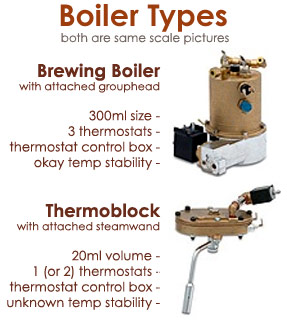
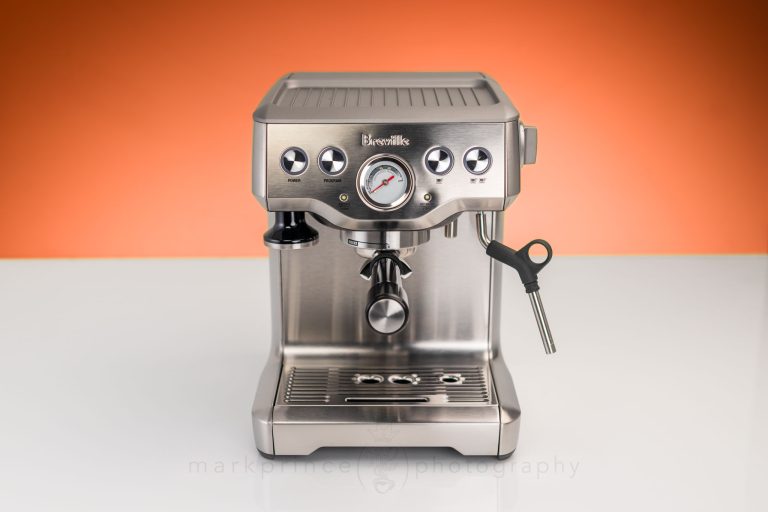
Thermoblocks have come a long way in six years since I wrote that they should be avoided. As an example, there’s a machine called the Ascaso Steel Duo, which has a boiler and thermoblock inside – the boiler is used for espresso, the thermoblock for “on demand” steam, and it actually steams quite well for its machine class.
The emailer also was confused over boilers, thermoblocks and some ad copy she read that said its heating device was a “steel lined thermoblock boiler”. If it features a ‘thermoblock boilers”, no matter what their material – steel, aluminum, copper, these things are still thermoblock heating devices. And what exactly is a thermoblock? Well they do range in design, but the few I’ve seen cut apart look very much like an old home radiator heater, or a liquid cooling device, but in reverse. They are essentially a snaking, folded set of tubes that are wrapped around heating coils or elements. As water passes through these tiny tubes (many of them are barely one or two millimeters in diameter), the heating elements flash heat the water, delivering, in theory and design, water that is at the proper brewing (or steaming) temperature upon exit.
Boilers on the other hand are single large cavity vessels that has a single heating element inside, sometimes a coil that is not unlike a compact florescent lightbulb (in look).
Boilers are mainly preferred for two reasons:
First, they don’t reduce pump pressure nearly as much as thermoblocks can – once the pump builds up sufficient pressure inside the boiler, it stays at that level and not much is “leeched” off as the water goes from the boiler to an espresso machine’s grouphead. Thermoblocks do leech off pressure from the espresso machine’s pump – as water snakes through the thermoblock, pressure is reduced and restricted by the nature of the design. Lately though, companies are designing their machines with this deficiency in mind, so if the thermoblock will leech off about 2BAR of pressure (as a guess) from the water that passes through it, the designers will set up the pump and restrictor valves so they deliver 11BAR or more pressure to the water at the entrance – and when the water exits, its at 9BAR).
Second, boilers provide more built up steam and “head room” for capacity of steam when steaming milk. The problem with boilers is it takes some time to go from brewing temperatures (about 95C) to steaming temperatures (about 130C or so), but once it has a build up, steam is usually pretty good, especially if the heating element stays active, or the boiler size is large enough. With thermoblocks, they can transition from brew to steam temperatures a lot quicker because of the minute amount of water they have to heat up in a given second. The downside is, because the volume of water inside the thermoblock at any given time is very small – maybe 5, 10mls – steaming power would be pretty weak.
At least that’s the theory, and in empirical testing six, seven years ago, the practice for the user of an all-thermoblock machine. But lately, I’ve tested a few machines with thermoblock designs, and they’ve come a long, long way in steaming ability, so some nut has been cracked by engineers and designers, and thermoblocks today in some machines may not be the bad bogeymen of only five and six years ago.
Food for thought, and I do welcome anyone who has more detailed (or unlike me, scholastic and engineering) knowledge of these systems to comment in the thread for this article, and explain better how thermoblocks work.

Mark has certified as a Canadian, USA, and World Barista Championship Judge in both sensory and technical fields, as well as working as an instructor in coffee and espresso training. He started CoffeeGeek in 2001.