





Out of the BoxNEO Flex
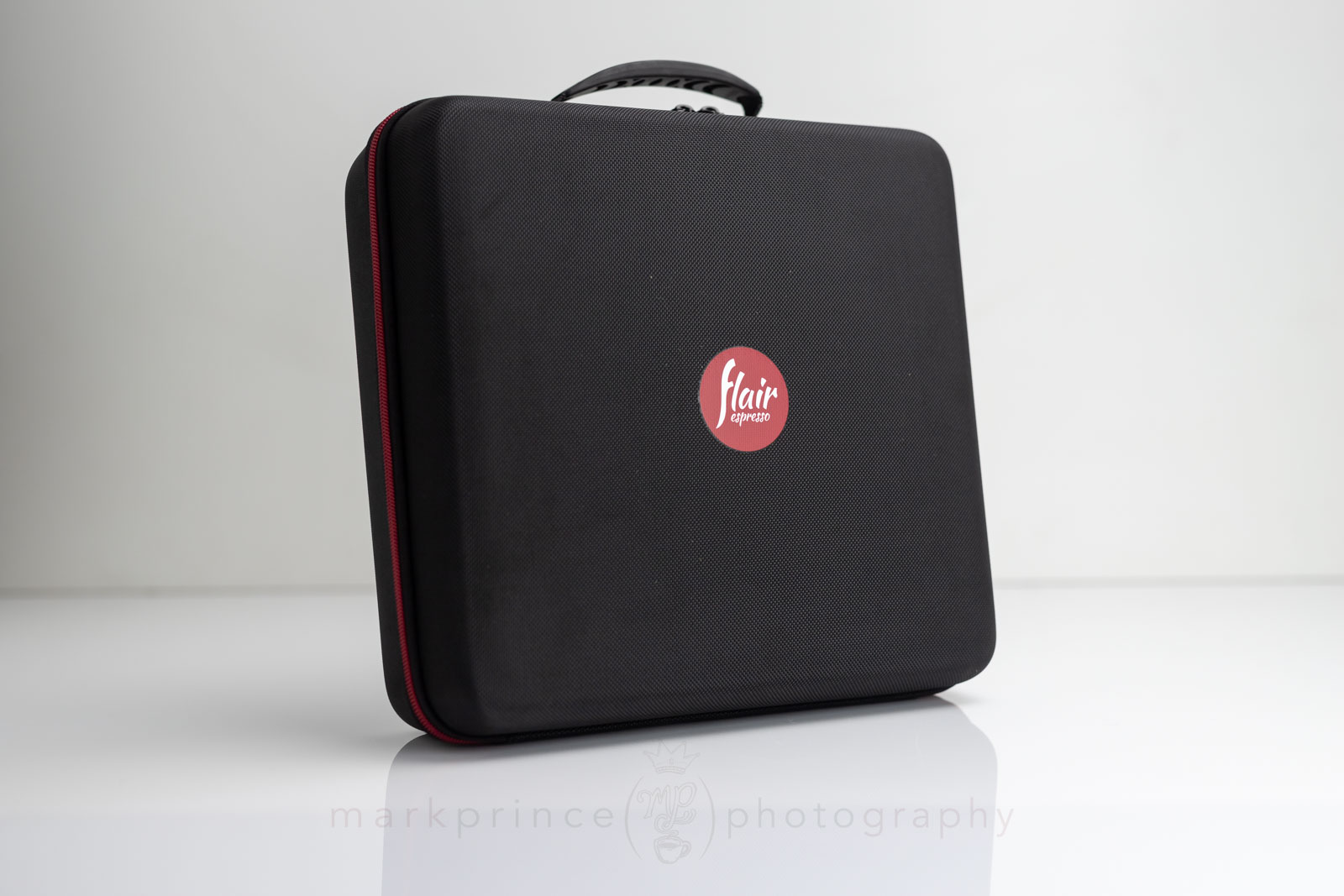
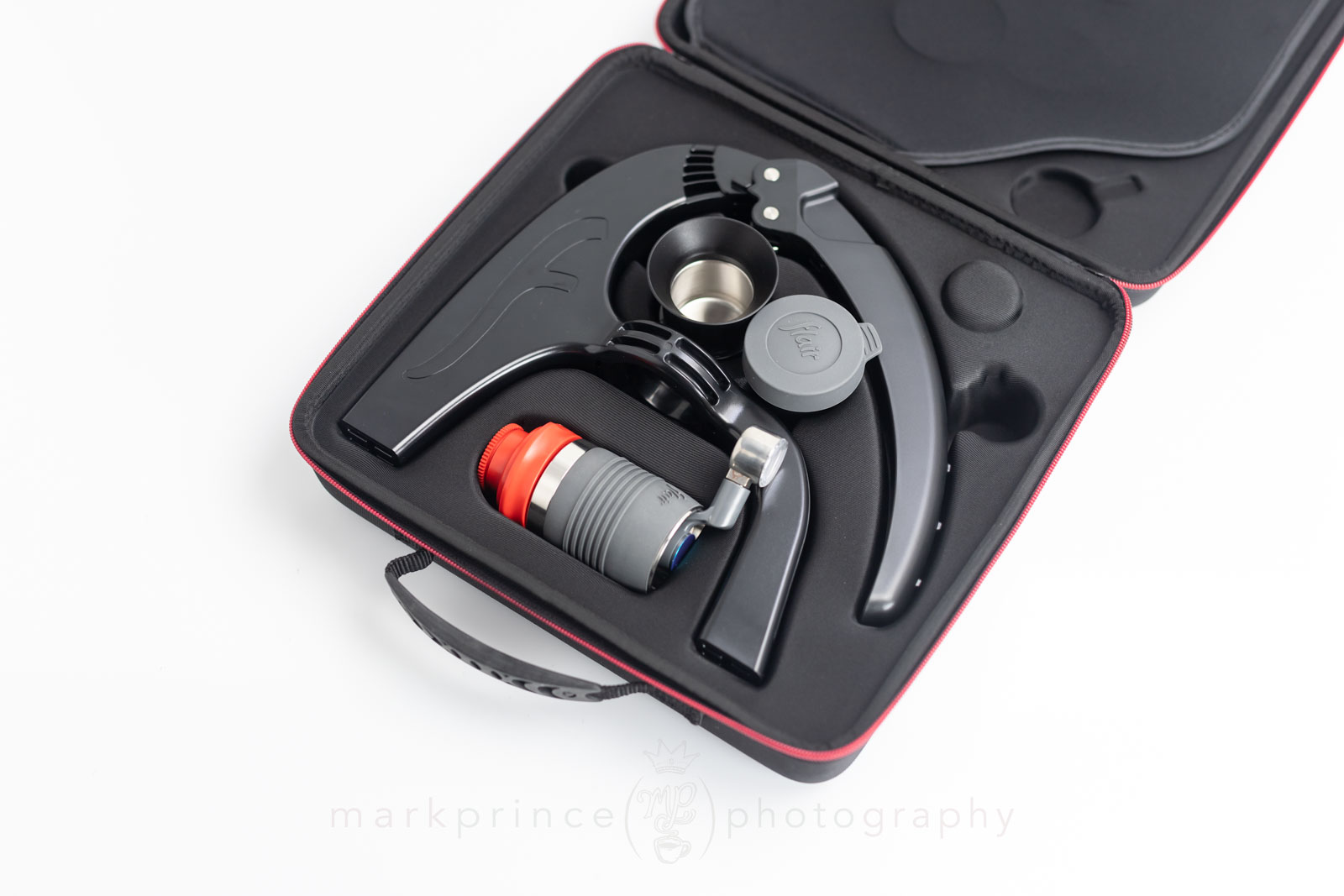
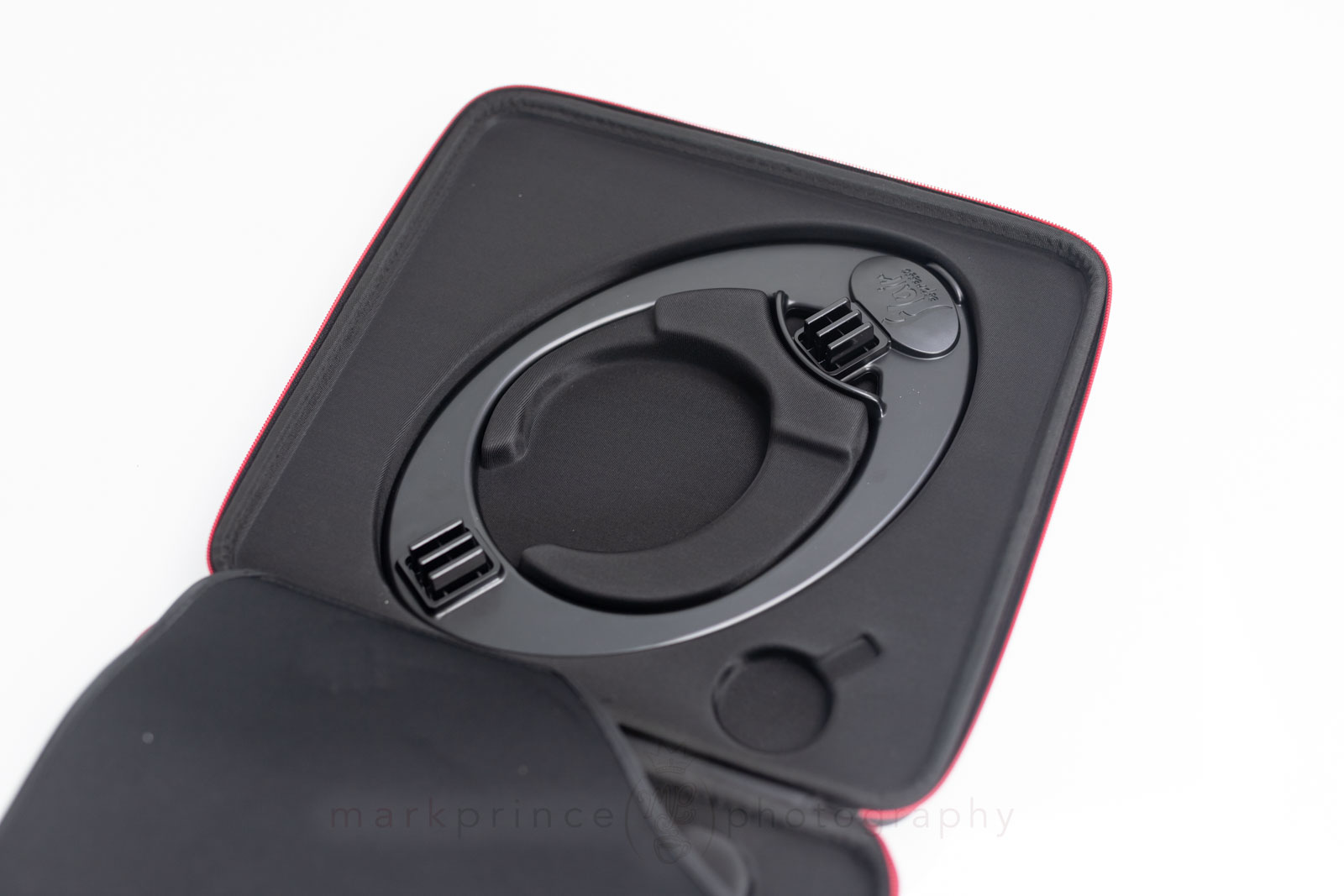
NB, Flair sent CoffeeGeek two units of the Neo Flex; Chris got the basic model (without case), and our office got a unit with a travel case; Chris’ review reflects the $99 base model, though some of our photos do show the travel case version.
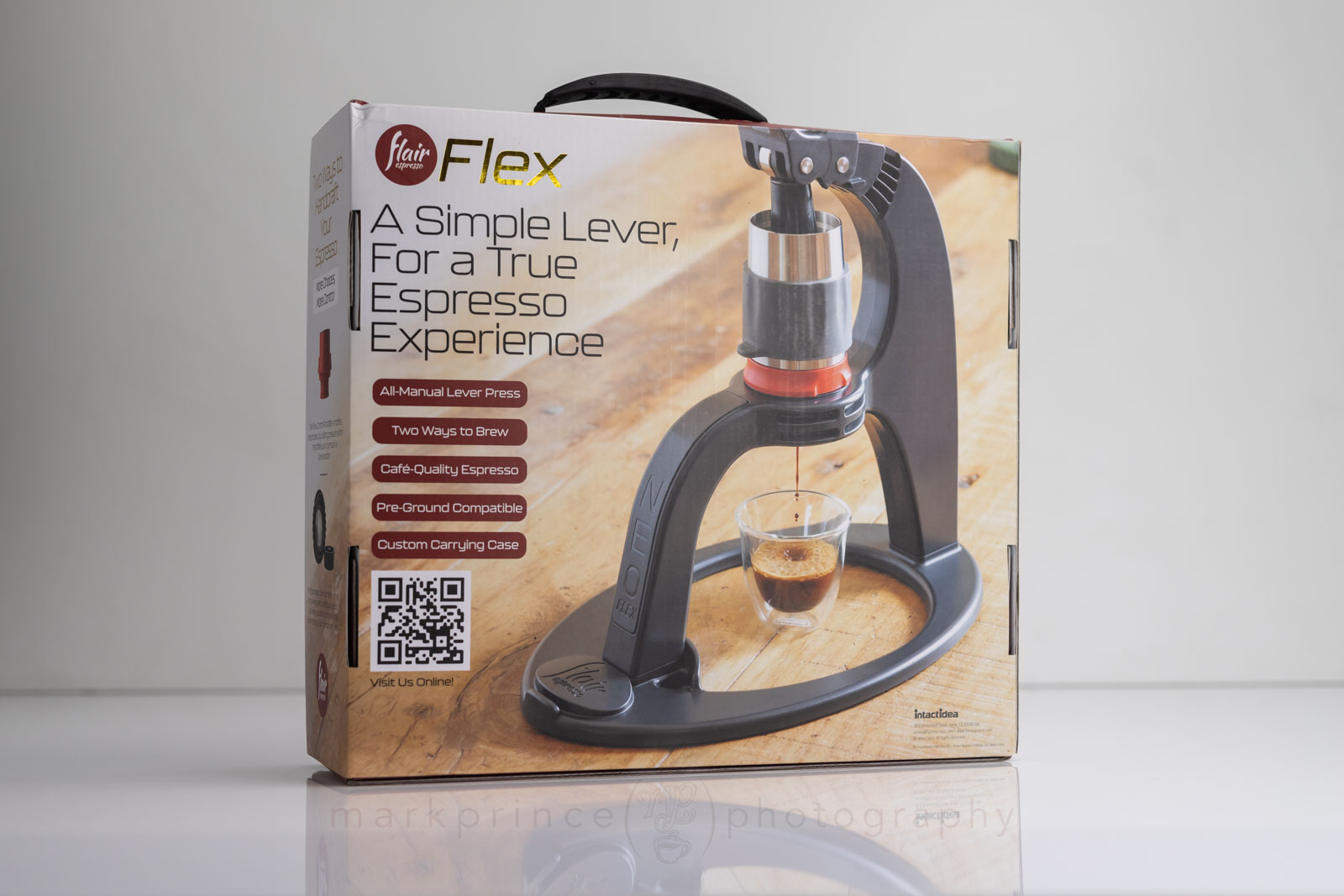
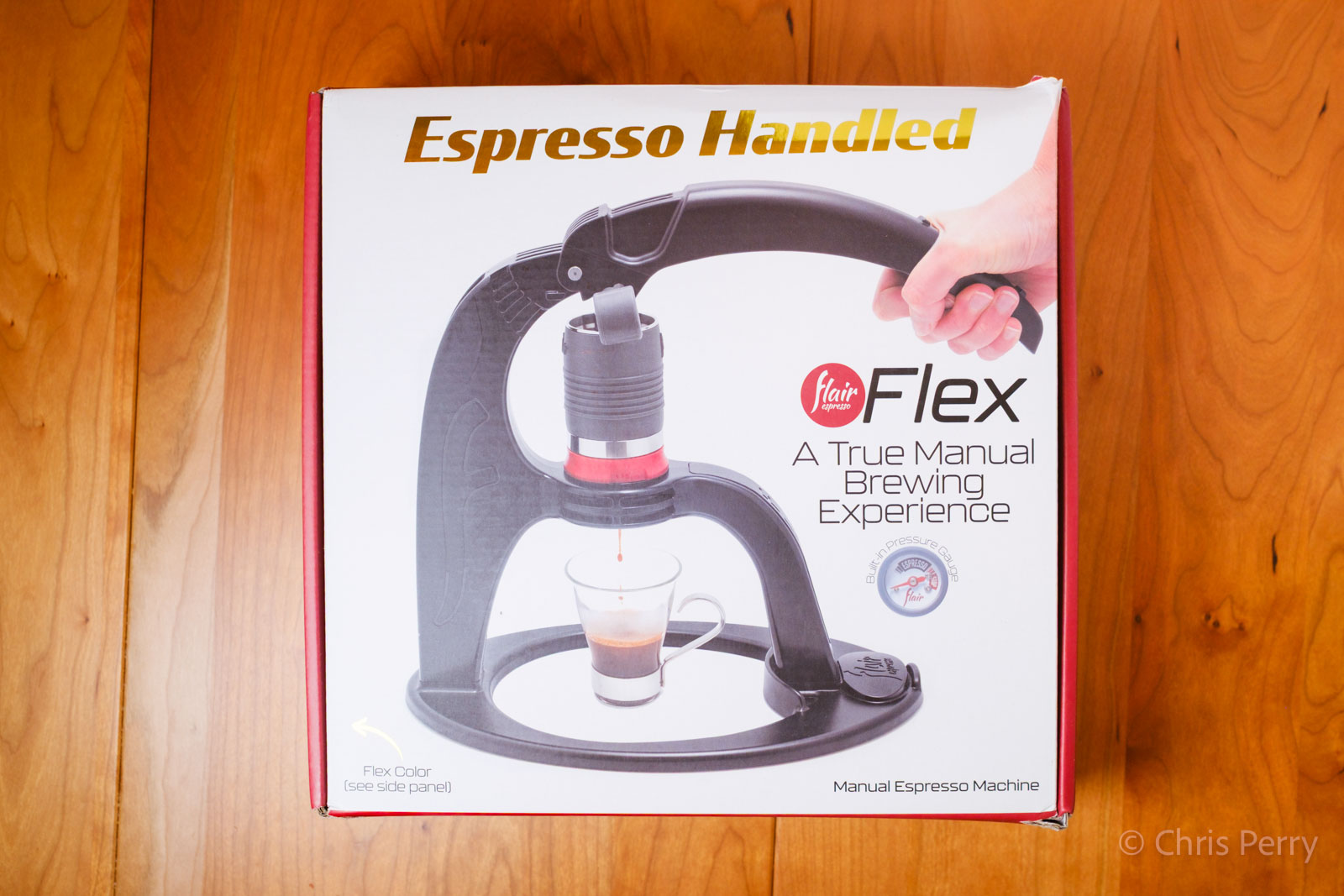
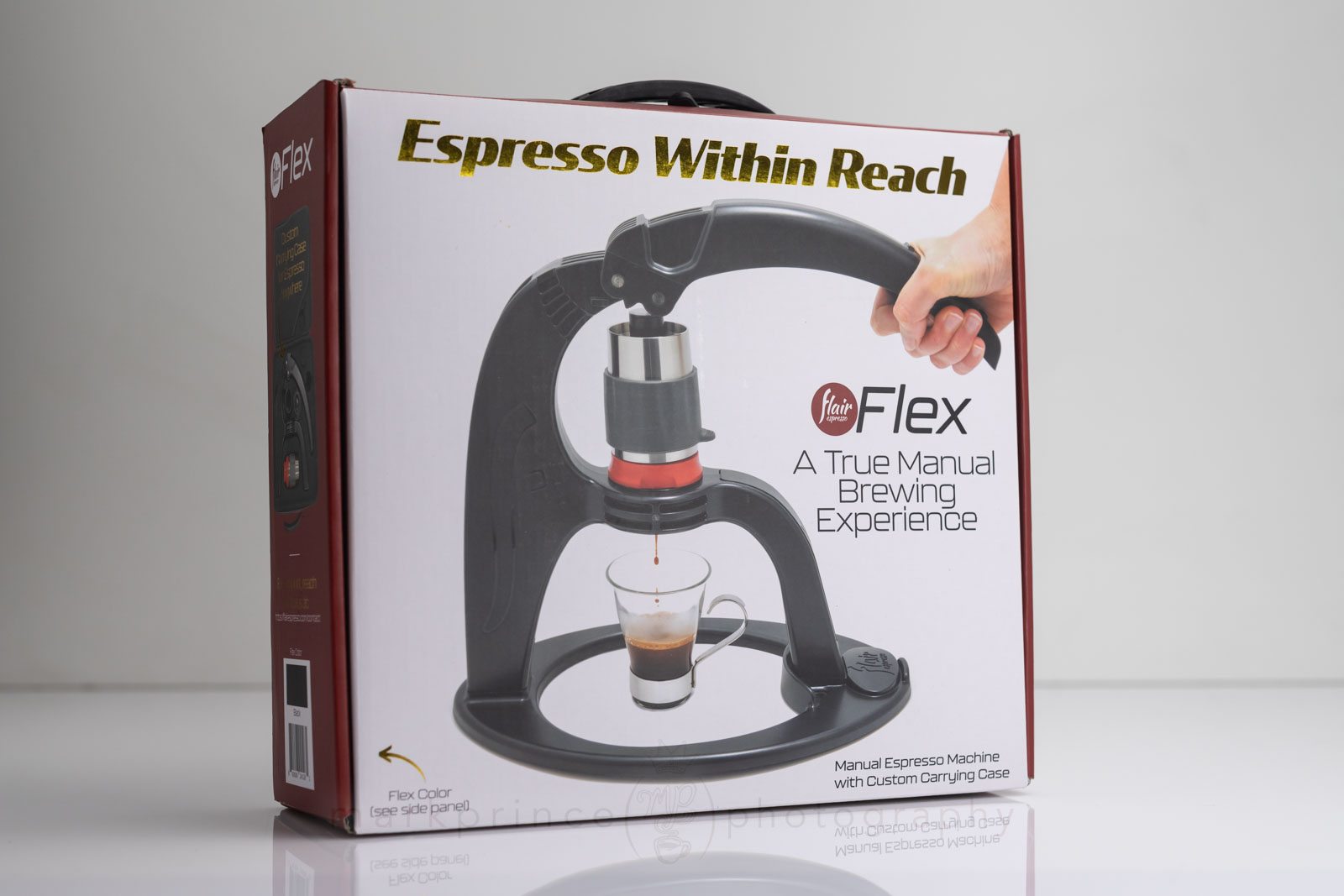
The Flair Neo Flex comes in fairly standard, but attractive looking retail packaging made of a medium weight cardboard stock, adorned with pleasant product photography and fairly corporate looking product description details.
The box, frankly, looks like it would fit in just fine on the shelf at a Williams Sonoma or other big box home goods store. While it’s nothing ground breaking, it is nice that Flair shows you what you’re getting yourself into when you receive the box, as compared to other espresso machine manufacturers that ship in generic brown corrugated cardboard boxes.
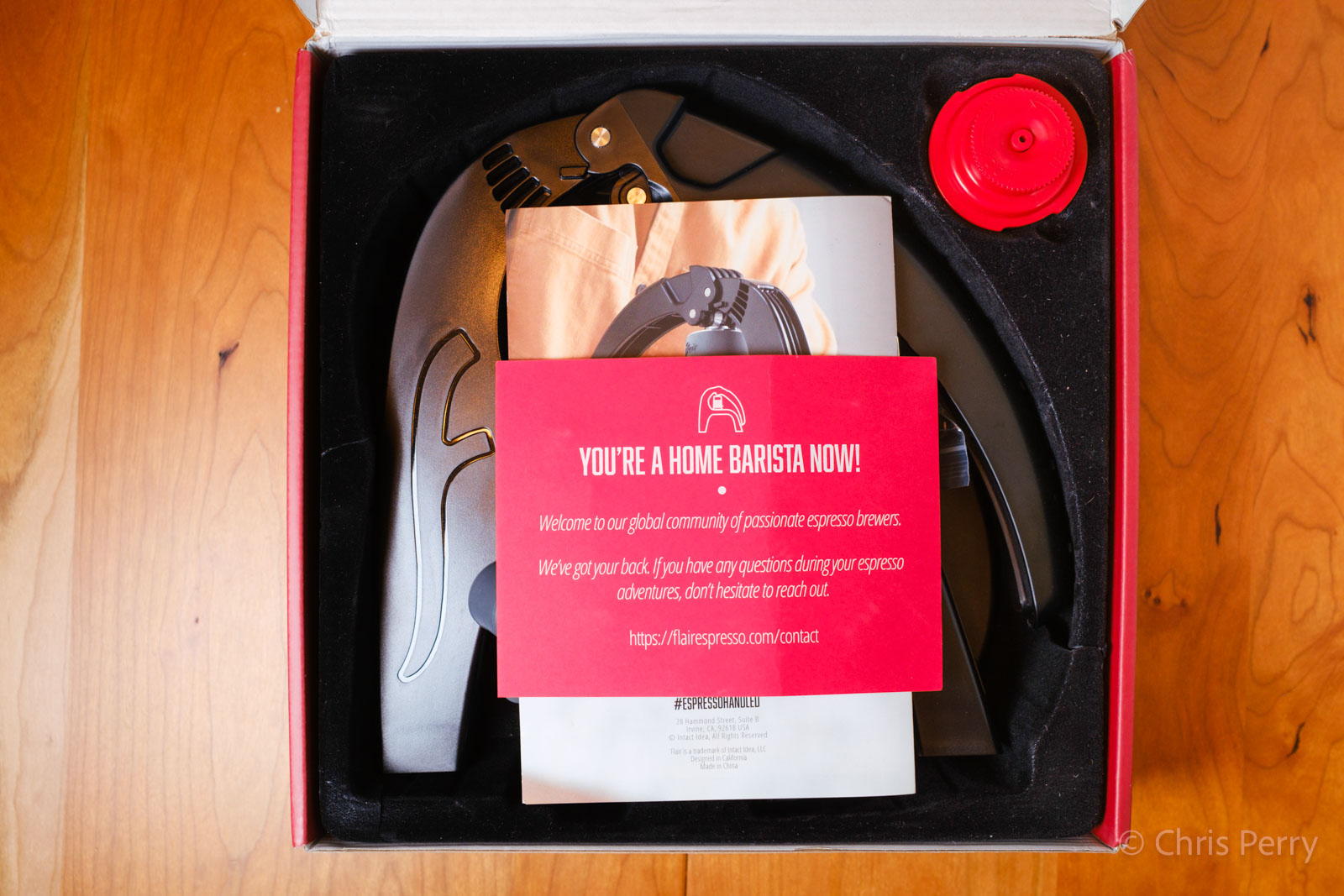
Upon opening it up, you’re greeted with a nice, bright red card that congratulates you on becoming a Home Barista, and offers to help with any questions that may arise during your “espresso adventures”. Flair makes it clear from the get go that they want you to be successful with their product, and are standing by to help you get the results you’re looking for. Under that card is a small booklet that lays out the contents, introduces the product, and explains how to get started brewing right away. It also offers a QR code that links to their quick start video brew guide.
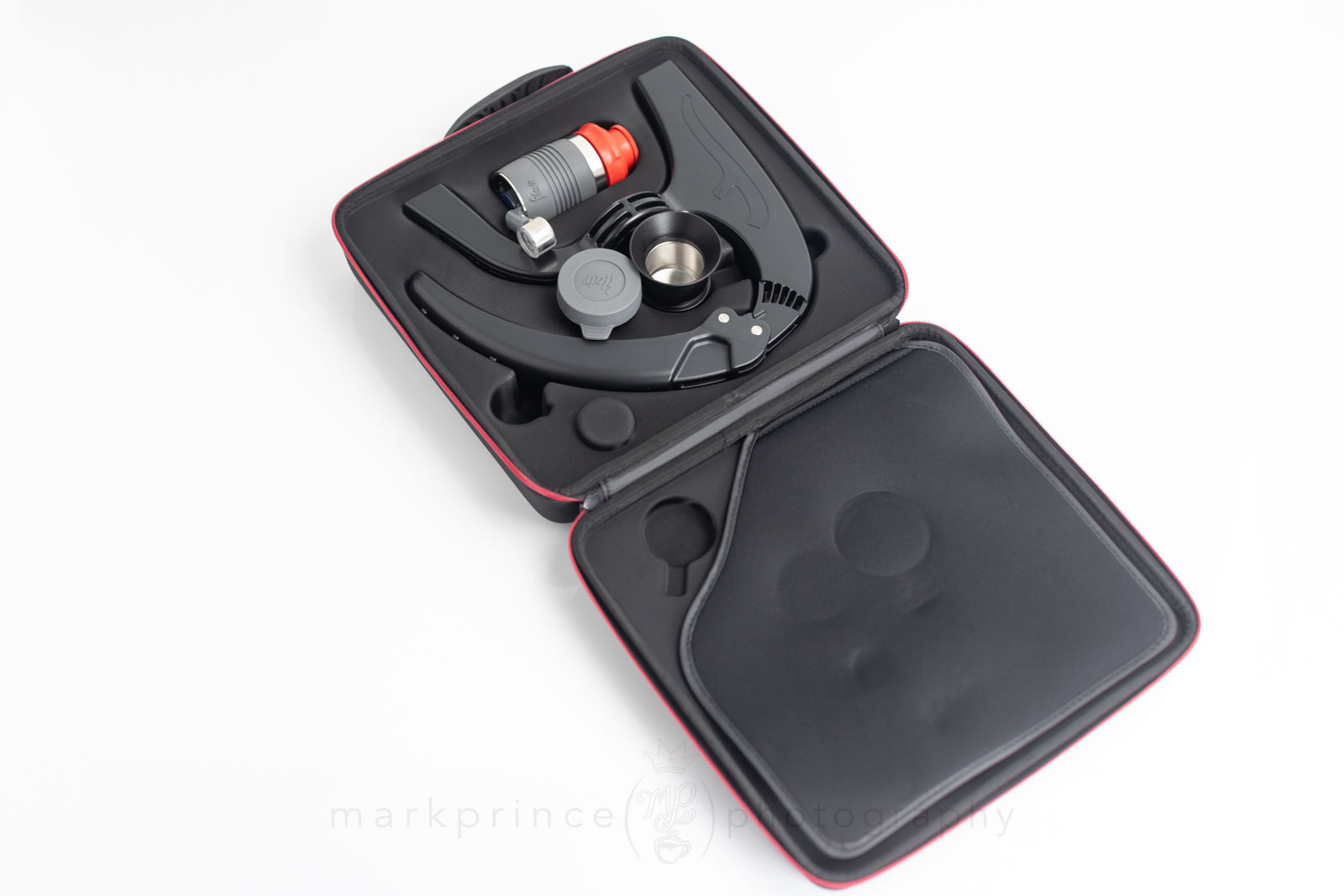
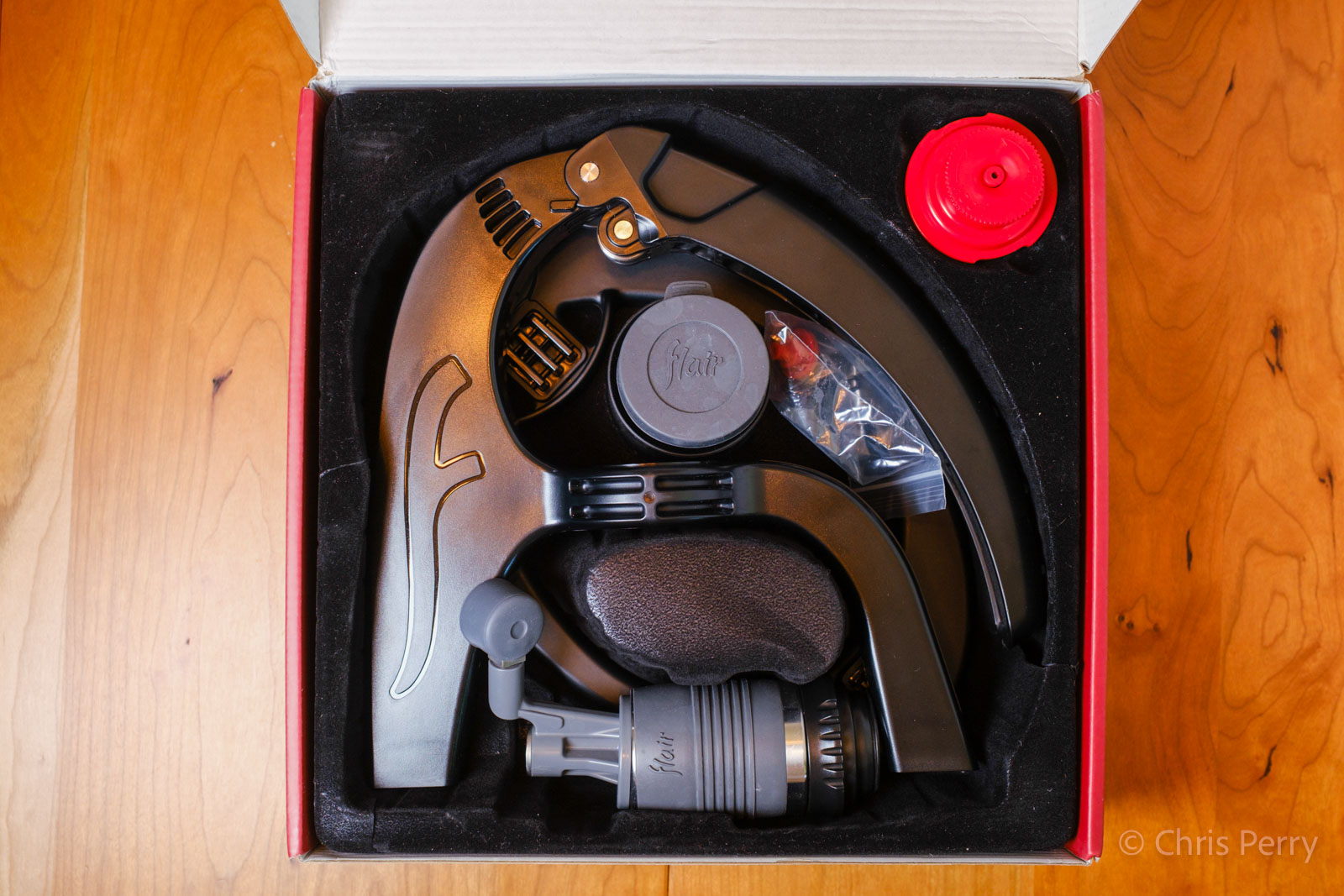
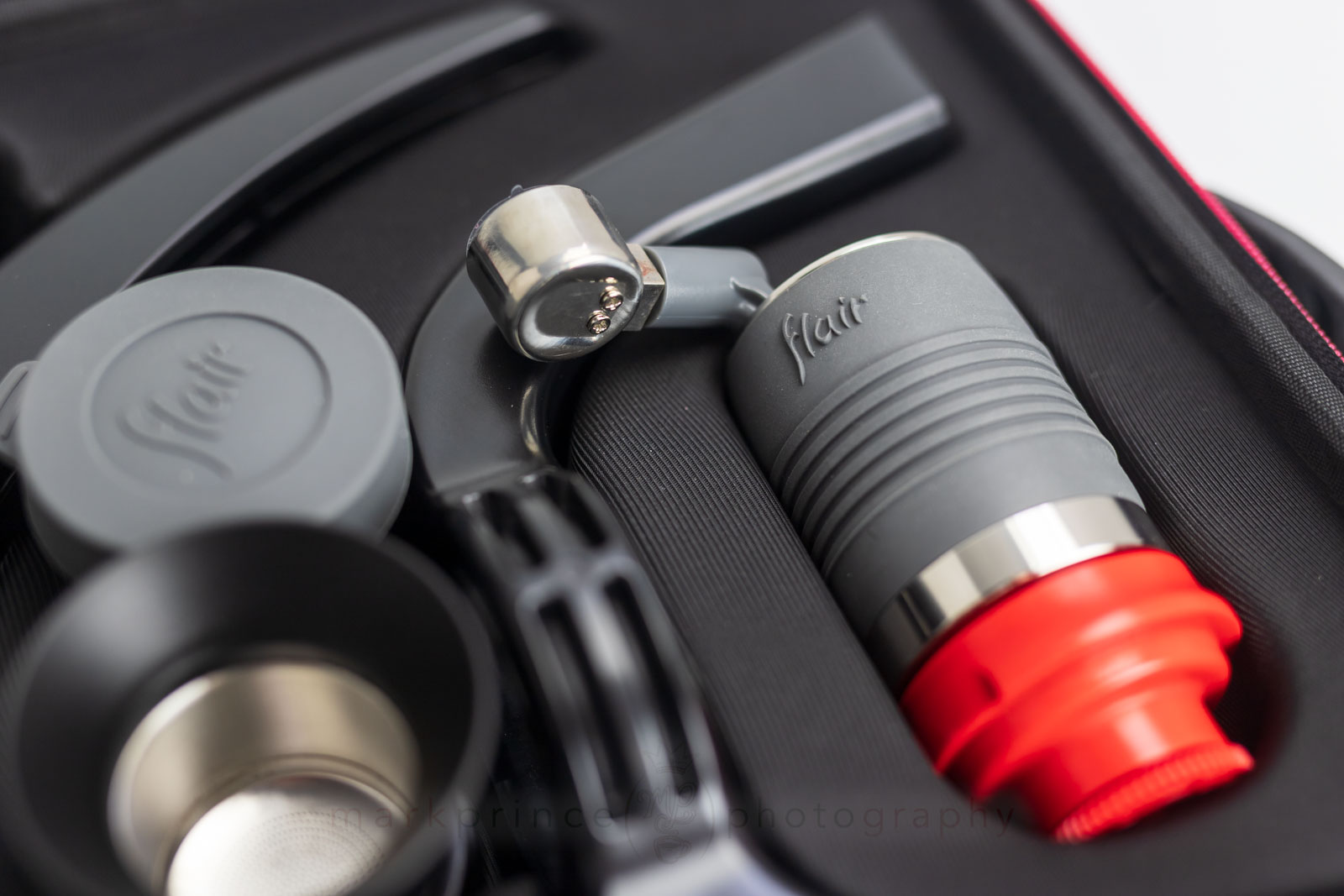
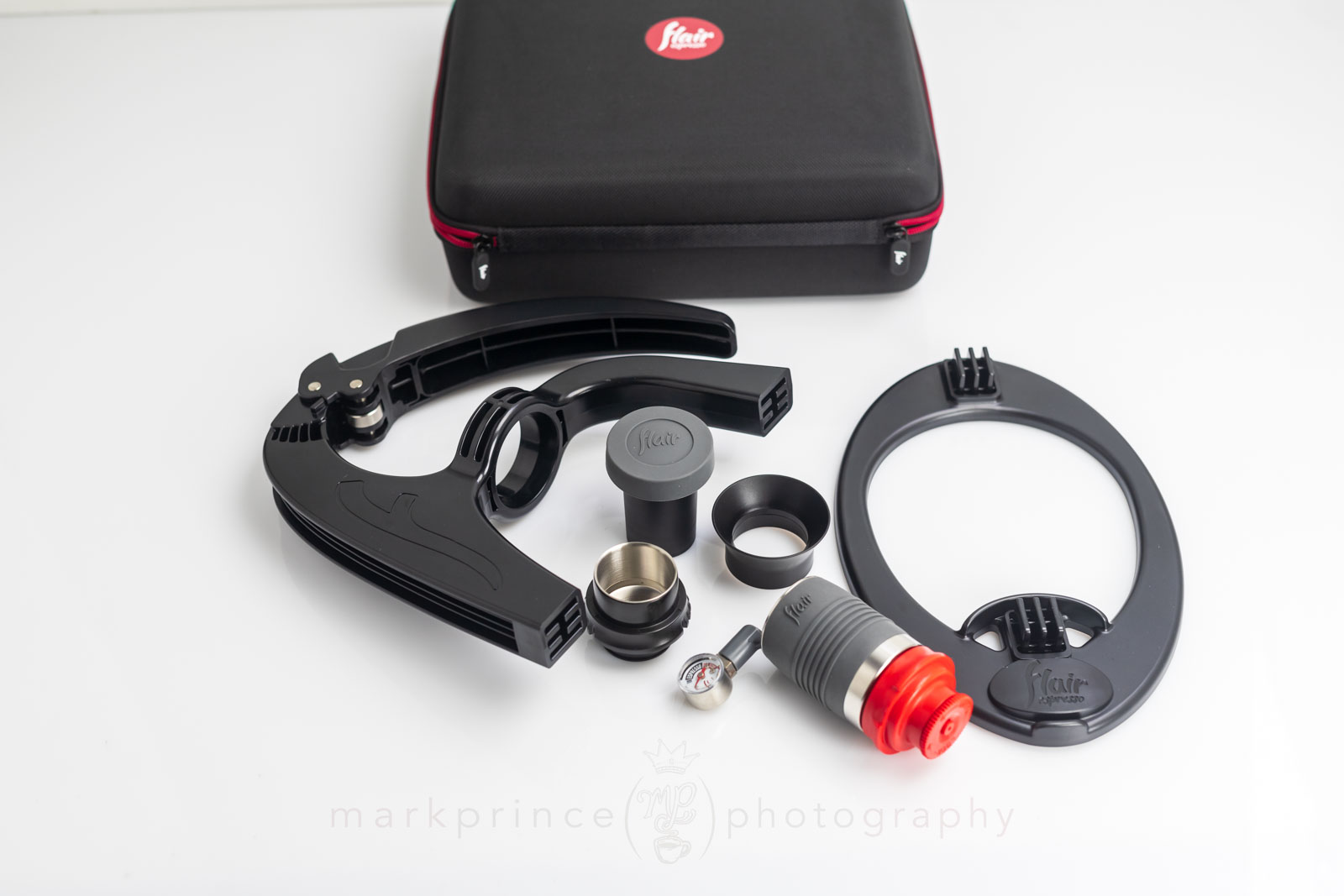
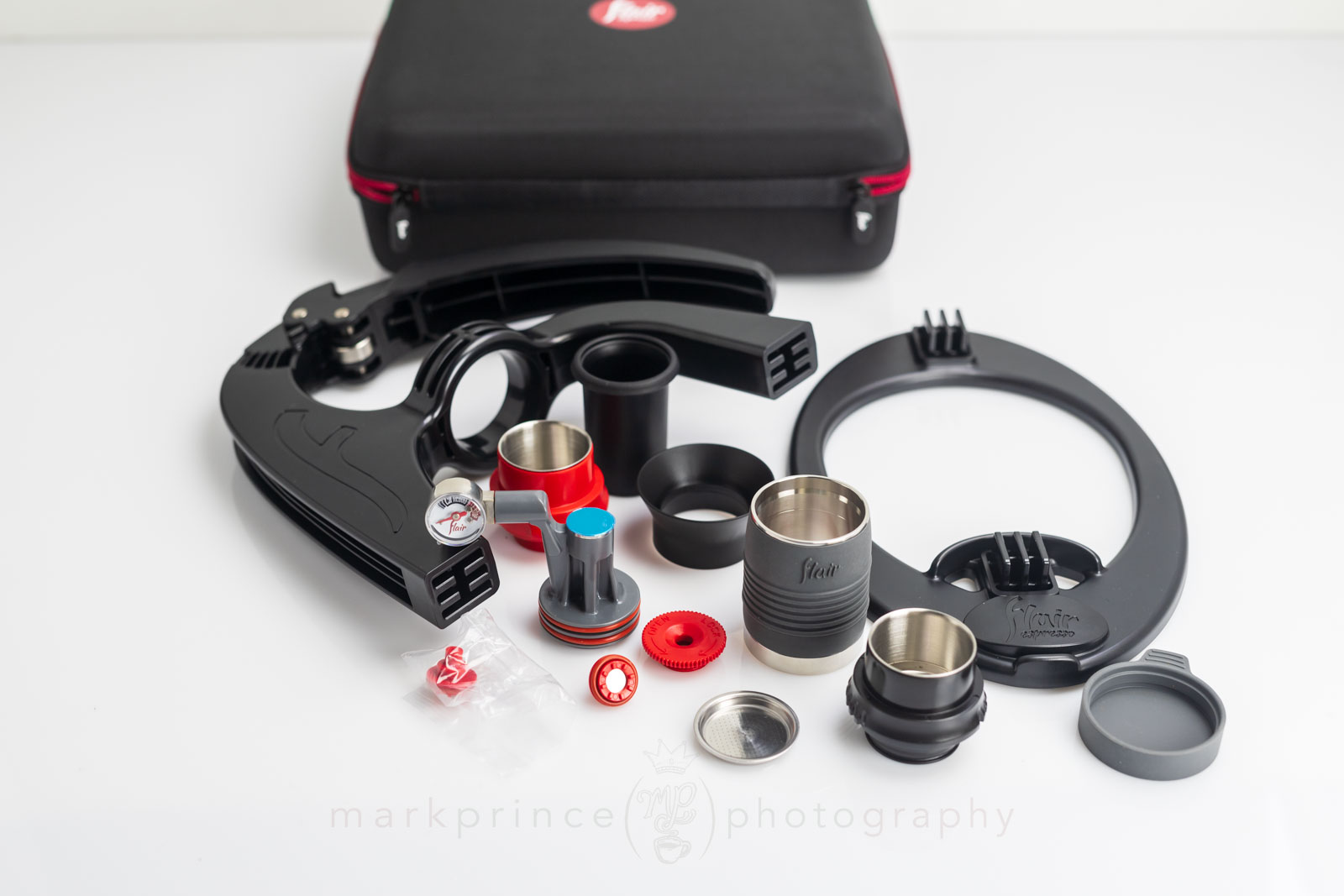
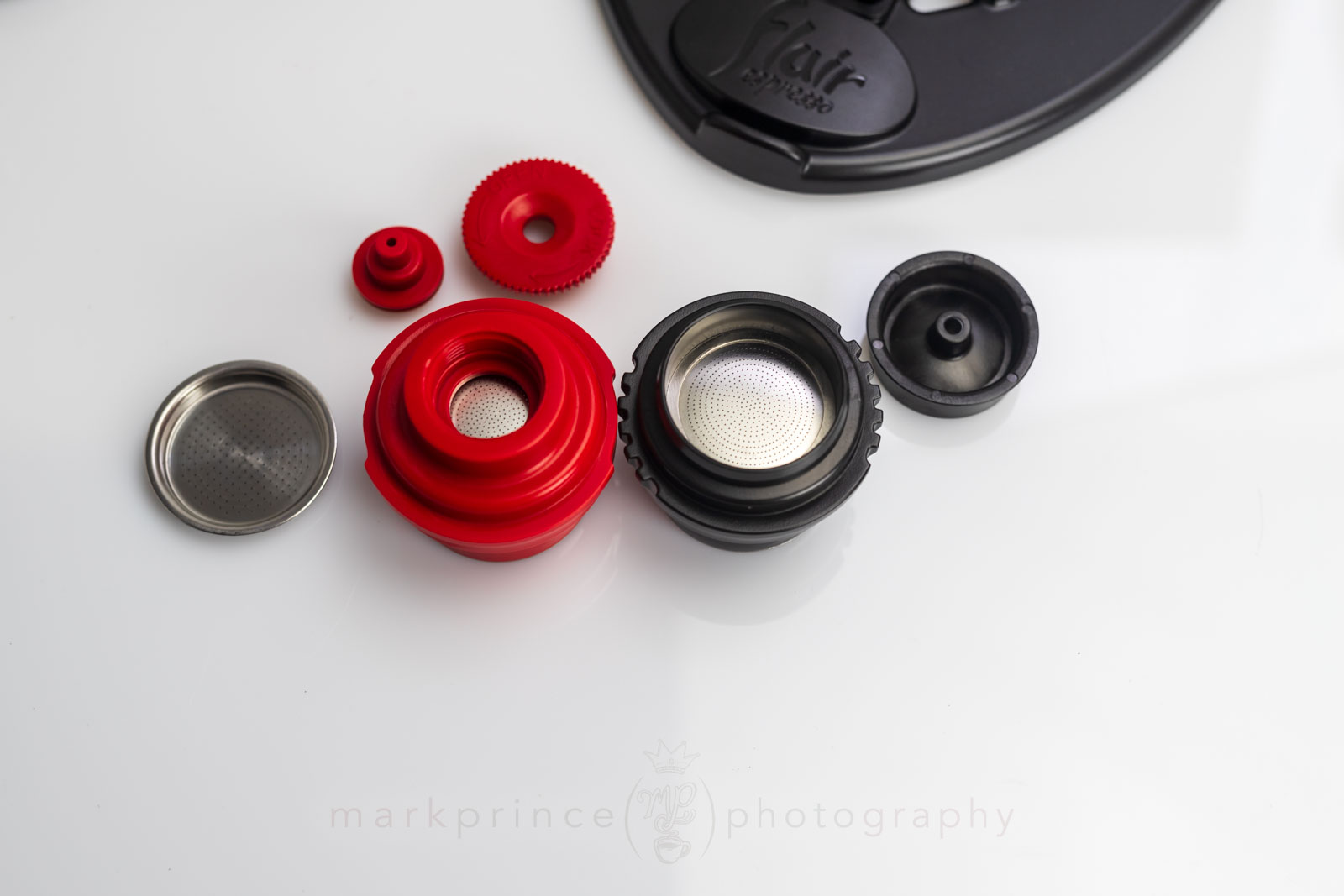
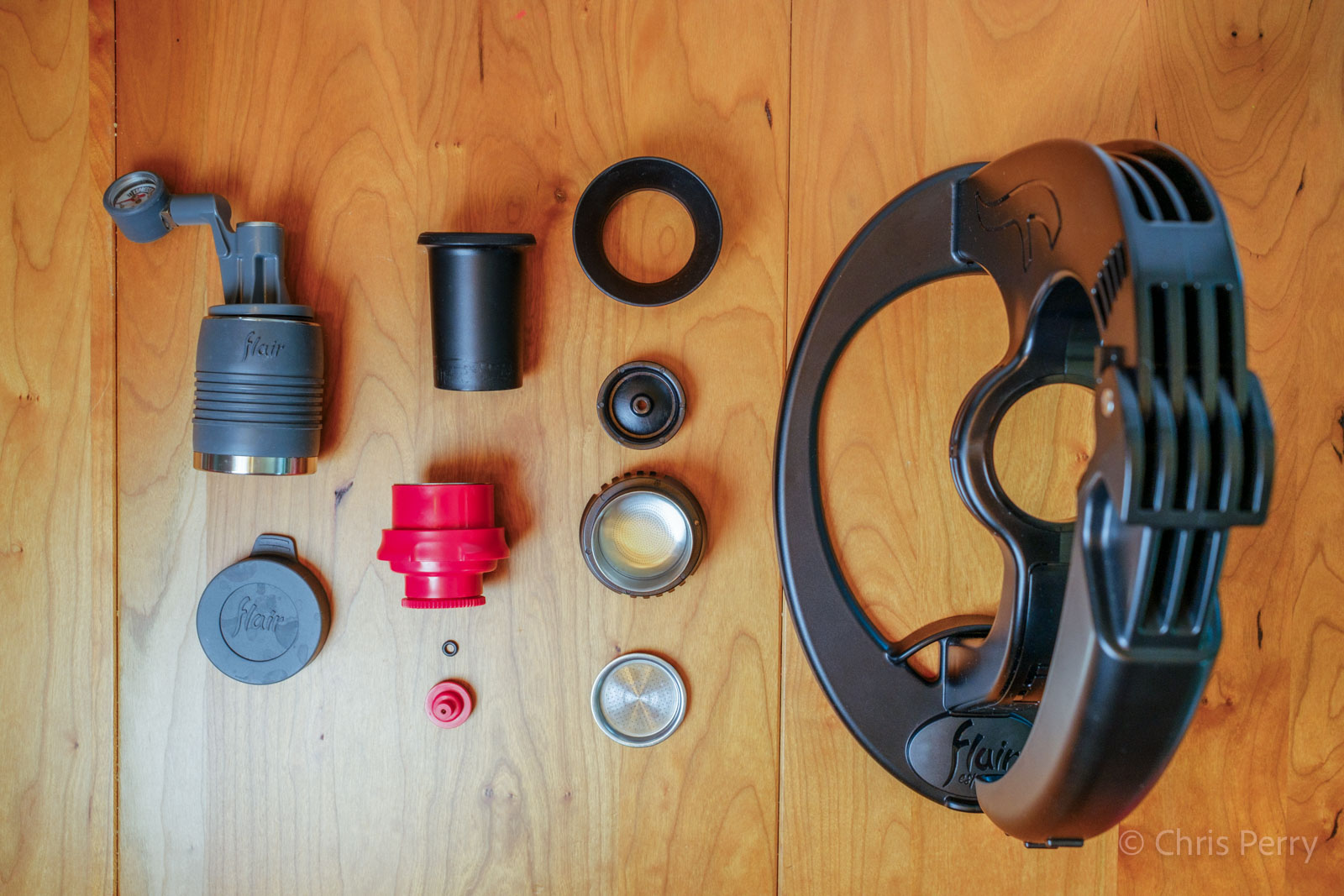
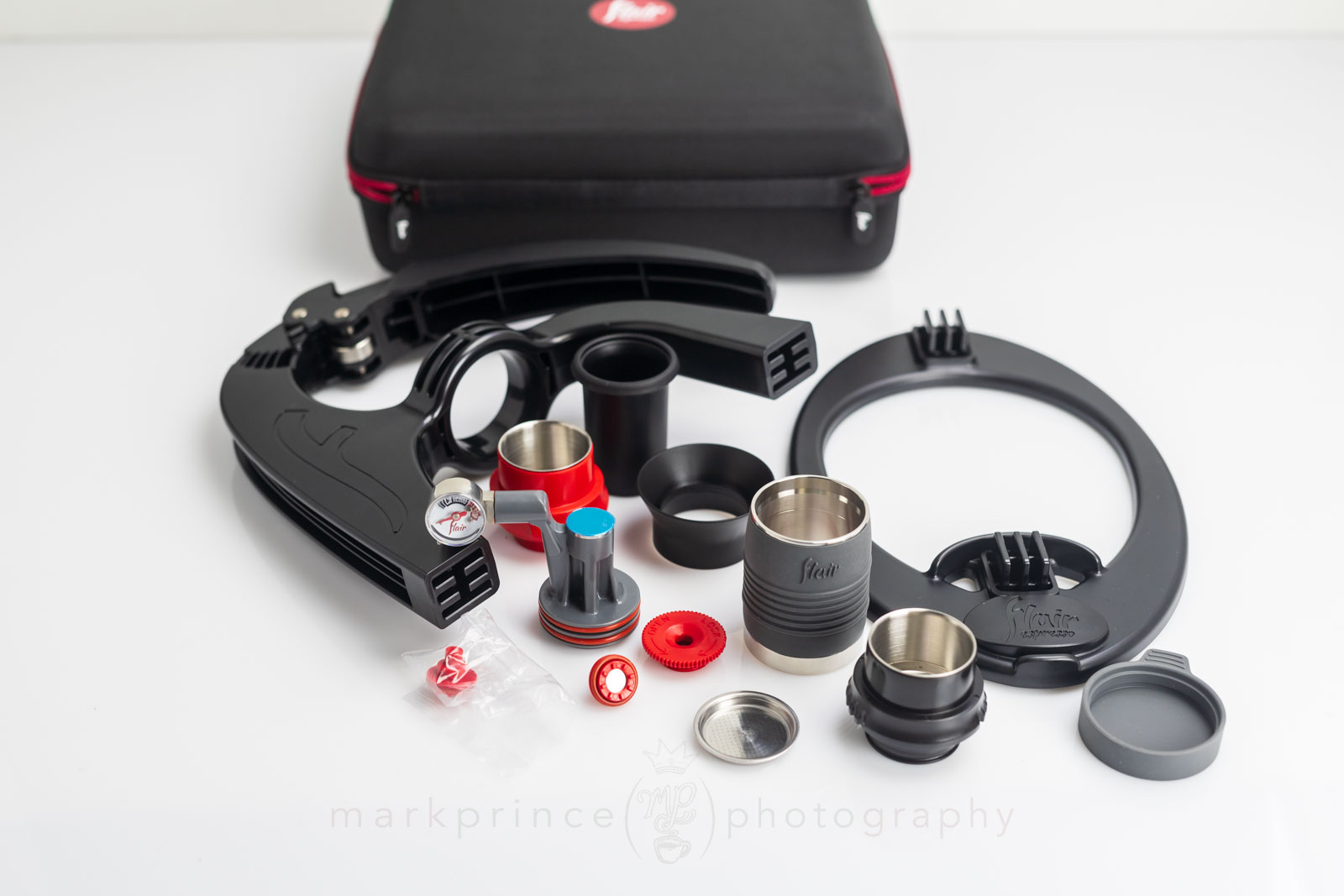
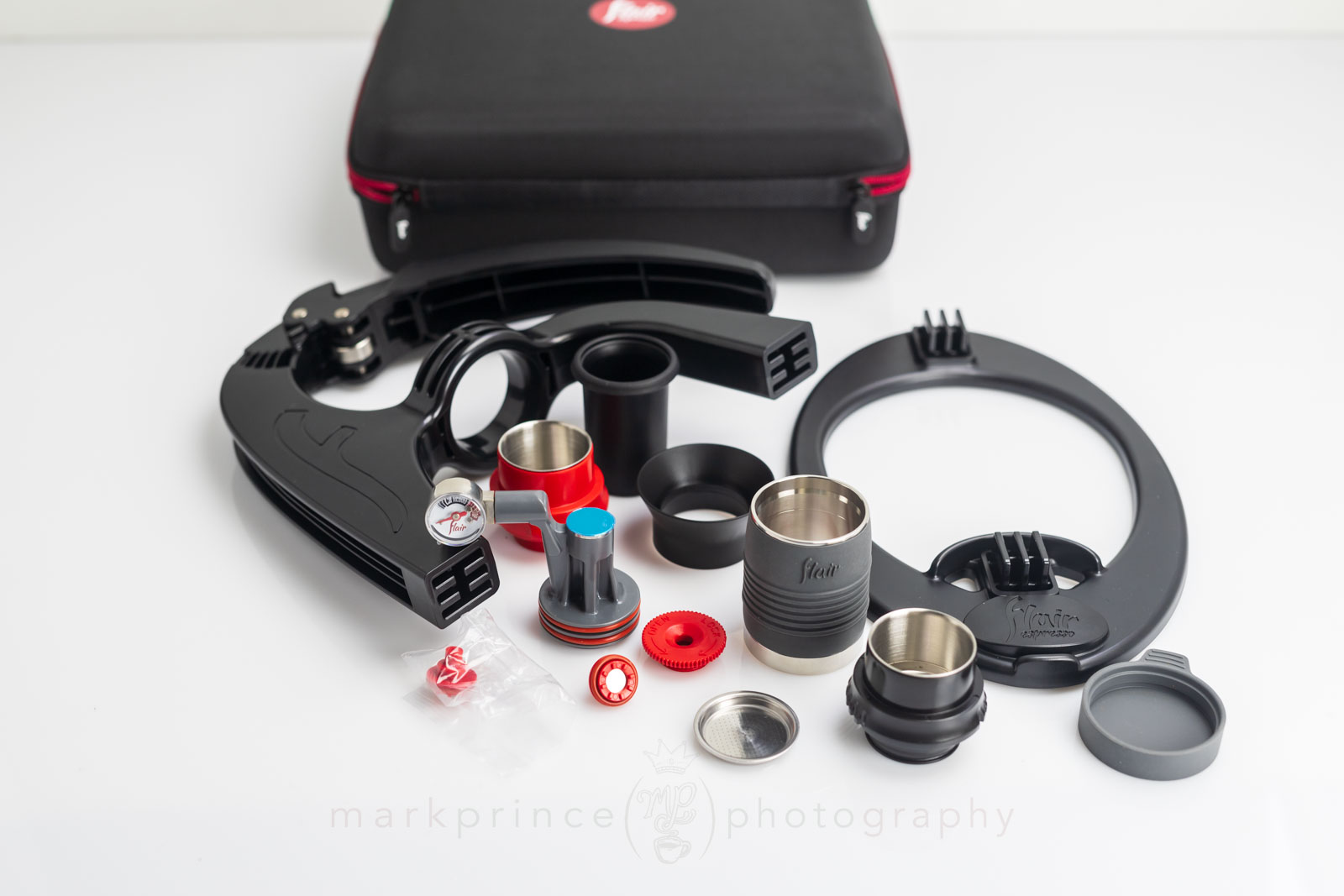
Nestled underneath the paper products is the main event, the Neo Flex separated into its key components, tucked carefully into a molded, pseudo-felt lined plastic packaging. You’ll find:
- Main Post & Lever + Base
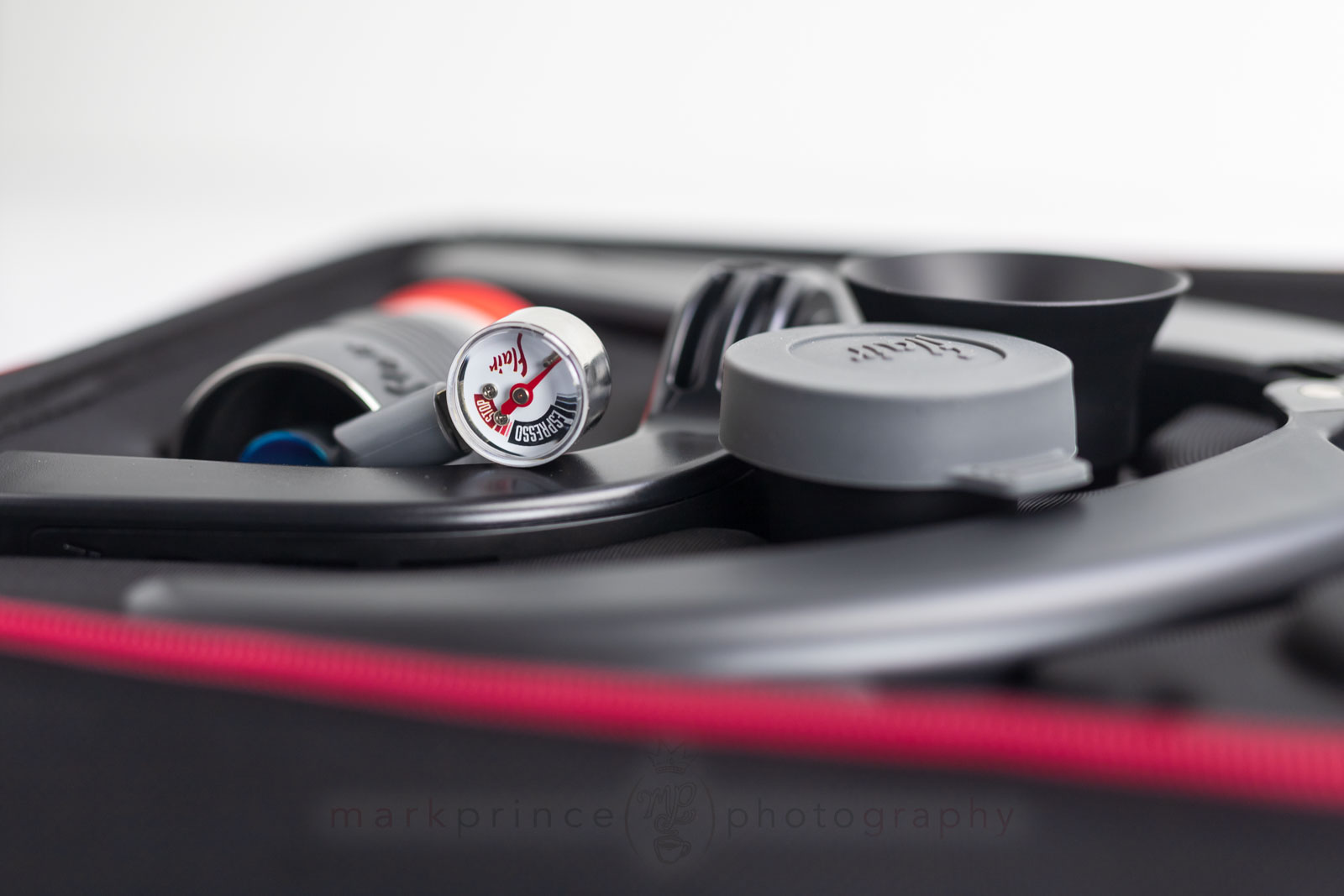
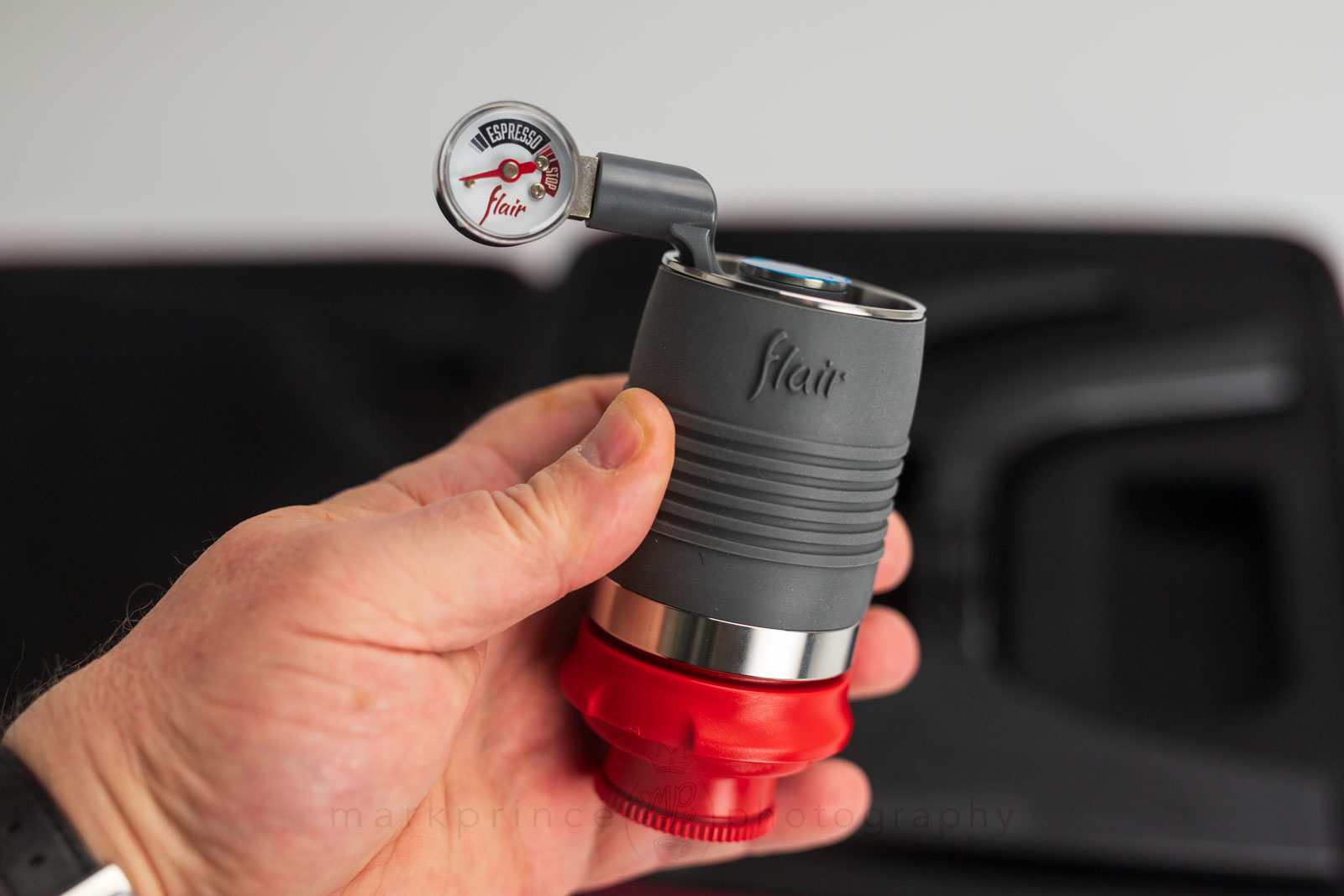
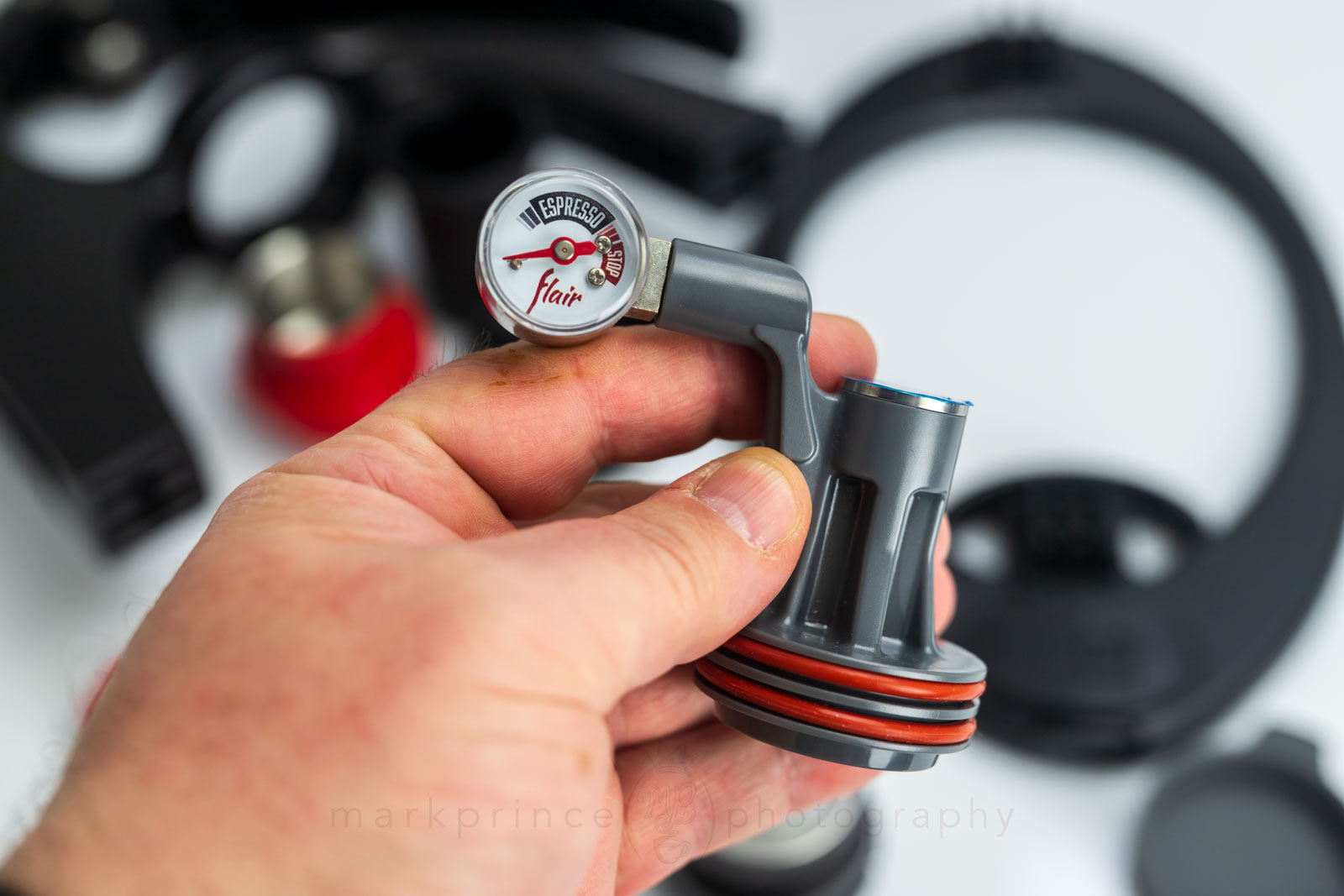
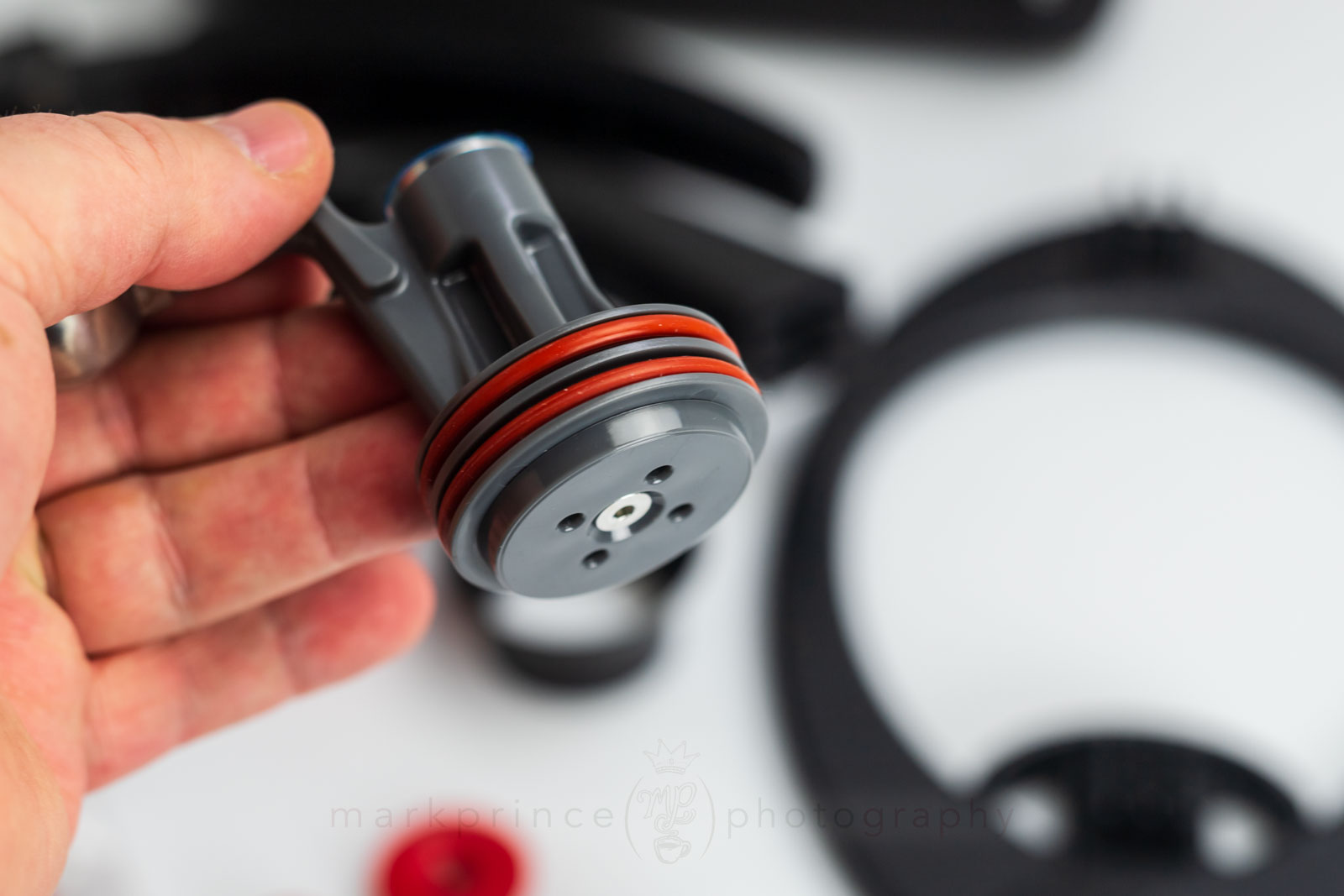
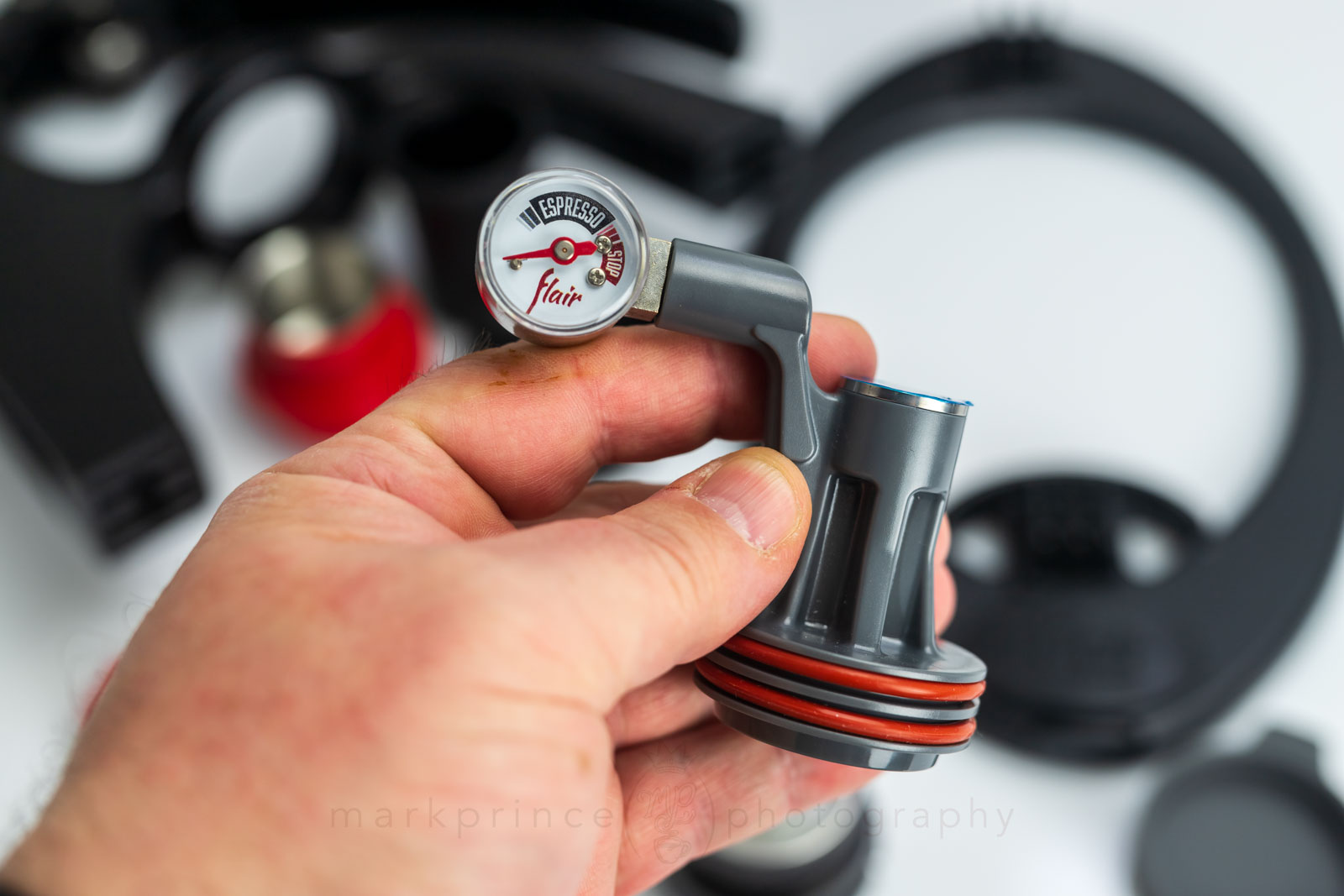
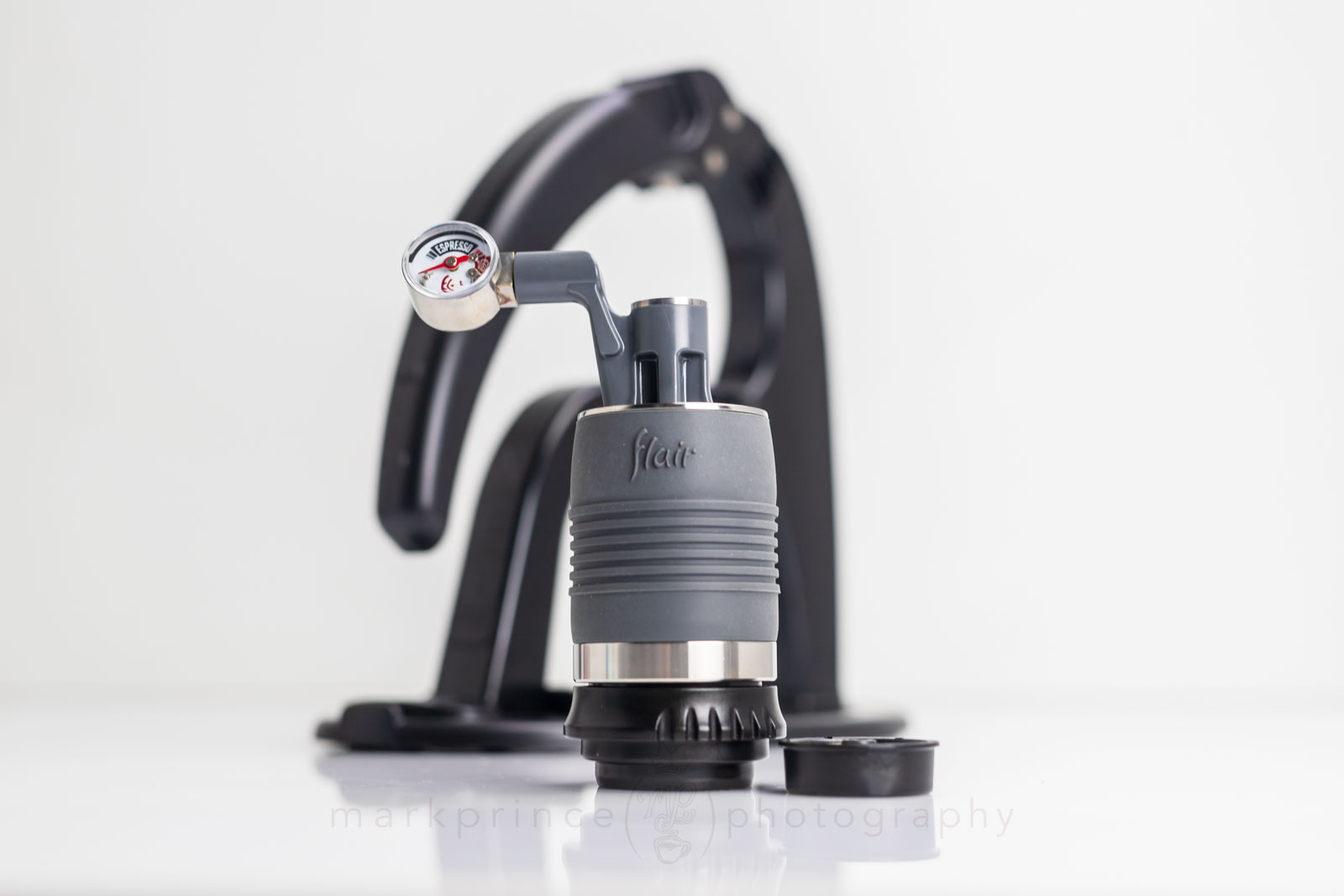
- Piston with Pressure Gauge
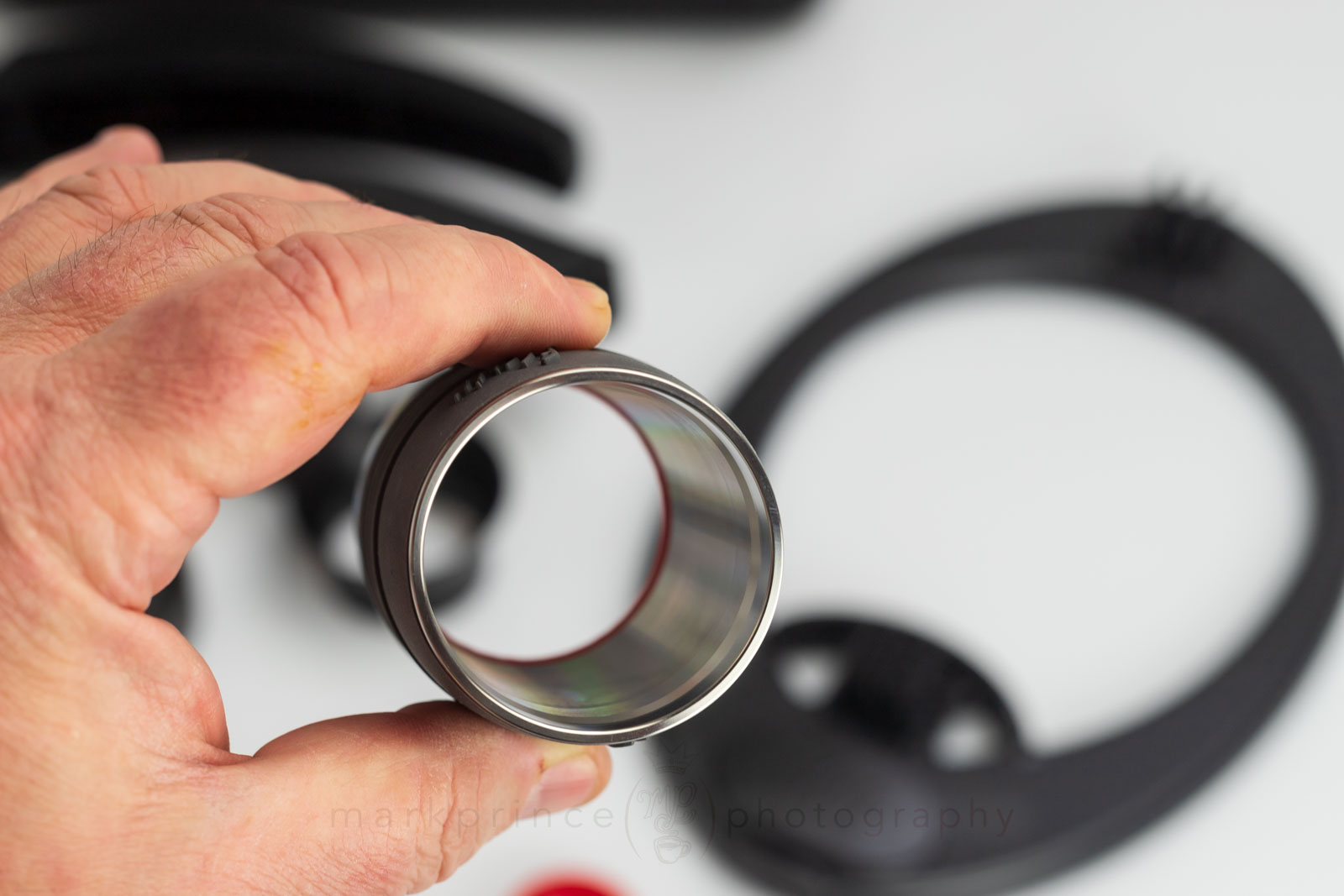
- Thin-walled Brew Cylinder
- Silicone cap for Brew Cylinder (for pre-filling with hot water)
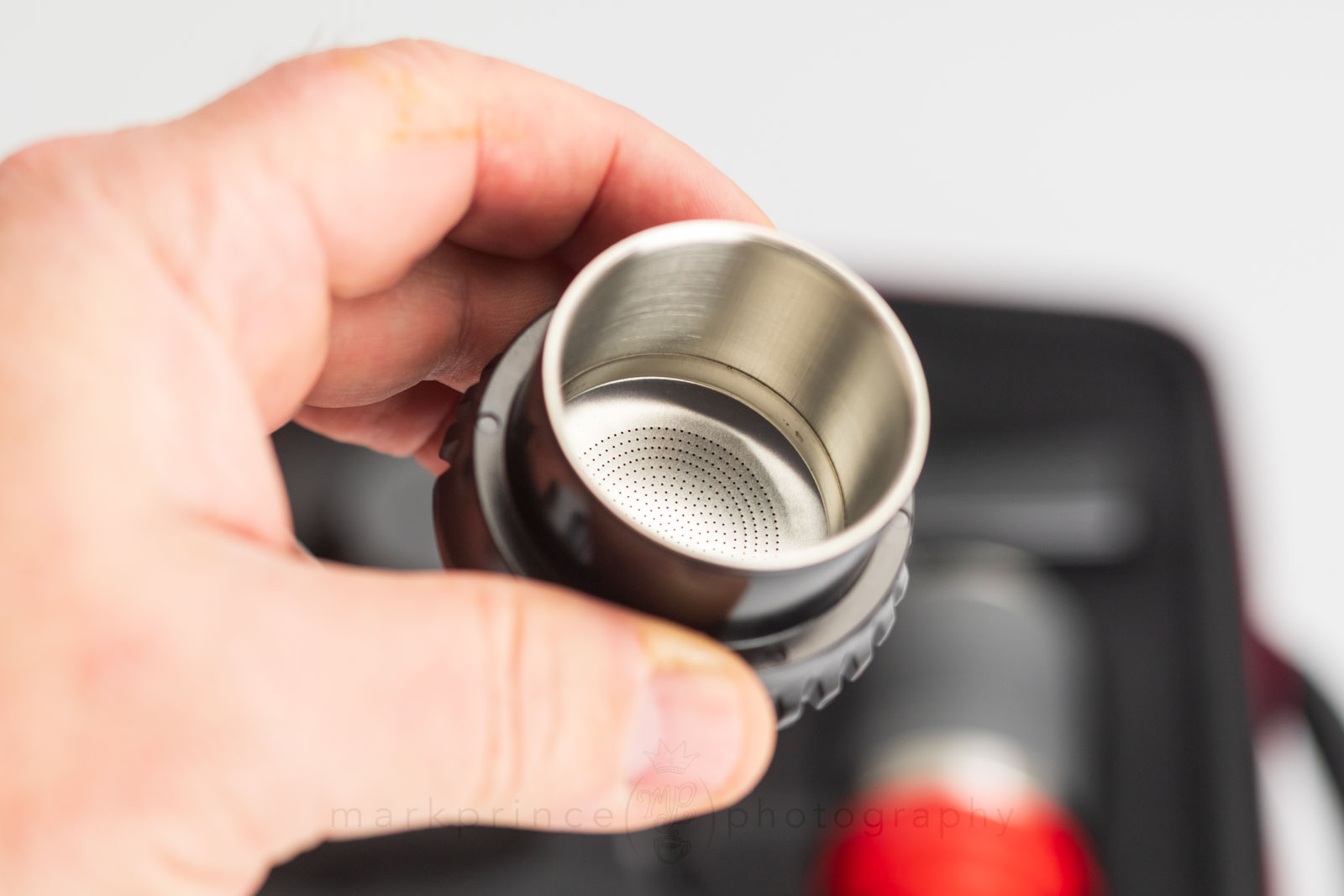
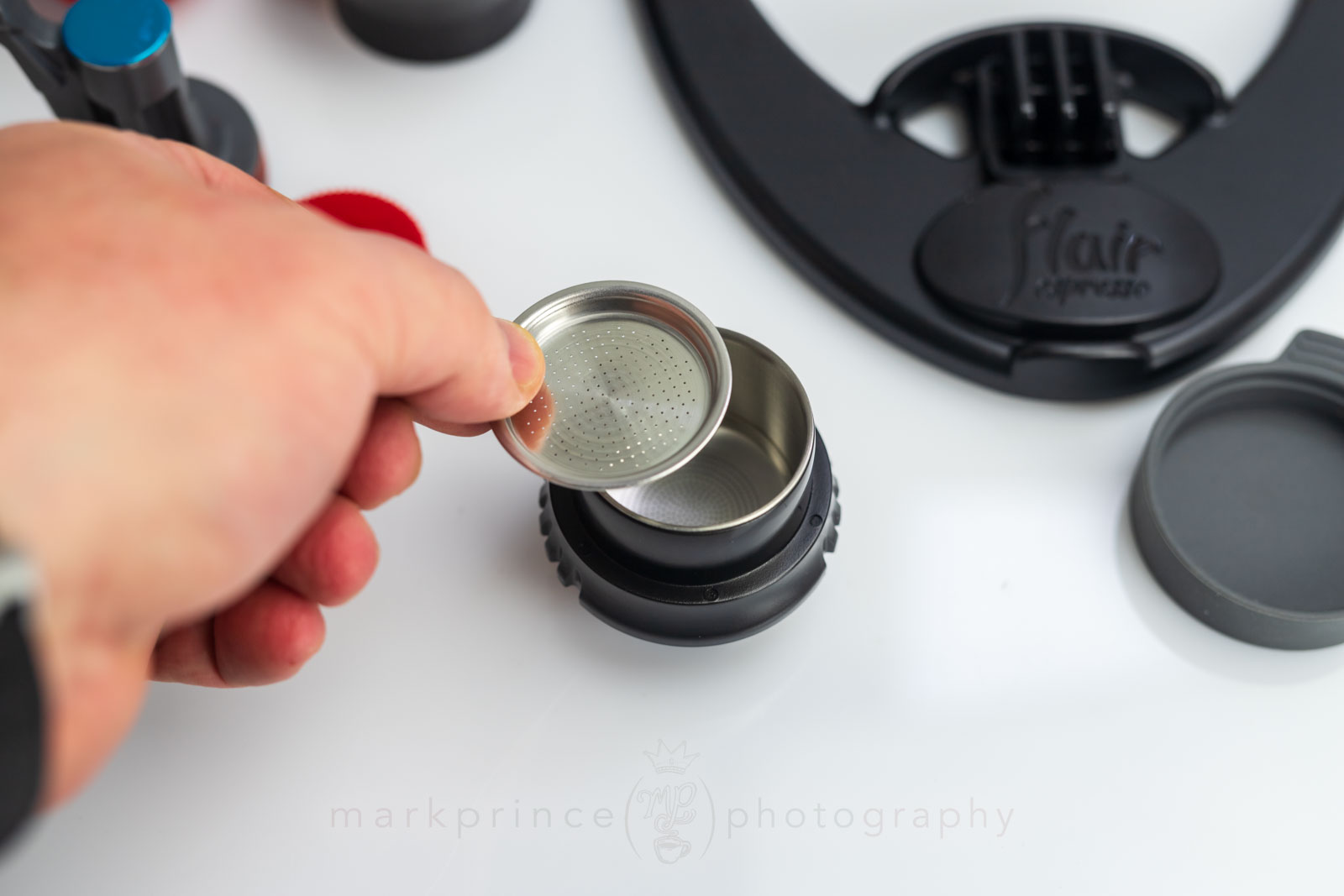
- Stainless Steel Dispersion Screen (found inside brew cylinder)
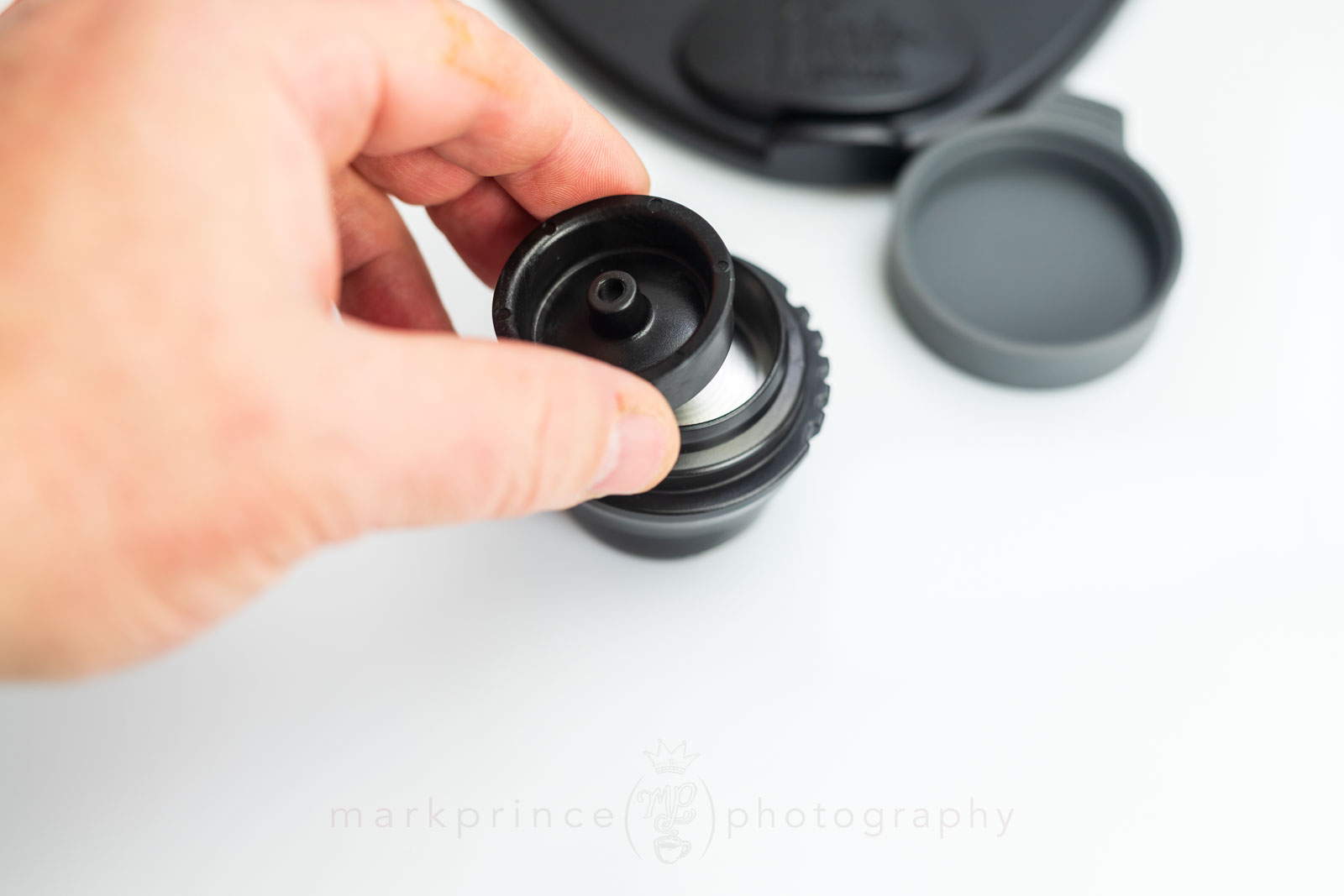
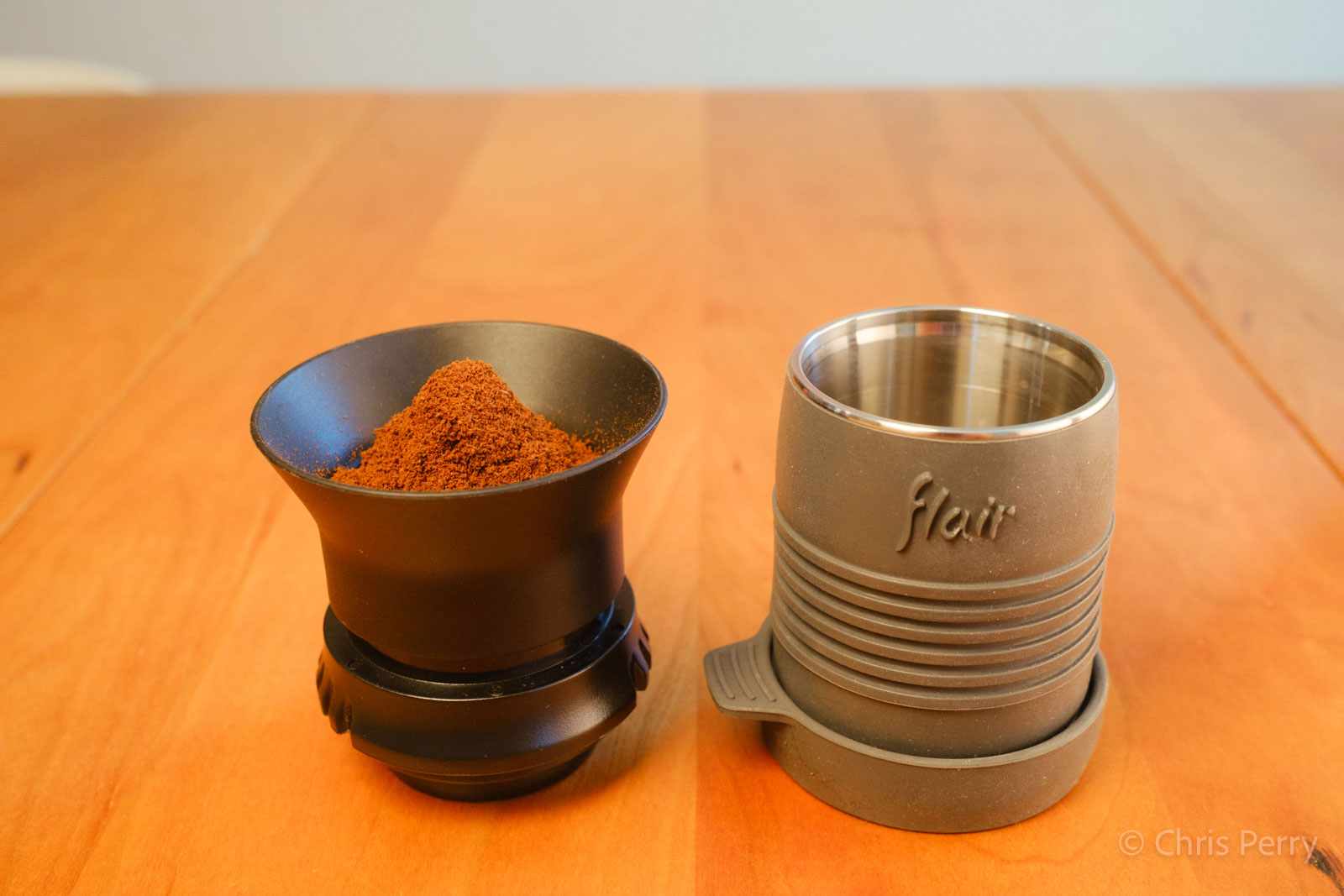
- Bottomless 2-in-1 Portafilter (black)
- Flow Control Portafilter (red)
- Silicone Preheat Cap
- Extra Flow-Control Spout
- Extra “Training” Pressure Release cap (may be discontinued in the future)
- Dosing Cup/Tamper
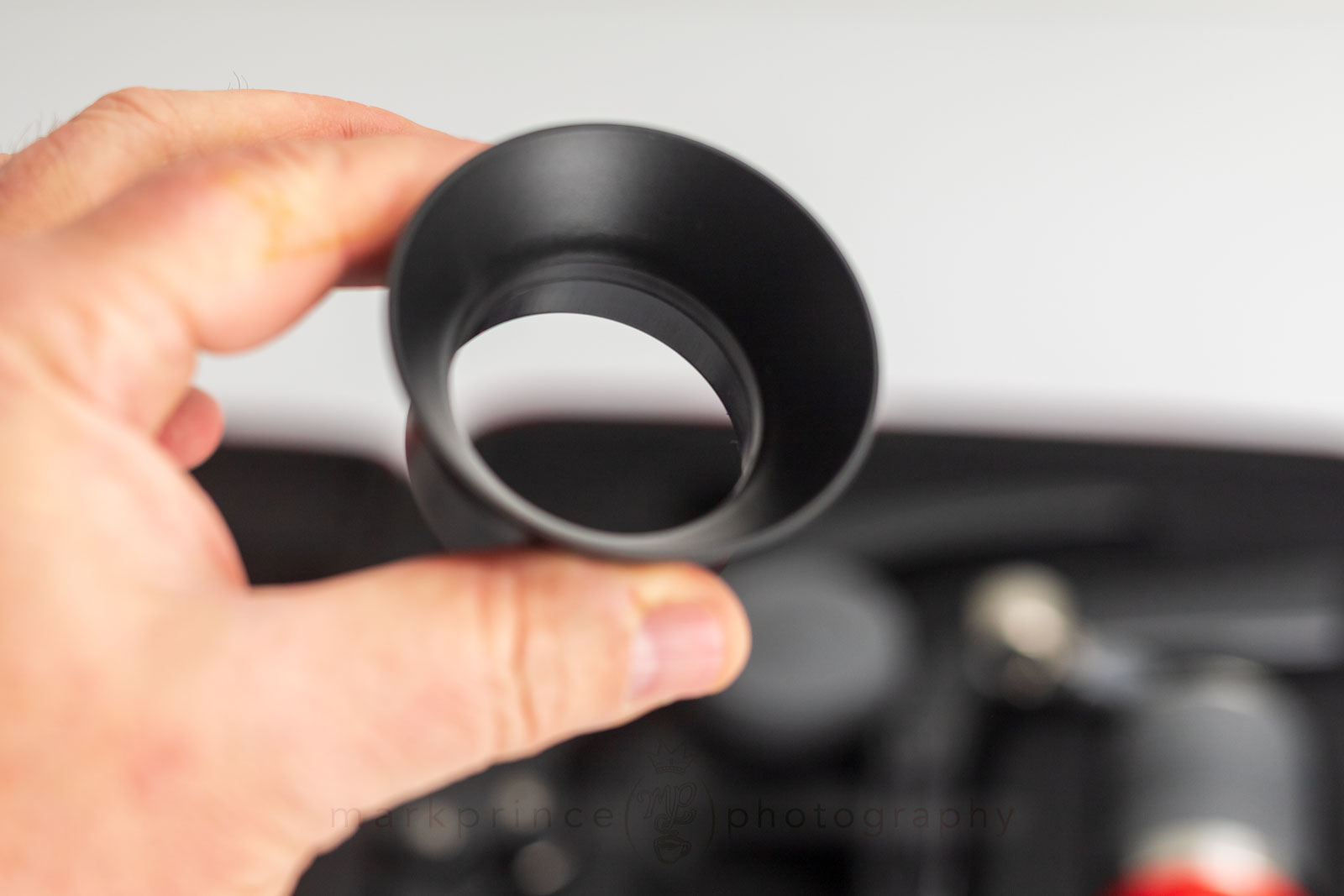
- Funnel
At first glance, the amount of components can feel a little overwhelming, especially if this is something you’re expecting to have to assemble and disassemble with every use. That said, assembly is really quite trivial, and it takes just seconds to get “brew ready”. Keep in mind, this machine has two complete brew heads, one for use with preground coffee (the red bits) and one for use with fresh ground coffee (the black parts), and you’ll only be using one of these day to day.
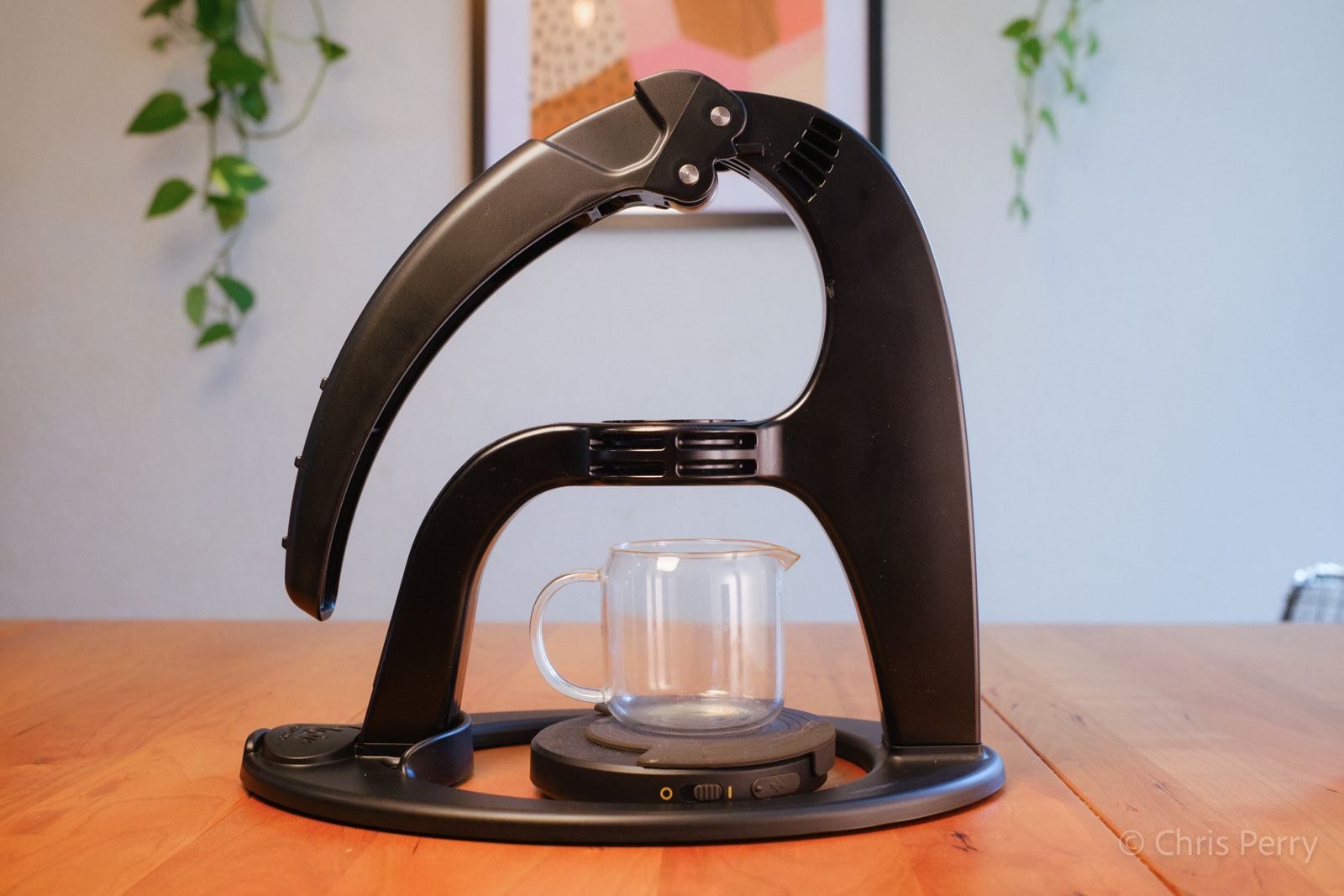
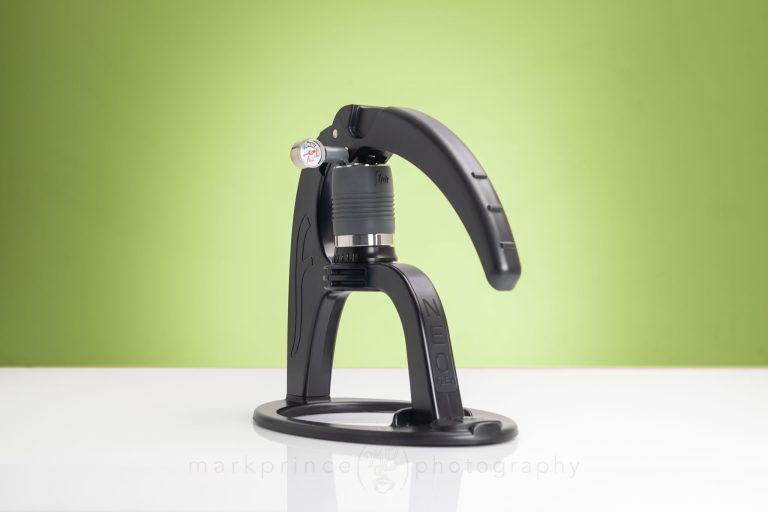
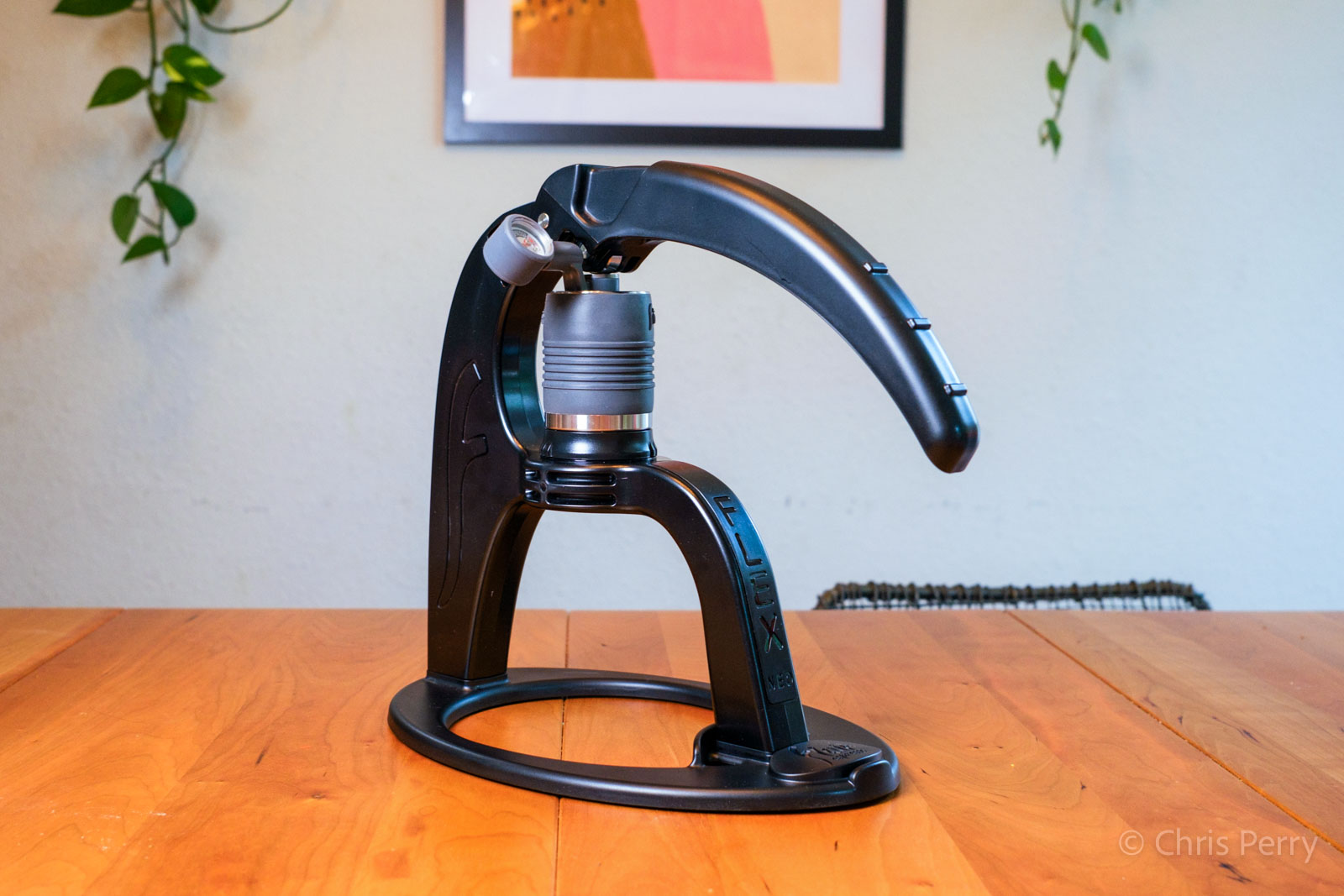
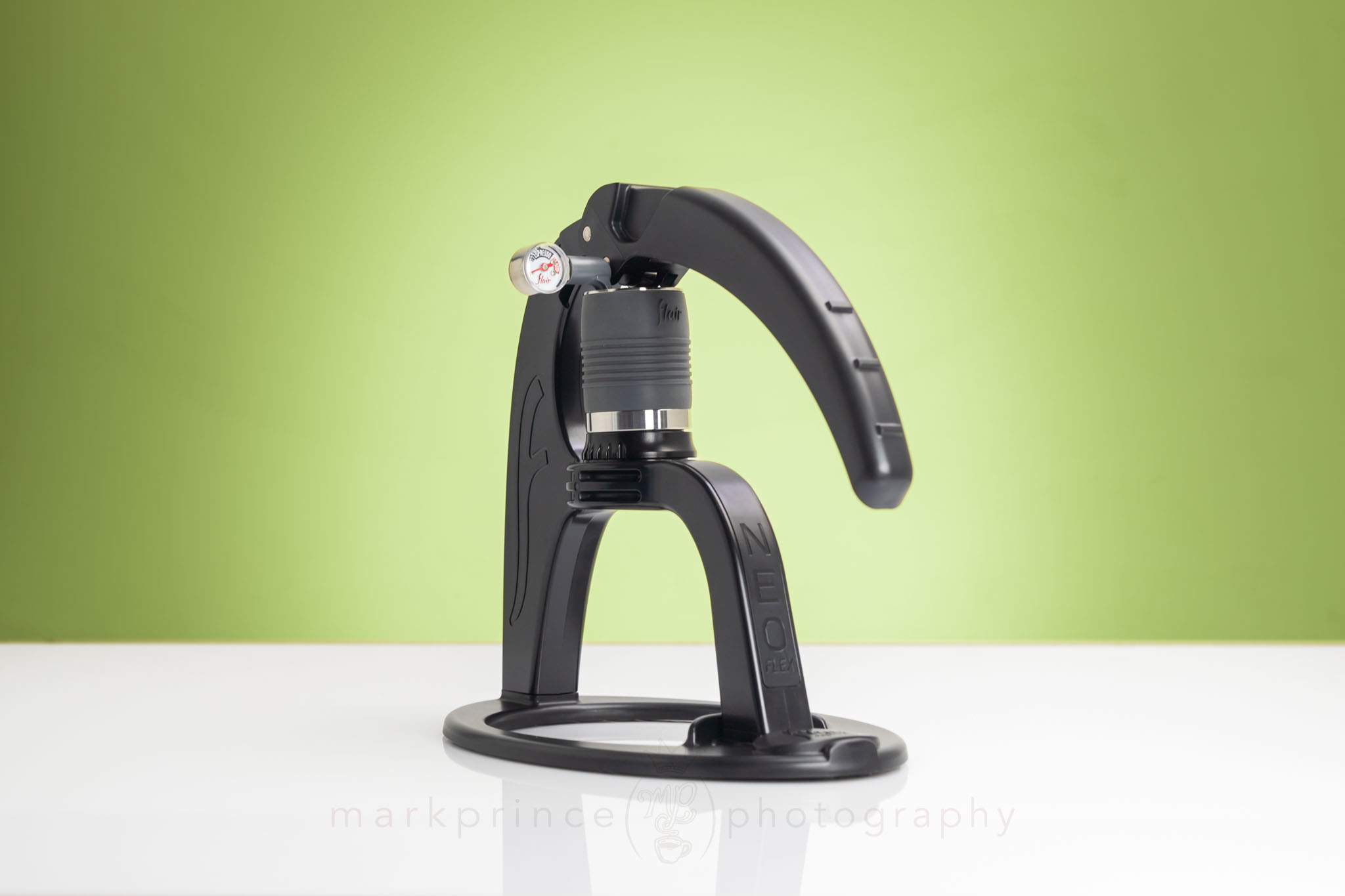
All in, the Neo Flex weighs 3.2 kg (4.5 lbs), and fully assembled has a footprint 29 by 19 by 26.75 cm (11.5 by 7.5 by 10.5 inches). It can handle a max dose of ~18 grams of coffee, which will give you a maximum yield of about 45 ml of espresso depending on your grind size and the dose of coffee.
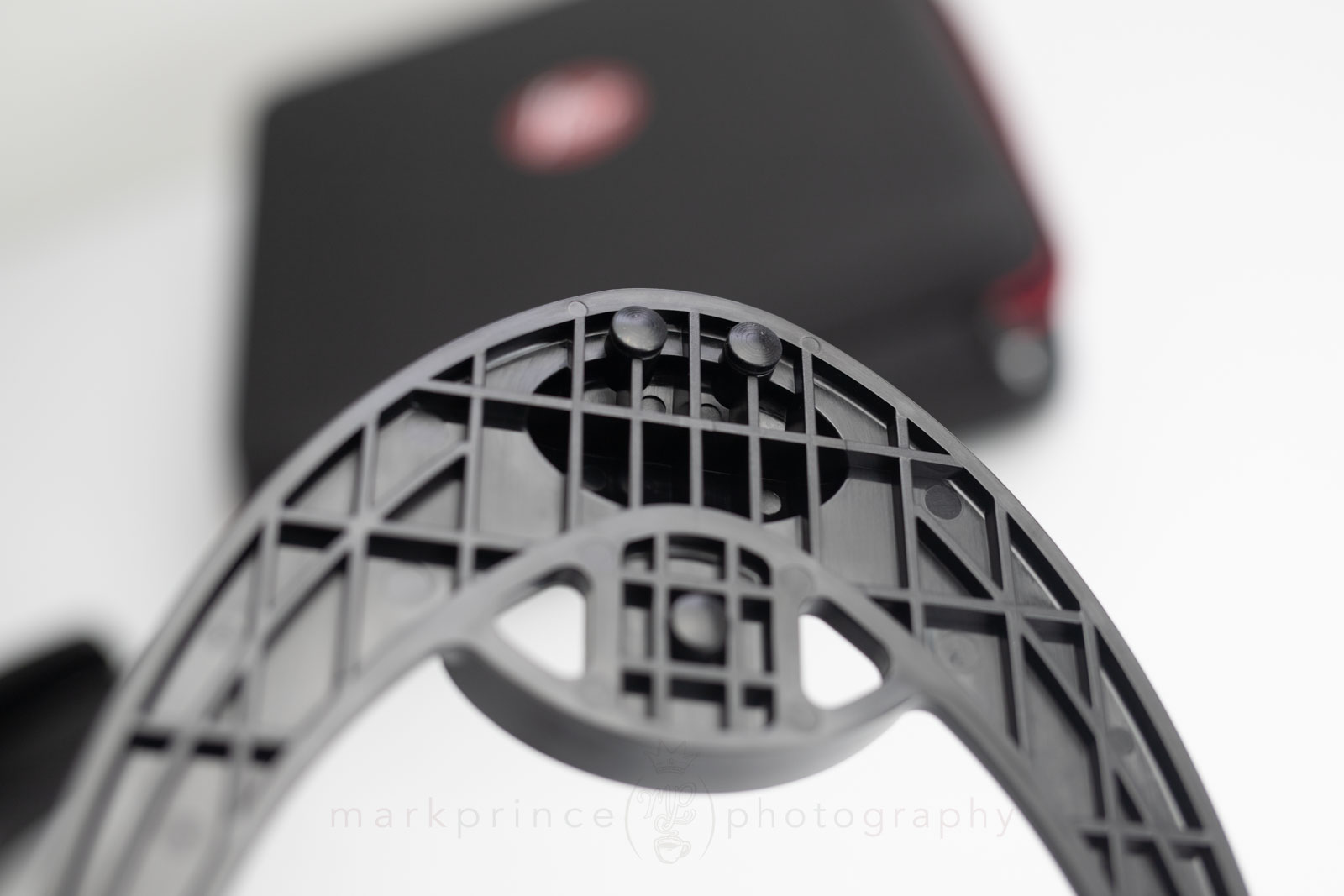
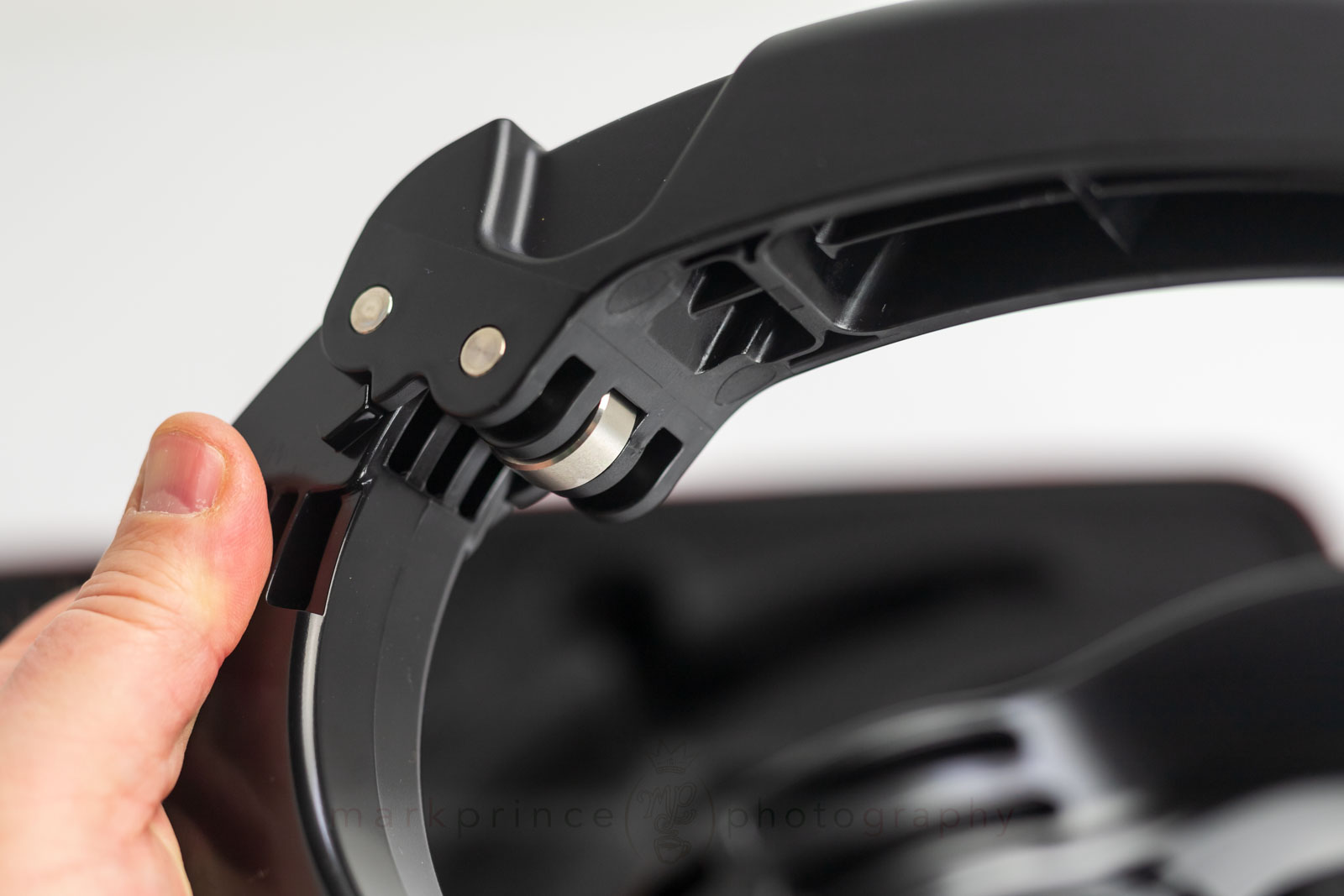
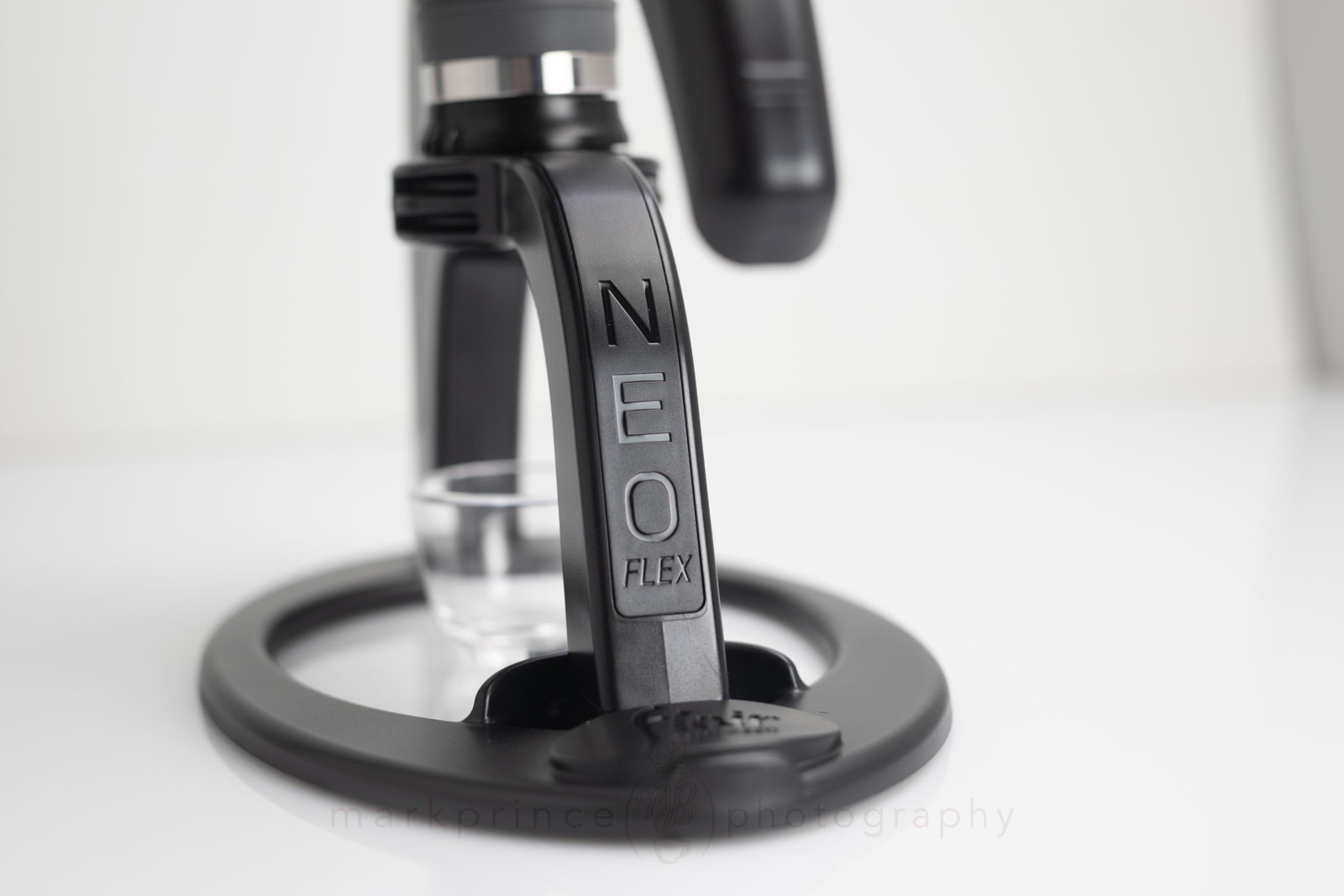
The feel of the components in hand varies wildly. The ultra-light polymer of the stand and lever doesn’t pretend to be metal; it feels exactly like what it is, which is: engineered plastic. If you give the frame a firm squeeze, you can literally feel the slight ‘Flex’ that gives the product its name.
By comparison, the no-preheat brew cylinder, pressure gauge, and two included portafilters feel much sturdier and higher quality, albeit not “premium” by any means. To be fair, one should not expect premium from a $99 espresso set-up, so the most important thing is how does it feel to actually use?

Support CoffeeGeek
If you enjoy and learn from this resource, please consider making a one time or recurring donation to help support our work and fund purchases for future reviews.
Using theNEO Flex
Assembling and pulling shots with the Neo Flex is straightforward. Like any manual lever machine, it’s a hands-on process, and with the Neo Flex it breaks down into two parts: assembling the components and extracting the shot.
Assembly Required, But Minimal
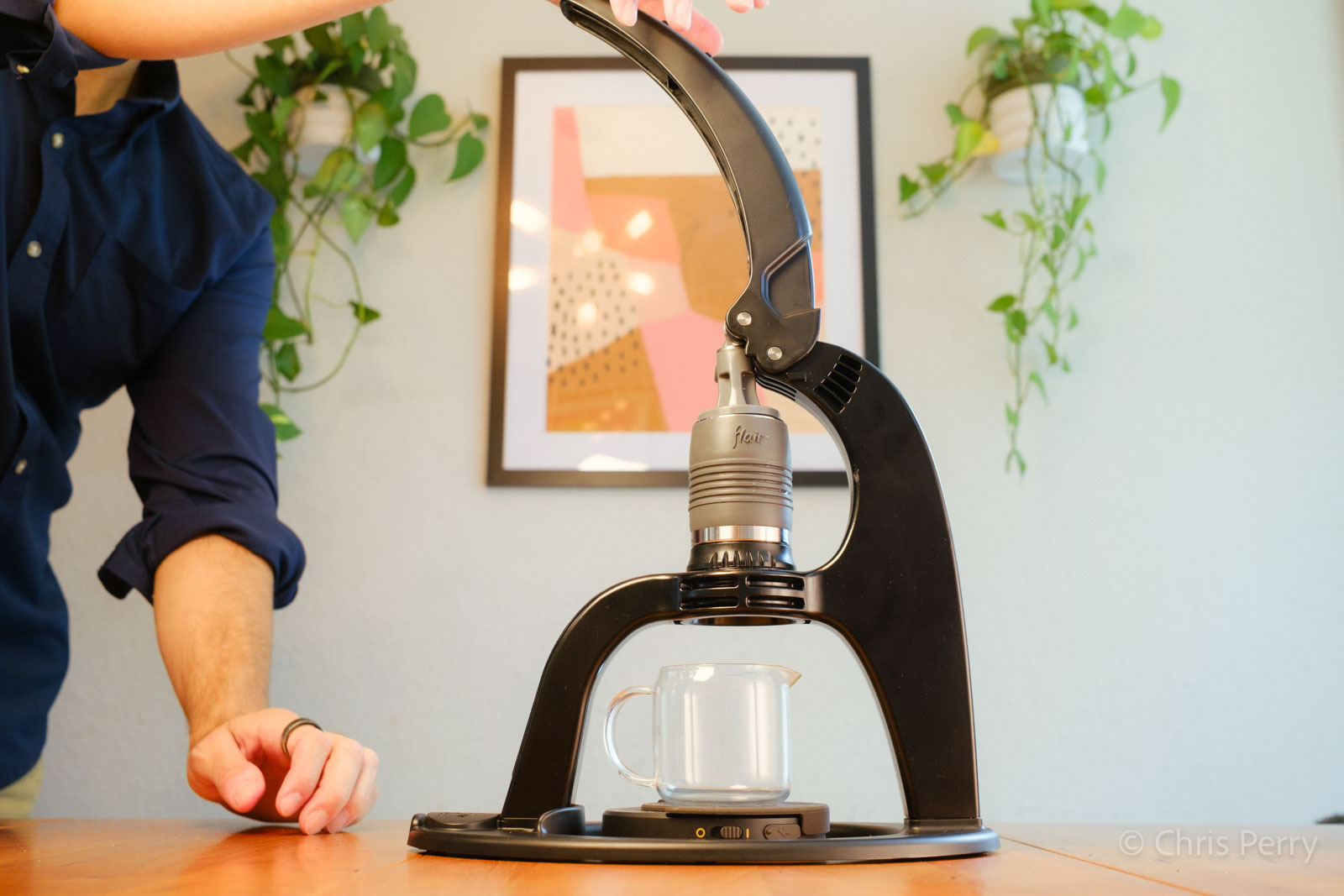
Assembling the Flex is straightforward. There are essentially two parts to assemble: an oval-shaped stand that you connect the brew head holder and lever to (it is plug-and-play). If you plan to leave the Flex out on your counter, then you only need to do this once. It is trivial to set-up and take down though, so for folks with less counter space or who are on the go, this is not overly burdensome to prep. Next, and more involved, is the prep and assembly of the brew components.
Preparing the Shot
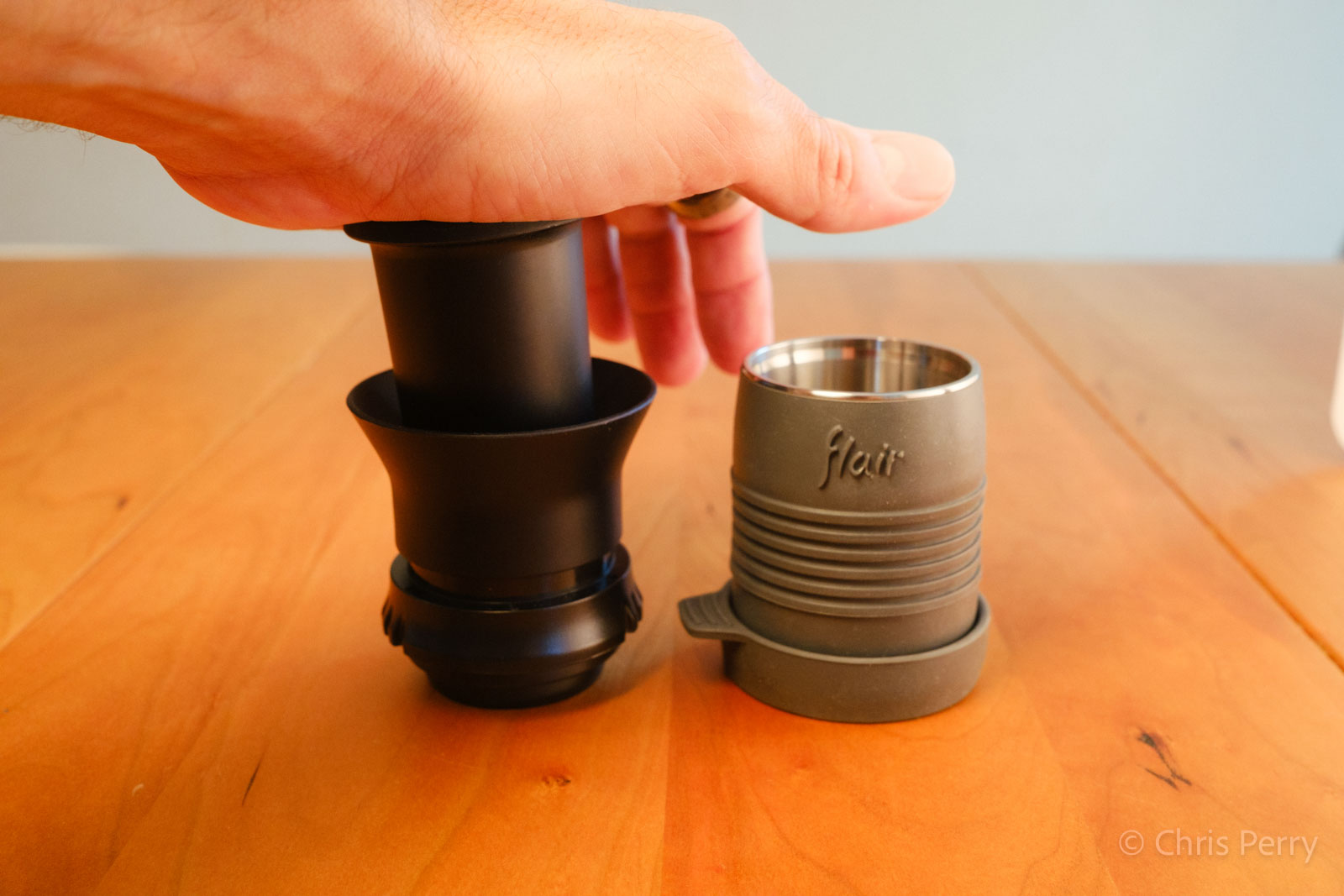
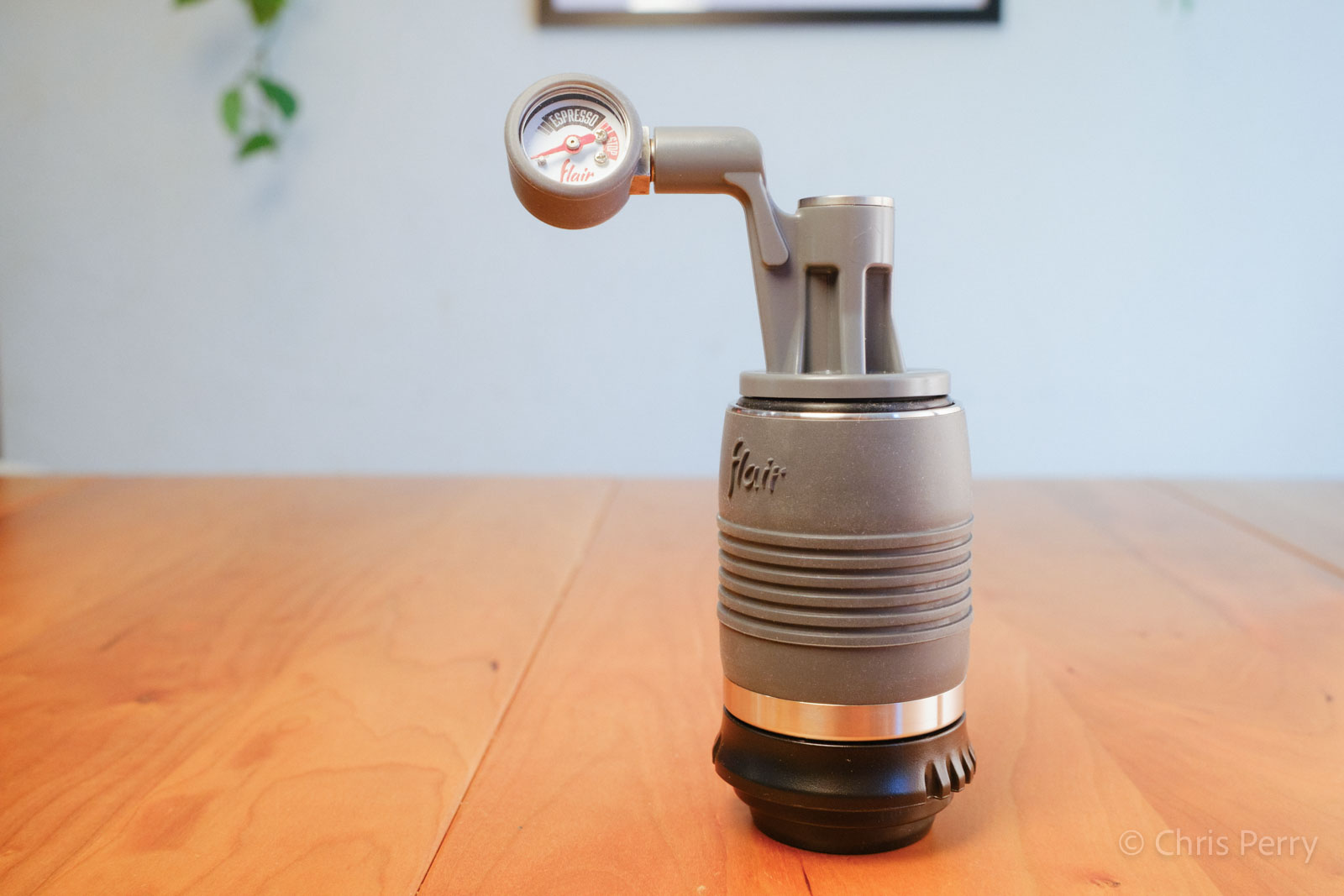
The brewing components of the Neo Flex include the insulated brew cylinder (which holds a max of 60ml of water when filled up), a portafilter (accommodating a max 18g dose of coffee), a shower screen, a pressure gauge, and an optional drip spout for a cleaner shot pull. All of these must be put together and taken apart with every shot.
It doesn’t take long, and the parts press together and pull apart with just the right amount of resistance to give you confidence in the seal, but the process can certainly get tedious. Cleaning up after brewing, in particular, felt like a chore. By my third attempt to dial in a new bean, the full disassembly, rinse, and reassembly cycle required to pull another shot started to feel less like a craft and more like a tedious reset.
It is worth noting here that Flair were quite thoughtful in the accessories and components they elected to include with the Neo Flex. While they are by no means high end, they have not only included a perfectly serviceable funnel and dosing cup and tamper, but also a “Flow Control Portafilter” which is essentially a pressurized and dual wall portafilter for newbies who may not have access to finer, espresso grinding at home. Again, given the $99 price tag, it’s nice to see that Flair didn’t hold back in this department.
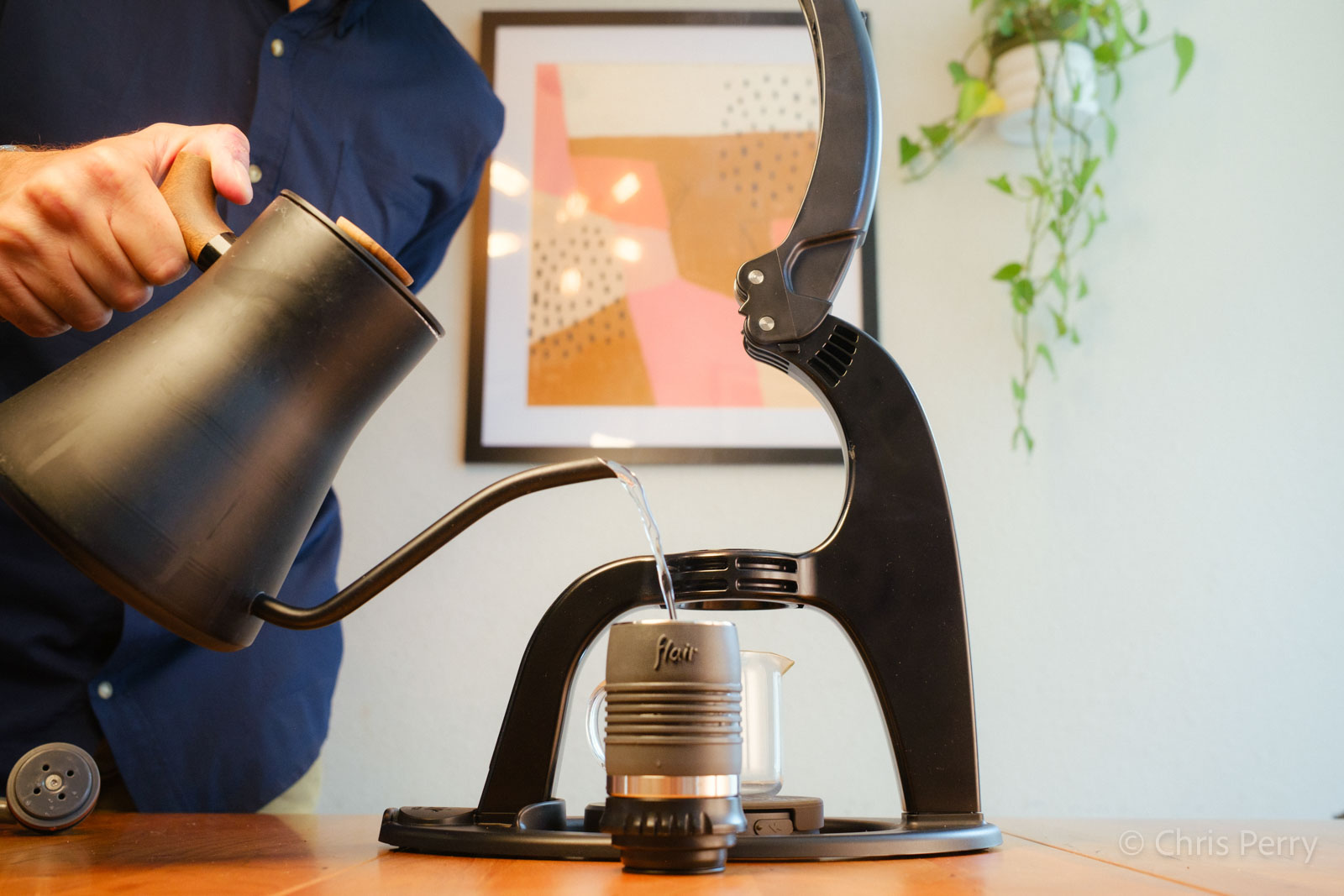
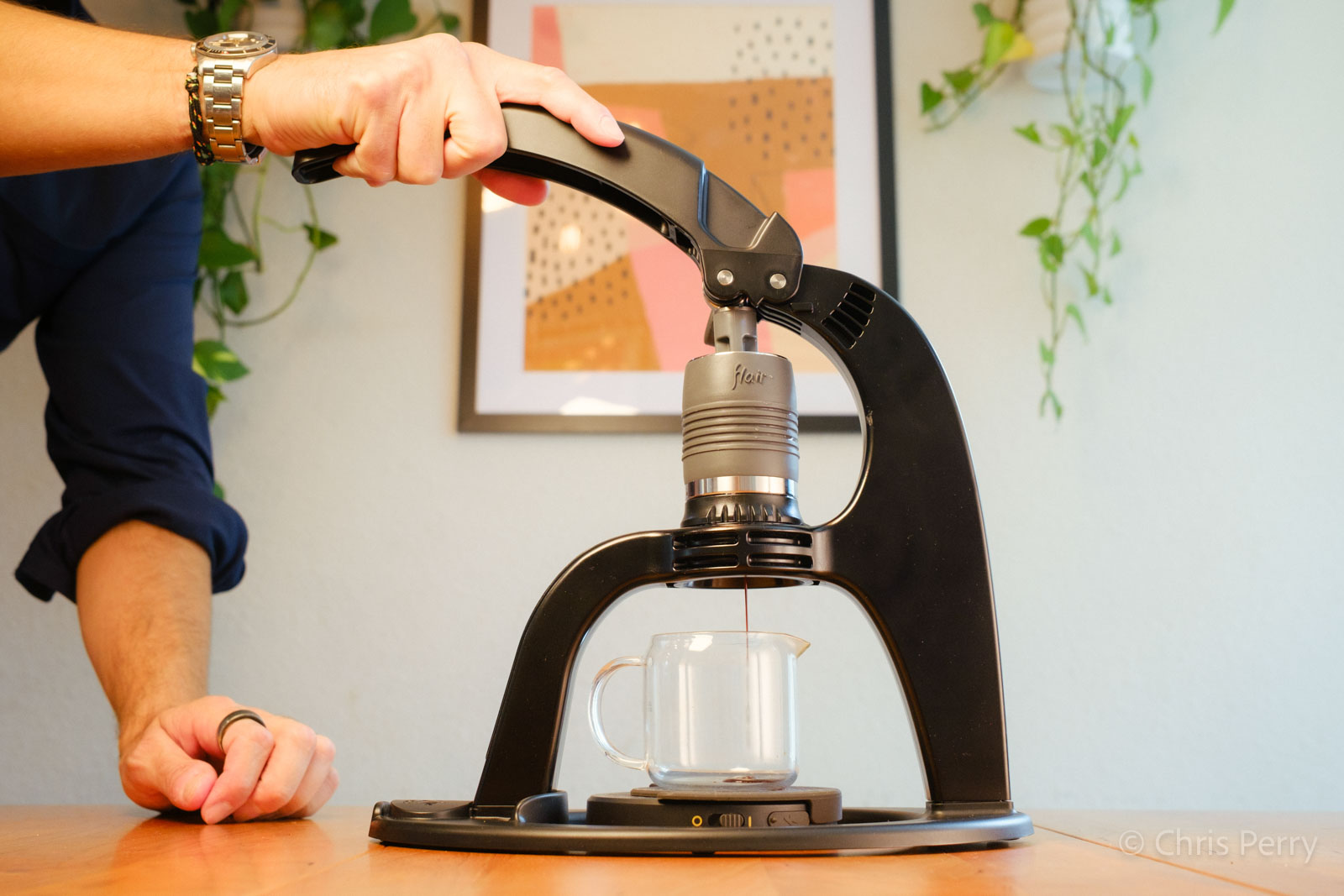
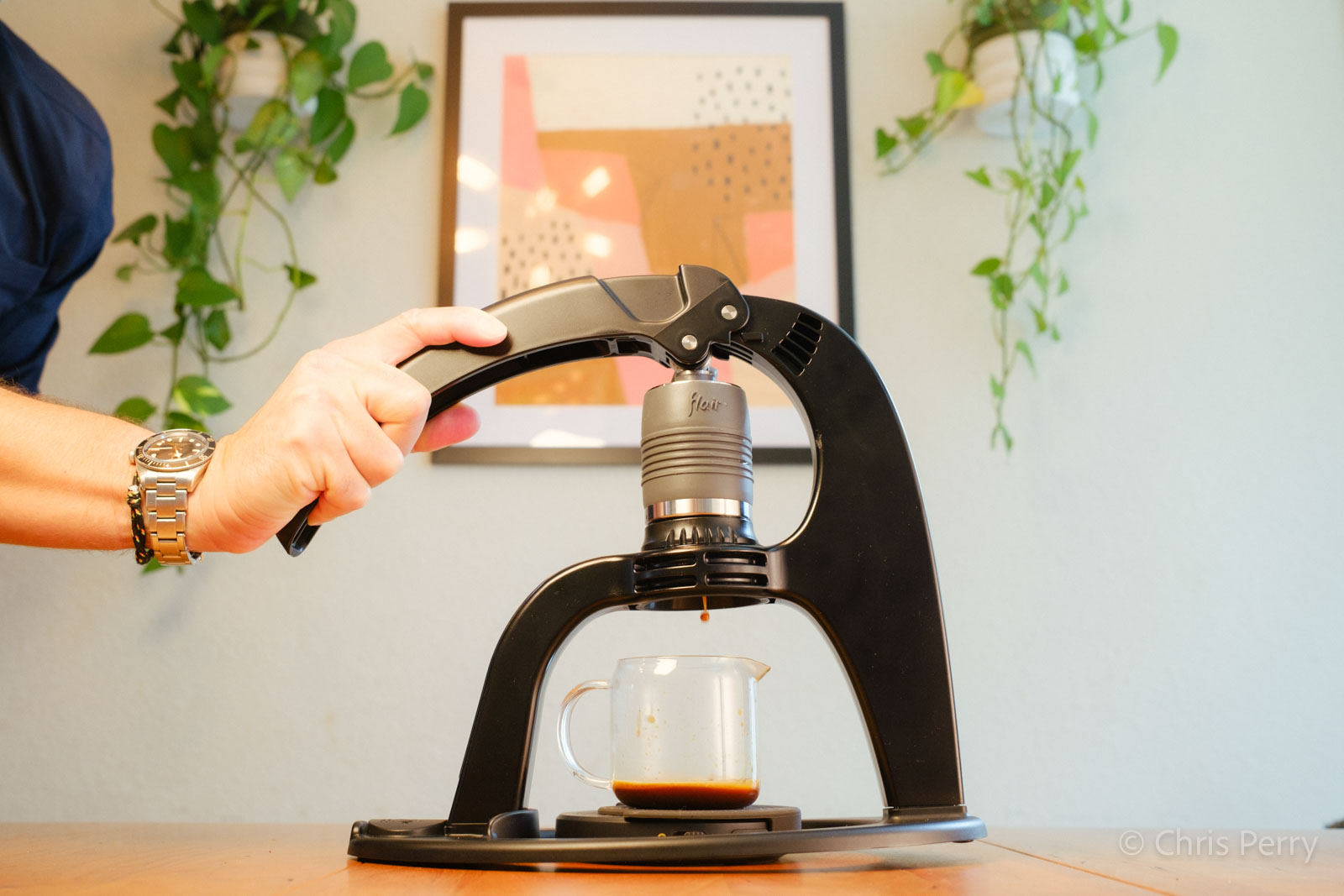
With the shot puller fully assembled, an appropriate dose of grounds loaded, and your preferred volume of boiling water poured into the brew cylinder, you are ready to start extracting via a long, firm pull or press of the lever.
As with the assembly of the components, you feel a meaningful amount of resistance correlating to the number of bars of pressure to which you are subjecting your brew. The pressure can be scaled up depending on a number of variables: the fineness of your grind, the amount of water in the brew cylinder, and the speed and firmness with which you press the lever.
These variables combine to give you an impressive amount of control over your extraction process, rivaling automatic, electric espresso machines at much higher price points. As a bonus, the pressure gauge is rotatable so you can get just the right angle to monitor it while you pull your shot.
In fact, most machines at even ten to twenty times the price of the Flex do not allow you to control brew pressure with this level of precision. The catch is that the included pressure gauge is not very precise in its own right. It does not give you specific bars of pressure, but it is still a noticeable improvement over the first generation Neo Flex’s pressure gauge, which was both tiny and a bit janky.
The new version features a sliding scale with an “Espresso zone” label for the broad sweet spot that indicates you are maintaining the right amount of pressure for your beverage. It also has a “Danger zone” to show when you are pushing too hard on the lever (or listening to too much Kenny Loggins). It is up to the user’s skill, experience, and preference to figure out where along that spectrum is the best spot for the flavor and extraction they are aiming for.
Subscribe to
Coffee Pulse
Join the 12,850 other coffee lovers who receive CoffeeGeek's premier newsletter. Each issue dives deep into one coffee or espresso based subject. Subscribing is free, and your personal information is never shared.

Support CoffeeGeek
If you enjoy and learn from this resource, please consider making a one time or recurring donation to help support our work and fund purchases for future reviews.
NEO Flex Who it's For
The Flair Neo Flex is made for everyone from beginner home coffee enthusiasts wanting to pull their first at-home espresso to seasoned veterans who want to experiment with the effects of variable pressure on extraction, but are not ready to drop $600+ on a Flair 58+2 or $5,000 on a Decent.
For both groups, the emphasis is on this being a bare-bones entry point for anyone wanting to experiment before making a more significant investment.
At the $99 price point, the Neo Flex is also a solid option for anyone looking for a backup or travel espresso solution to supplement their main setup at home. Since it can produce excellent espresso during a power outage or while roughing it in a cabin or hostel, it is an easy pick for anyone who wants to be able to brew at all times and under any condition.
NEO Flex Comparisons
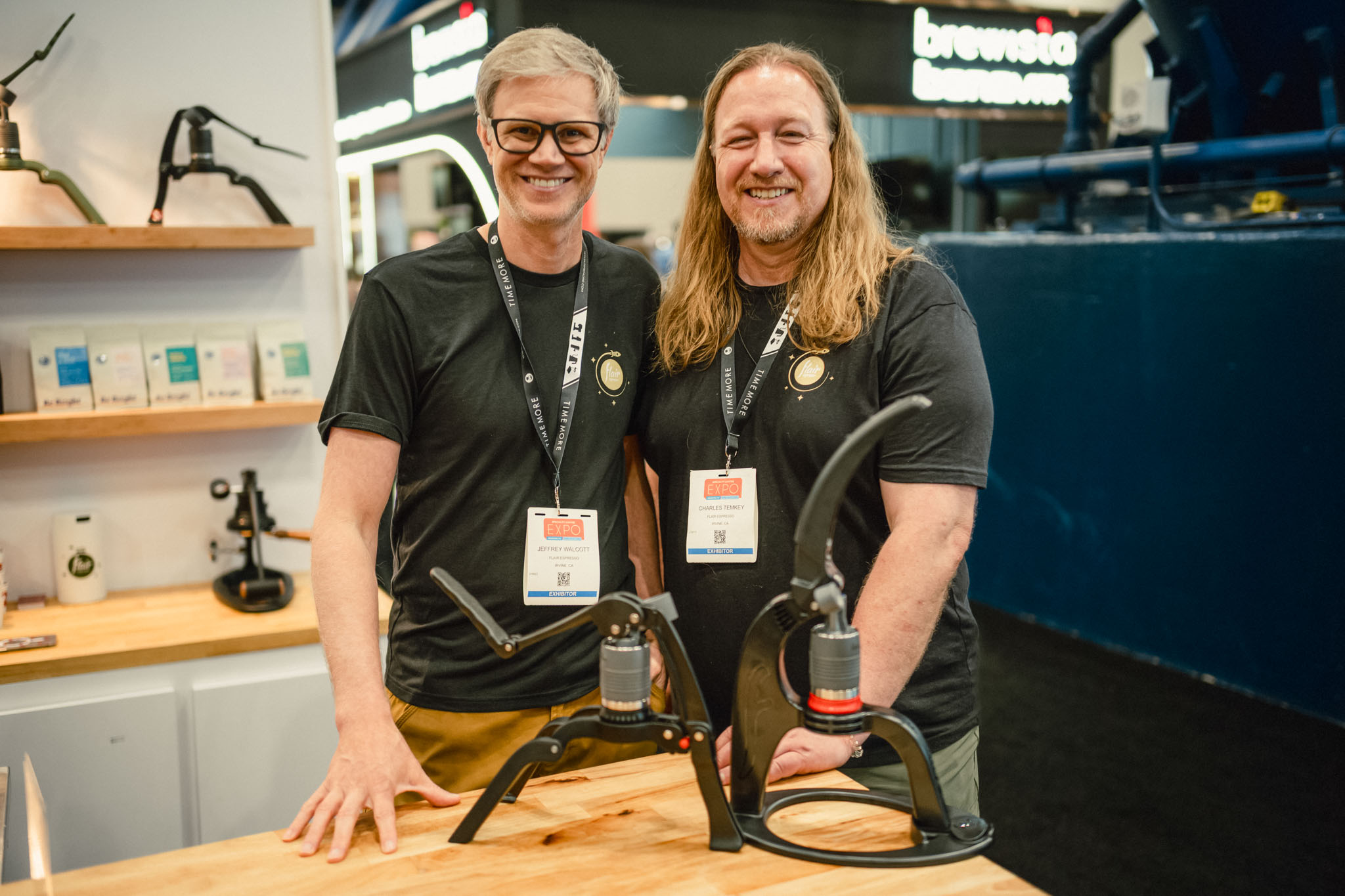
“Why did you make this thing?” I had the chance to ask the Flair team directly when I visited their booth at the Specialty Coffee Association Expo in Houston this year. It was not just a question for the sake of a review. I didn’t understand why Flair created this machine when they already sell aggressively priced, well-regarded models.
At the high end, their flagship Flair 58+2, used in Michelin-starred restaurant coffee programs, is in the $650 range. Their Flair Classic with a pressure gauge is a very attainable $229. So I was curious where the Neo Flex fit in their lineup and in the market.
Flair’s Jeffrey Walcott explained that the Neo Flex is part of their long-term plan to expand the home espresso market by offering machines that are both very affordable and capable of producing quality, customizable espresso. He was not concerned about the Neo Flex cannibalizing sales from higher-end models. In fact, they see many customers starting with a Neo Flex only to later upgrade to one of Flair’s more premium machine once they have learned the basics of extraction (and gotten a taste for the manual process).
Flair’s Charles Temkey added that the Neo Flex can turn beginners into knowledgeable coffee enthusiasts faster than many other entry-level machines, mentioning the Breville Barista Pro as an example, because it gives users more control over extraction variables.
If you are new to espresso and want the absolute lowest-cost entry into the Flair ecosystem that still delivers excellent results, the Neo Flex is an easy choice. If you can spend a bit more, the Flair Go or Flair Pro 3 are both under $350 and worth considering. The all metal Flair Go is the better option for travel, thanks to collapsible components that pack down small. The Flair Pro 3 offers upgraded materials, a more precise pressure gauge with specific bar markings, and an integrated shot mirror for monitoring your extraction.
If keeping costs down is the top priority, an Aeropress is another option. It is one of my personal favorite brew methods, and with third-party accessories it can produce an espresso-like cup. However, it cannot generate the pressure needed for true espresso. It is about one-third the price of the Neo Flex and far more compact for travel.
NEO Flex What's the Value Like
For just $99, the Neo Flex is a killer value. While you give up higher end materials and upgrades like a precise, upgraded pressure gauge compared to some of Flair’s other offerings, you are still getting the tools to make a fantastic shot of legitimate espresso just about anywhere and under any conditions.
I am unaware of any other espresso machines that can match the output and control the Neo Flex offers at this price point while also providing a very traditional shot pulling experience.
Subscribe to
Coffee Pulse
Join the 12,850 other coffee lovers who receive CoffeeGeek's premier newsletter. Each issue dives deep into one coffee or espresso based subject. Subscribing is free, and your personal information is never shared.

Support CoffeeGeek
If you enjoy and learn from this resource, please consider making a one time or recurring donation to help support our work and fund purchases for future reviews.

ConclusionNEO Flex
I’ve enjoyed testing the Flair Neo Flex over the last couple of months. It surprised me how well it delivers both great espresso and a unique, hands-on brewing experience, despite the obvious compromises in materials. The build quality has held up well through my use.
I’ve appreciated how much more involved the brewing process is compared to my usual home machine. Importantly, the simpler materials have not affected the quality of coffee I’m able to make.
By and large, the Neo Flex can produce coffee just as good, if not better, than my home setup. Any shortcomings in my shots come down to my own skill or experience. The more time I spend with it, the more I see clear improvements in shot consistency and flavor.
At $99, it’s excellent value and an easy recommendation for anyone ready to dip a toe into home espresso making while learning the fundamentals of pulling a traditional shot—your arm as the pump. I expect to be buying several of these as gifts for friends in the months and years ahead.
I’d love to hear your thoughts on the Neo Flex, especially if you’ve tried one. Our comments section below is active, and we always do our best to respond to questions.
This review has been undertaken and written by Chris Perry, who also maintains a popular technology newsletter service and blog site, called the Hiro Report. If you are into technological trends, gaming news, and yup, even coffee and espresso technology trends, you should consider subscribing – it’s free!
We use affiliate links to a) Amazon, and b) manufacturers only. Any links to vendors (including CoffeeGeek Sponsors) are not income generating links. Further details about our commission and affiliate link policies can be found on our Terms and Conditions Page. The use of any affiliate links have no effect on our editorial policy or review objectivity.


One Response
Fantastic to see a new reviewer at CoffeeGeek! I’ve followed your work on the Hiro Report, and love seeing you here. Keep up the phenomenal work!