
Barista competitions may look like theatre, but at their core they’re a celebration of craft, precision, and storytelling through coffee. Competitors have just fifteen minutes to serve a panel of judges espressos, milk drinks, and a signature creation of their own design. Every step matters: how the coffee is chosen, how it’s brewed, and how it’s presented. Winning once is an extraordinary achievement. Winning multiple times puts a competitor among the world’s best.
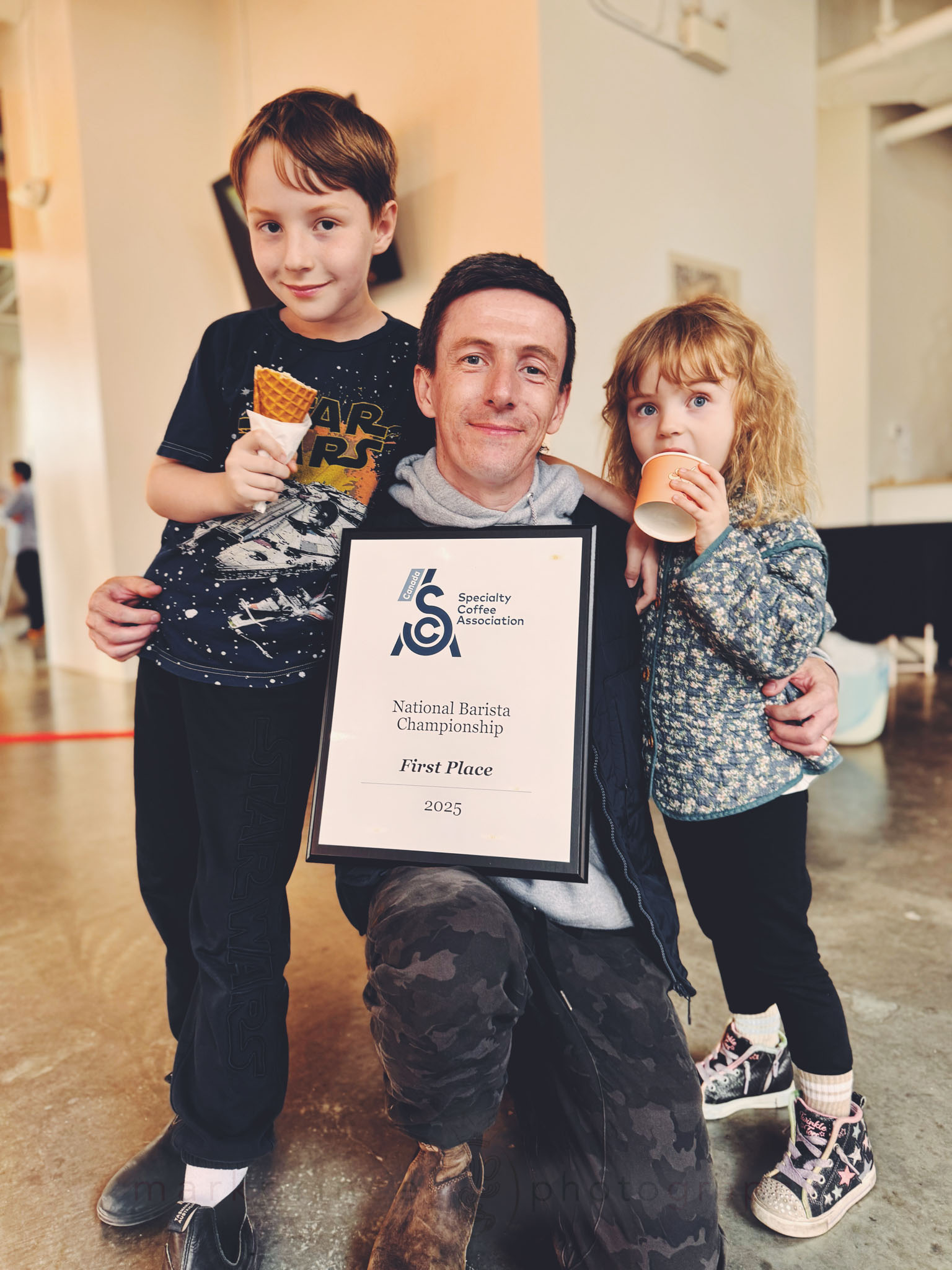
One name Canadian coffee fans know well is Benjamin Put. With his 2025 victory, Put has now claimed the Canadian National Barista Championship seven times, a record unmatched in the competition’s history. Since his first national title in 2013, he’s been a consistent force on the world stage, representing Canada at the World Barista Championship and earning multiple top‑five finishes.
Beyond that stage, Put is co‑founder of Monogram Coffee, a Calgary‑based roastery and café group that has helped shape Canada’s modern coffee scene. Known for innovation – he was among the first to showcase freeze‑distilled milk in competition – and for an unshakable focus on flavor and hospitality, Put has built a reputation that extends far beyond competition halls.
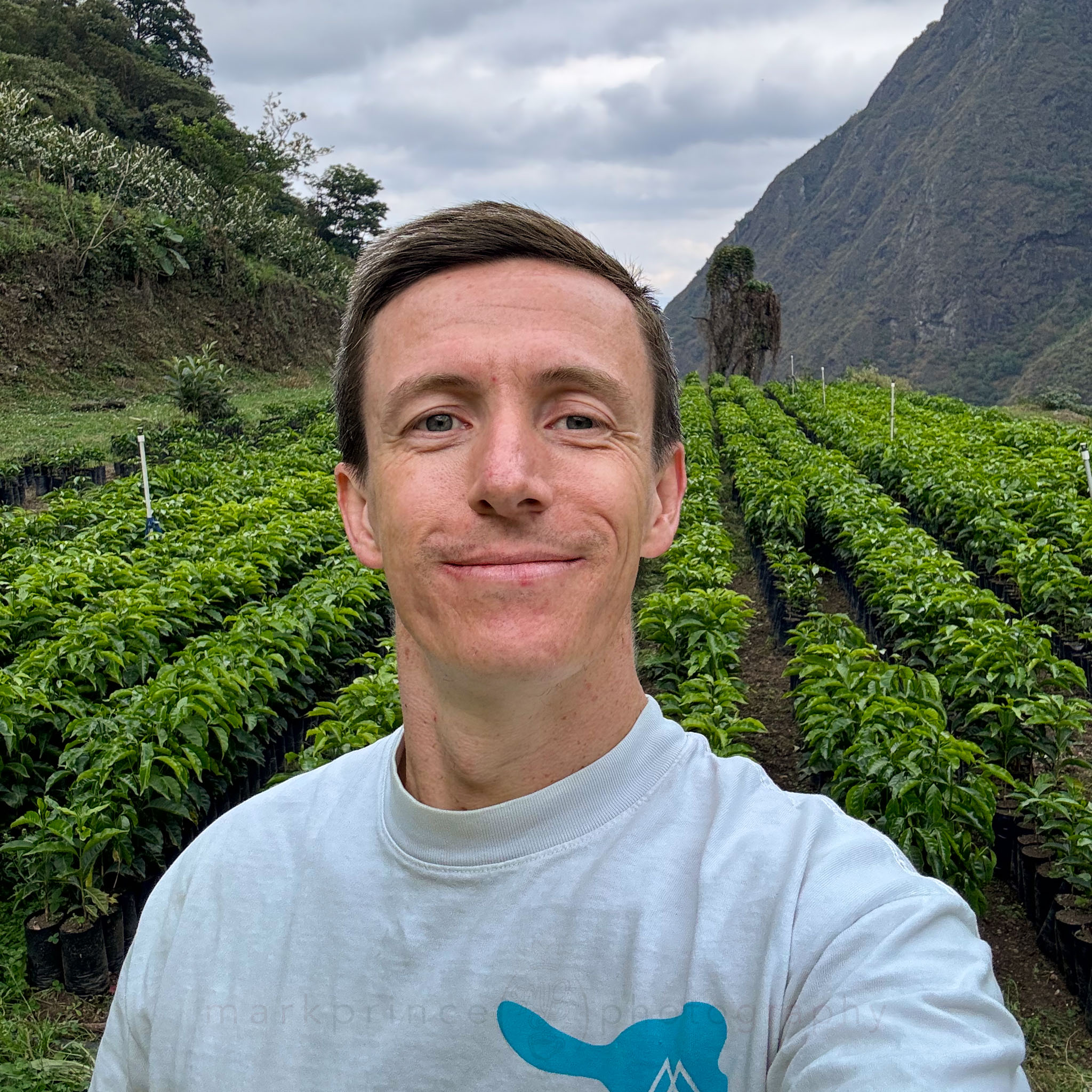
We sat down with him shortly after his 2025 championship win to talk about his journey, the drinks that defined his career, and how the lessons of competition connect back to everyday coffee.
CG: Ben, for readers who may not know you yet, can you tell us a little about how you first got into specialty coffee and what led you to start competing?
Ben: I am one of the older competitors so my start in coffee was a long time ago. I worked at a chain cafe during high school. My boss brought in a newspaper article that talked about latte art – didn’t even tell you how it was done – and the moment I read that I decided I would learn.
This was the era of dry cappuccinos and steaming pitchers without spouts, but somehow I learned how to pour something resembling a rosetta. From there I moved to Calgary and started to work at 3rd wave shops. In 2009, I was working at Phil & Sebastian Coffee and my boss, Phil, decided to compete.
Even though I knew little about coffee and even less about competition, Phil let me join the team and that was my first foray into competition. What has kept me coming back is that every year I continue to learn more about coffee and it always makes me better at my craft.
CG: Do you remember that first moment when you realized coffee was going to be more than just a job for you?
Ben: Many baristas have a clear “aha” moment when they fall in love with coffee forever. For me, it was a more gradual process and included many factors.
Coffee offers a lifetime opportunity to learn, and not just strictly coffee, but chemistry, sensory science, languages, and the list goes on! The people that I’ve worked with have become lifelong friends of mine and to have a career with some of your best friends is a huge blessing.
Finally, to be able to have so much control over how something tastes is completely fascinating. My role involves sourcing, roasting, and brewing so I am able to have a hand in every step of the coffee making process and it’s and incredible career. I think having so many different reasons to love the industry has been the reason I’ve stayed happy in coffee for so long; there might be times where some element appeals to me less, but the other things I love about coffee keep my fire burning. When I step back, I realize that coffee was always more than a job for me. I just didn’t know it yet.
CG: This year you stepped back on stage and won the Canadian Barista Championship again. What was it like for you to be back in that environment, and how did it feel to come out on top in 2025?
Ben: I have got to witness firsthand the Canadian competition evolve and grow. In the past, the world level was much higher than the standards in Canada, but now I believe that any of the finalists in the Canadian nationals could compete and excel at worlds.
It makes me very proud to see how far Canada has come on the global stage, but it also means that it is much harder to win. Even after all these years, I am still always shocked to hear my name called as the winner.
CG: Do you find the rising level of competition pushes you to experiment more, or do you tend to stick with a style that feels true to you?
Ben: I am always looking for new things to share at the competition. In barista competitions there are so many failed experiments that never see the light of day. My style of competition is to always take a few risks and to try and bend the rules just a bit.
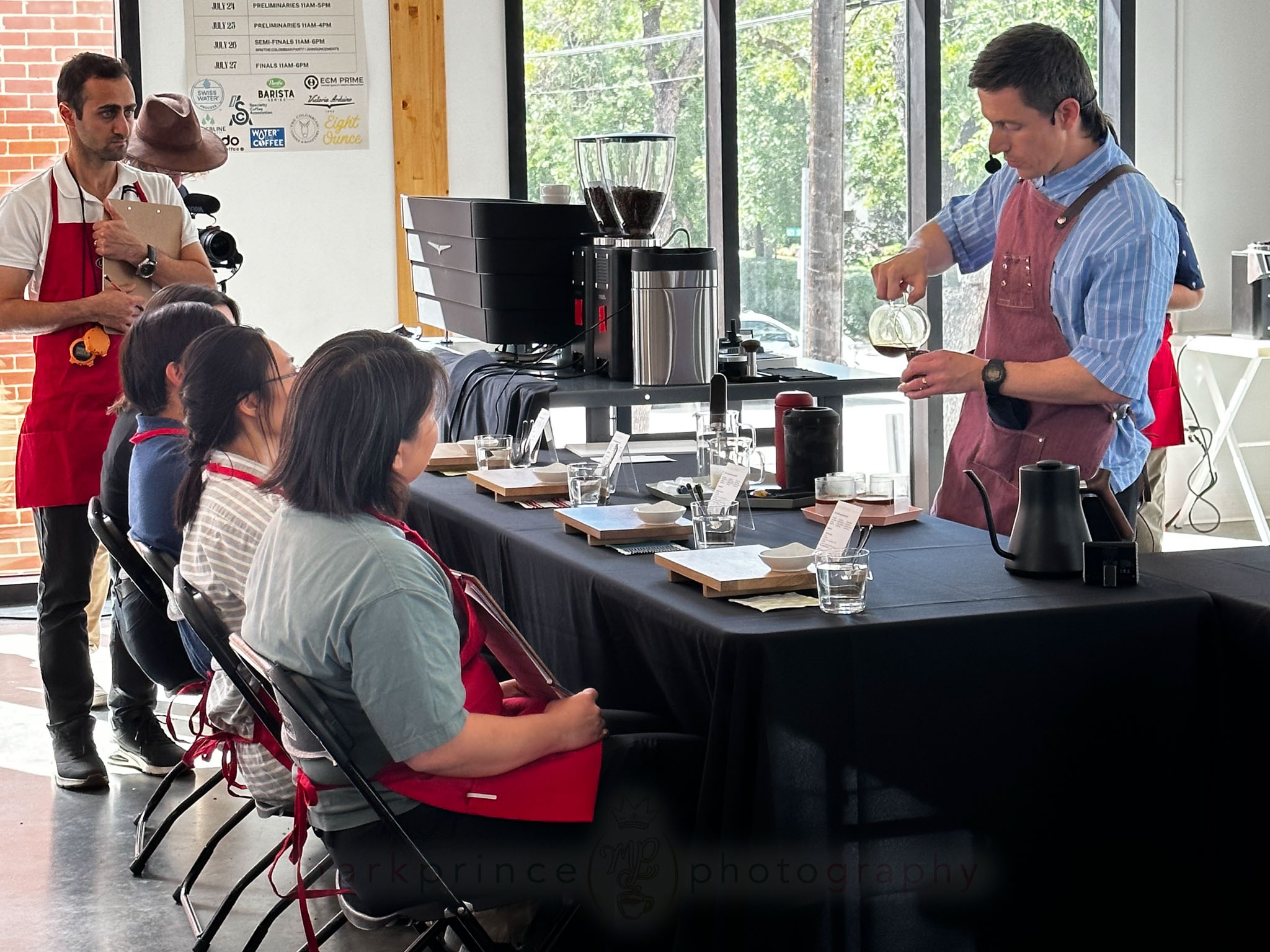
CG: When you were planning your routine for this year, what was your approach? Was there anything different in how you prepared or presented compared to your past competitions?
Ben: For new innovations, this year I served a milk drink at two temperatures. The world rules are published every year and this year they removed the word “warm” from the milk drink descriptor. This means that technically I could serve a milk drink that was cold, but it still had to be steamed. After many trials, I figured out that I could freeze a different milk (coconut milk) in the bottle of the cup and serve a warm milk drink on top of it. The judges took one sip of the warm milk beverage and then stirred the drink until the frozen section at the bottom of the cup melted. This cooled the drink and introduced a different milk, which together created a completely different sensory experience.
Additionally, this year I prioritized my energy levels. Trent Rolling was the WCE Representative for the competition and he wanted it to mimic worlds as much as possible, so he made it a three round competition with a preliminary, semi-final, and final (most years, nationals is just semis and finals). This meant three days of stress and waiting for results.
To combat this, I slept every single moment I could. Once I was done at the competitor meeting, I went to the car and slept in the back seat; after my dial session, i slept; 30 minutes before finals announcements? Time to sleep! It might sound a bit strange, but the 15 minutes of a presentation requires intense focus and I really felt the difference by being rested.
CG: That’s a very different kind of preparation than most people would imagine; have you picked up any other unexpected habits or rituals that help you perform on stage?
Ben: I used to always wear a new pair of socks every round, but I retired that a few years ago. One thing I now swear by is I only wear Blundstones shoes to compete. All of my best results have come while I’ve worn them. I’m not typically superstitious, but this is one thing I’m not risking (laughs).
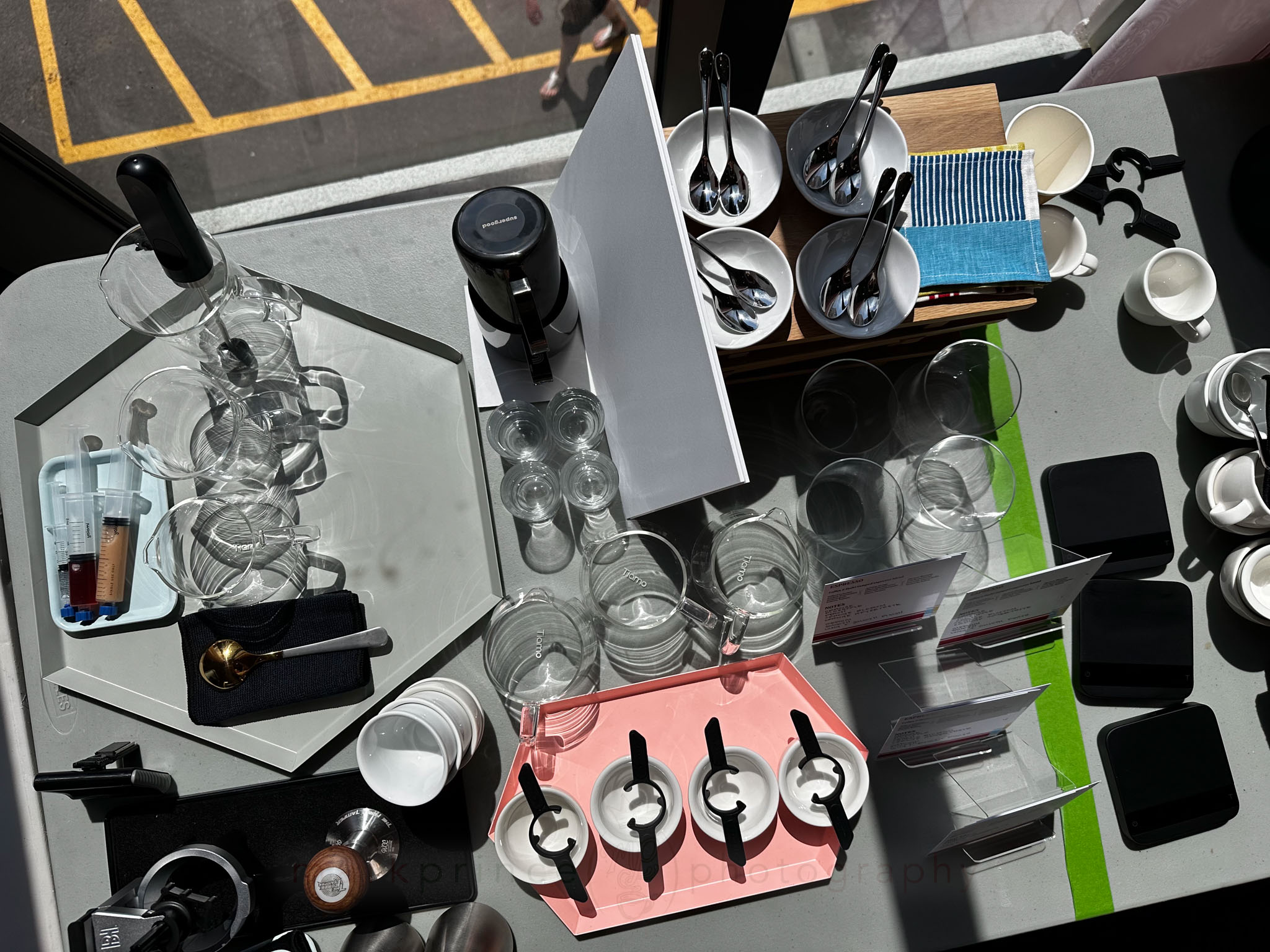
CG: Your signature drink is always something people look forward to. Can you walk us through what you created this year and what inspired it?
Ben: My signature drink was inspired by a drink that should taste good, but I personally feel like it doesn’t taste very good: Cappuccinos made with washed geshas.
Washed geshas have some of my favorite notes in coffee: Florals, citrus, and stonefruit. However when mixed with milk, those notes disappear. I’ve always wanted to make a milk drink that showcased those elusive flavours and this year I made the decision to do it in the signature drink.
I used coconut milk and freeze distilled milk to replicate the sweetness of a cappuccino and black cherry syrup to reveal stonefruit notes. My final ingredient was geraniol. Geraniol is a terpene and one of the aromatic compounds identified in Panamanian geshas. By adding just a small amount of it, it revealed all the floral notes of the espresso that the milk covers up.
It is extremely hard to make signature drinks that are both creative and delicious and I think this is one of the rare ones that hit both qualities really well.
CG: When you’re developing a signature drink like that, how many versions usually fail before you land on the one that makes it to competition?
Ben: I would estimate that I’ve made around 50 signature drinks in my career that have never seen the stage. Coffee is extremely hard to mix with other ingredients. It’s bitter, sweet, and acidic and that balance is often precarious. Introducing elements that support or increase that balance requires many trials and tests. It only gets more difficult because judges want to see new ingredients and techniques. It’s not enough to just use chocolate and vanilla. Even once I’ve chosen the ingredients, finding the correct amounts takes a lot of time. A few grams difference can completely change a drink from terrible to delicious.
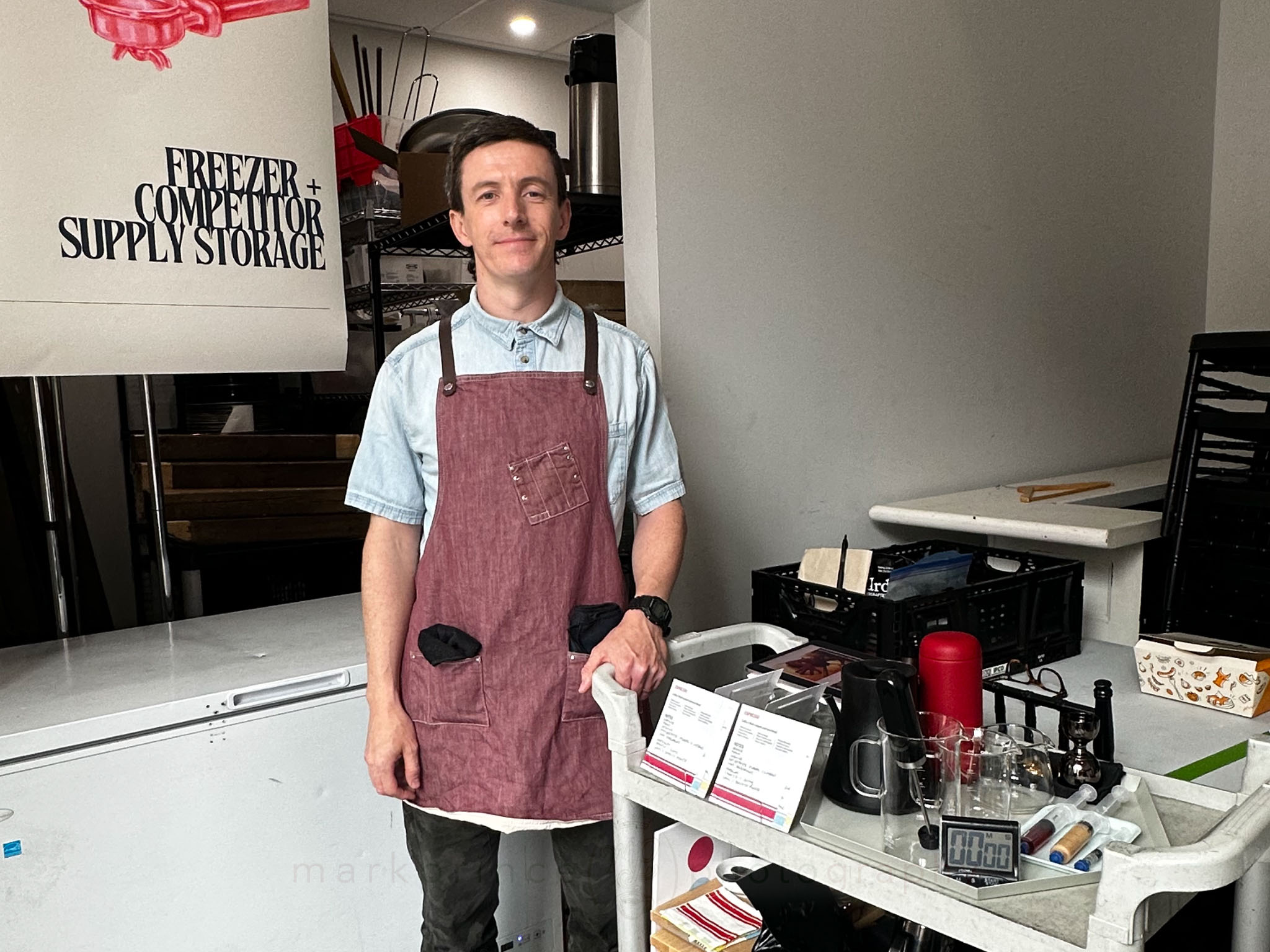
CG: And what about your espresso choice: what did you decide to serve, and what qualities in the coffee were you trying to bring out for the judges?
Ben: This was a first for me. I used a blend! I used an equal part blend of three coffees: Washed gesha from Elida Estate (Wilford Lamastus), Hybrid-washed/natural gesha from Finca Deborah (Jamison Savage), and a natural Gesha from Finca Takesi (Mariana Iturralde).
My theme talked about how coffee has traditionally been taught through mentors and trainers, rather than books or non-human resources. When we are taught by someone, we not only learn the subject material, but we gain the unique perspective of our instructor. The coffees I served all came from producers that I have spent countless hours with, learning about coffee production and taking in pieces of their personalities. The blend I served was not only delicious, but was a physical representation of the blend of knowledge that these coffee masters have given to me.
All three coffees had similar profiles, but I think that their slight differences made the blend more balanced and seemed to make the similarities “pop” more (e.g. the stonefruit notes really shone on stage).
CG: Looking back over your competition career, do you have a favourite signature drink from a past year, one that still stands out in your mind?
Ben: Yes! My most risky one (laughs). For a long time, I would compete with two-part or multiple signature drinks. I really enjoyed creating contrasting drinks that would play well off of each other.
When I won nationals in 2017, Mike Strumpf warned me that two part drinks were difficult to judge and might not score well at WBC. I had won nationals with a two part drink and I did not have much time to rebuild the drink. My solution was to serve two drinks in one cup.
I built half of the drink, served it in the cups, and then froze it with liquid nitrogen. Then I poured the second half of the drink on top. Judges would take one sip of the unfrozen drink and then hold the glass in their hands and swirl until the second part of the drink melted. It was a really delicious drink and received high scores. Though, in finals I used a bit too much liquid nitrogen on one of the cups and it took a long time for that judge to melt the drink!
CG: Same question for espresso: was there ever a shot that you felt completely captured what you were aiming for in competition?
Ben: Delicious espresso is the most elusive drink in the world in my opinion, which is part of what keeps me coming back again and again in competition.
This year, I feel like I have the best green coffee in the world and I am able to roast and extract it in a way that properly showcases the producers’ hard work and the uniqueness of their land. During the competition, I did not pull a single shot that wasn’t delicious, which is shocking as usually the dial-in process for me has some really bad coffee before you get a good one.
This year feels special and I hope I can recreate that at WBC.
CG: You’ve been competing at the World Barista Championship since, I believe, 2014. How has the experience changed for you over the years, and what have you taken away from being on that stage so many times?
Ben: To be honest, nothing has changed. I am just as star-struck, nervous, and excited as I was the first time I stepped on stage in Rimini. As the competition has progressed in Canada and the world, it is harder and harder to succeed in competitions and so it’s almost more meaningful now than it was at the beginning.
The biggest thing I have taken from the competition is the group of friends that I get to see every few years – if I am lucky!
CG: I’m curious how much of what you work on for competition finds its way into café service. Do you notice a crossover between the techniques you develop for the stage and what happens at Monogram day to day?
Ben: The biggest crossover from competition is the coffees that we offer.
As we competed over the years, we had staff and customers inquire about the coffees used on stage at competitions. There wasn’t much demand at the time, but we decided that Monogram would always have a few “competition” level coffees available for order.
Since we started that, interest in top quality coffee has grown and there is always at least one gesha or interesting variety available as an espresso or pourover. I believe that this makes the competition a little tangible for both baristas and customers.

CG: And for the home baristas out there: do you think anything from the competition world translates well into making better espresso at home?
Ben: I think the competitions gain a lot from home baristas now.
Back when I was just starting as a barista, everything was based on feel: No scales; no recipes; just a timer, a grinder, and an espresso machine. This meant that baristas were able to experiment a lot while making coffee, for better or worse for the customer.
Now cafes have much better systems and recipes. This makes coffee more consistent, but has limited the amount of innovation that happens in the cafes. I really admire all the home baristas that come home from their day jobs and hit the espresso machine until the wee hours of the morning just to share new data. I think we’ve reached a point where home enthusiasts and baristas are able to raise the bar together, which I believe will have a huge impact on the growth and acceptance of specialty coffee.
CG: What’s one thing you’ve learned from a home barista or an online community that genuinely surprised you or changed how you think about espresso?’
Ben: The resurgence of RDT (Ross Droplet Technique) has really been a game changer for espresso (and filter!) I remember reading about it on forums for ages, but never really tried it.
Then Professor Christopher Hendon published a paper on the science behind it and I realized I had some catching up to do. We don’t do it in the cafes or the competition, but I think it’s one of the most affordable and powerful techniques a barista can add to their coffee ritual.
CG: Besides RDT, we’ve seen a lot of other new tools and ideas in the last few years: things like puck screens, WDT, even turbo shots. Given your take on RDT, what’s your take on these other trends, and do you see them making an impact in café espresso as well as at home?
Ben: I love these trends! As someone that grew up following coffee forums like CoffeeGeek and Coffeed, I know that RDT and WDT have been around for a long time. These techniques were relegated mostly to home users, until manufacturers started to build cafe equivalents.
For me, it affirms so much of the early espresso knowledge, but also makes me excited for how much more we can learn about coffee!
CG: Finally, with everything you’ve already accomplished, what keeps you motivated to keep competing, and what are you most excited about in coffee right now?
Ben: Barista competitions have gifted me with constant learning and life-long friendships. I would not be the barista or human that I am today without the competition molding me. There have been many ups and downs, but all of them have been for the best.
I am most excited to see specialty coffee become more of a household term. We still have a long way to go, but the understanding and appreciation for quality coffee has never been higher and I think we have a huge opportunity to share coffee with the world.
CG: Thanks again for sharing your time and experience with us, Ben!

Natia loves coffee and relishes at the chance to write about it. She's competed in regional barista competitions in the past, and while no longer a Barista as a profession, she says espresso runs through her veins.
- Natia Simmons
- Natia Simmons
- Natia Simmons