




I recently noticed our Senior Editor shared a post on Threads about Breville’s focus on automating their espresso machines over the past five years. He mentioned that the last two traditional models released by the company were the Infuser (2014) and the Barista Express (2013). I also noted the recent coverage and excitement for the new Luxe Cafe machine from Ninja, which has a lot of “barista assist” features. It seems like a super machine, but a few of the details caused a pause in my home barista mind.
As a longtime owner of the Breville Dual Boiler (which was introduced in 2011), both of these caught my attention. I love the hands-on experience my machine offers every time I use it, and I find no appeal in the automated steaming, tamping, and dosing features that Breville’s newer machines now include. So, I proposed writing this article, and Mark was more than happy to let me take it on.
What’s a Traditional Espresso Machine
I do hope this isn’t a controversial take, but here’s what I think of as a traditional, artisan craft espresso machine in 2024:
- A normal portafilter with proper single and double baskets (no crema raiders)
- Manually controlled steam system, with a steam arm that can fully articulate and a steam dial knob
- Volumetric, programmable shot buttons that can be manually controlled (or manual on/off shot buttons)
- Hot water either via a dedicated water tap, or through the steam arm
- PID temperature controls, giving easy access to setting temperatures and offsets
- A cup tray that properly warms up to keep cups warm for your drinks
- A grouphead that properly heats up, eliminating the need to run blank after blank shots to heat all the bits that touch your brewing water (this is a knock against Breville’s thermojet)
- A pressure gauge to show you your active pressures and help diagnose shot problems
- Good reservoir size, and good drip tray size.
Offer that kind of machine, and a manufacturer is in effect offering a capable tool that lets us home baristas build and hone our coffee making skills. The better we are, the better the shots will be. No hand holding from the machine: it provides the rock solid basic toolset, and we supply the rest.
Of course, there is the argument that some companies are doing this. Lelit (which is now owned by Breville), produces traditional machines, but all their machines under $1,000 range have been on the market for years, and are based on 10-15 year old technology and designs. They don’t have the polish and finnese of a Breville machine. Same goes for a lot of the other traditional Italian made machines. New “traditional” machines with more modern features and interfaces are being introduced, but they often have a high premium price point.
What I want is a new traditional machine, with 2024 technology, from a big modern manufacturer like Breville. And highkey here: priced around the same price as the Infuser or Express.
If I could go on with a bit of a wish list, my dream traditional home espresso machine would have the following:
- Entire machine is engineered to provide good recovery times between shots, relatively quick warm up times (10 minutes or less), and steady temperatures during the shot
- Ability to control and set the machine’s overpressure valve, to set your own max brewing pressure (this is a new demand, but something I think all new machines should offer)
- Relatively quick transition between steaming and brewing temperatures (this is where thermoblocks excel; perhaps a machine with a brew boiler and steam thermoblock?)
- Has a shot timer built in
- Has programmable, controllable preinfusion modes.
- Has a built in clock, and the ability to program in turn-on times in the morning (so the machine is fired up when I wake up).
It’s worth noting that none of the items above include wishes like “help me automate steaming” or “dose and tamp the coffee for me.”
Don’t get me wrong—those features are fantastic and ideal for many people who want cafe-quality drinks without having to think too much about the process. For peeps who prefer simply moving a portafilter from the grinder to the group head and letting the machine handle the rest, these automations are perfect.
But they aren’t for me.
The Hand Crafted Art of Espresso
The Breville Dual Boiler sitting on my kitchen counter is my ideal machine, and it’s been a trusty companion for years. The shot counter shows I’ve pulled 5,700 shots so far. I’ve done most of the maintenance myself — replacing o-rings, fixing leaks (thank you, YouTube!), descaling it three times, replacing the grouphead ring, cycling through baskets, and even upgrading to a naked portafilter.
The Dual Boiler checks almost all the boxes on my wish list: pressure gauge, shot timer, programmable shot buttons, solid steam pressure with a bit of control, a large reservoir, and the ability to steam and brew simultaneously. The cup tray gets toasty, and the grouphead heats up fully, thanks to its own heated PID controller.
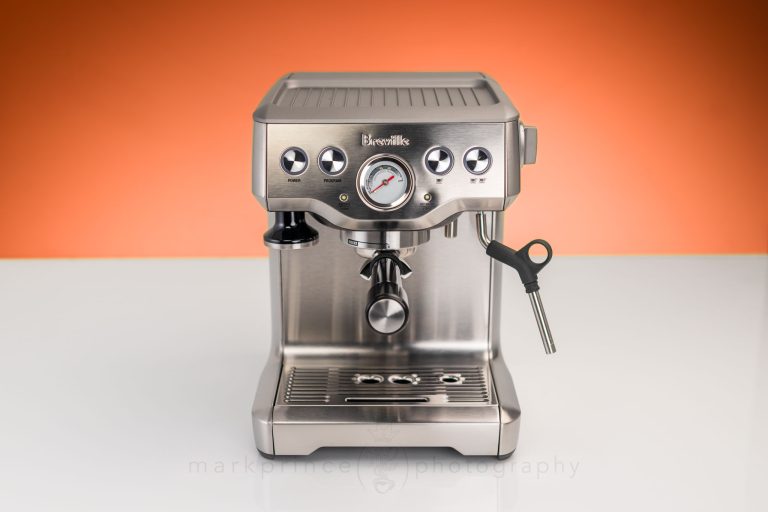
In Breville’s lineup, there are really only two machines that match the Dual Boiler as traditional options: the Infuser and the Barista Express. And when you think about it, those two are basically the same, with the Express just having a built-in grinder. Both have been around for over a decade.
Recently, Breville introduced the Bambino, Bambino Plus, Barista Pro, and the Barista Express Impress. Some might call these traditional machines, but I don’t see them that way because they have the thermojet system (and the Express Impress and Bambino Plus automate certain barista skill things).
I appreciate a lot about Breville’s thermojet system, but the lack of grouphead heating would drive me crazy. Having to run 2 or 3 blank shots just to get the machine warmed up seems to defeat the purpose of “instant on.” It complicates the process instead of simplifying it. Although, I’ll admit, the quick switch to steaming is a nice perk.
Then there’s the new Luxe Cafe from Ninja. I was very surprised to find out you couldn’t manually control the shots of espresso on that machine: it is a fully automated process, and the only thing you can change, before pulling the shot, is the ratio (2:1, 2.5:1, or 3:1). You can’t change the dose volume either: the machine has that preset, and you just have to trust them. That puts the machine’s espresso production into a very tight, very predetermined box. No developing barista skills there.
A traditional espresso machine that handles the basics — good temperature control, strong steam power, stable temperatures, a properly heated brew group, regulated pressure, and quick recovery times — gives you a solid foundation to build your skills on. Grinding, dosing, distributing, and tamping are skills. Steaming milk to create perfect microfoam is a skill. Analyzing a shot pull, watching the timer, pressure gauge, and shot development, and making adjustments to improve it — those are all skills.
That’s what I want in a home espresso machine: something reliable that lets me hone my barista skills. The automated “barista assist” machines Breville has been focusing on for the past seven years don’t offer that environment for skill-building.
I don’t fault Breville or any other manufacturer for making espresso machines that simplify the process for coffee lovers. I think Ninja entering the premium market with a machine that can brew a good “textbook” shot of espresso right out of the gate without any real input from the home user will introduce great coffee to a lot of people who otherwise wouldn’t put in the effort.
But, talking about Breville specifically, I wish they’d pay a bit more attention to the traditional espresso machine market. Their only “traditional” models are over a decade old, and one of them (the Infuser) isn’t even on their website anymore. (ed.note: We asked Breville about this, and they said the Infuser isn’t discontinued, but is now an “Amazon-only SKU” and has been removed from their website.)
As we approach 2025, it’s time for Breville to consider updating the Barista Express, preferably without moving it to their thermojet system—or at least solve the cold grouphead and cup tray issue if they do. And maybe it’s time to introduce a new, state-of-the-art traditional espresso machine designed for hands-on home baristas who want a reliable tool to perfect their espresso skills.
What do you think? Are you happy companies like Breville are putting all their focus on barista assist technologies and automating things like grinding, dosing, tamping, and milk steaming? Or do you want them to also introduce new traditional machines that let you practice the art of the home barista? I’d love to hear from you: leave a comment below!

Natia loves coffee and relishes at the chance to write about it. She's competed in regional barista competitions in the past, and while no longer a Barista as a profession, she says espresso runs through her veins.










15 Responses
While I agree with this, I have to note that this article is repetitious and needed editing. You provide solid content, but slogging through much of it is annoying, to me anyway.
I am sorry the editing of this post has caused you so much grief. I will endeavour to live up to your expectations with our new content, going forward.
Our well used Breville dual boiler was replaced with a more traditional DILETTA BELLO+. Less automation, more basic but still Includes PID, larger reservoir. I expect this time-proven group head will be more durable than the Brevilles I have gone thru.
So far the only replacement I would have for my Barista Express is another. I want simple, reliable and fancy free (as in I don’t want fancy screens and computers). My BES has given me 9 years of great coffees. It really isn’t that hard to learn how to pull a good shot. And the process becomes part of the experience.
I guess I am a simply guy. I own a Gaggia Classic. Actually I have had three of them; one died in an earthquake, one was left in a home we sold fully furnished and I am using the third one now. I rarely make anything other than expresso, once or twice a day. I don’t need all the gizmos, they just make things more complicated and there is more stuff to brake. I have never understood the inclusion of a grinder into a coffee maker. Do you really think that the grinder will keep the coffee fresh? I don’t. I grind what I want to use and not more.
I love the skill aspect of the home barista and admire the machines that honor tradition and give control versus automation. Having an espresso machine that can do it all is fine if the intention is to grab something quick and avoid a coffee shop stop. Regardless, if the sales of traditional machines are strong, this will maintain and grow this portion of the market. If home users desire to expand their horizons and develop barista skills this will expand the market as users grow. So really, the automatic market may serve to grow the overall market and drive innovation across the board – we can hope!
While I completely agree with the sentiment of the article – it resonates very much with my wishes – I wonder whether it is targeted at the wrong company. Breville’s MO is all about automation and appealing to customers who want convenience. Personally, I look to other companies to supply the ultimate home barista’s perfect machine.
What about Meraki (link omitted) you can still control everything but easier?
In my view, the Meraki looks great on paper, but also relies on a lot of “digital” to get things done, which is a bit of a concern; for instance, you can’t operate the grinder manually, it is all through the display pane. I’ll be curious to see what the machine is like once it gets out of prototype stage and is actually for sale and getting into consumer hands.
I bought a Gaggia fully automated espresso machine. It was about $1k in price. It was the worst tasting espresso I have ever consumed. Automatic espresso machines are not for discerning espresso lovers. In fact, I returned my because it actually turned me off to espresso. I was even using very high end expensive beans. Didn’t help at all. If you don’t care what the quality of your espresso is, then you will save a ton of money by just getting the $70 espresso machine from Walmart because the quality is comparable.
I have a Bezzera 10. It is a straightforward simple espresso machine that just works well. One minor repair in 8 years for a blown relay. Makes a perfect espresso and the wand foams milk quickly and effectively. No excess buttons required
After 4 months of searching for a simple traditional machine for myself I ahd to go with the infuser. I dont think there are any options at the same price range for people that are casuals but like meddling manually with their machines like me. I bought the infuser 2 months ago from Amazon for AUD $350, that was the only place that it was available. Had to send it to service though due insanely high pressure pump, which is a bummer, even though they slappe “9 Bar extraction with OPV” everywhere on the box. Dont think they going to fix it and i am gonna left with returning the machine back..
I didn’t know their was a downside to the thermojet on my Barista Pro and I am not sure most of the things the snob end of espresso culture seem into matter much, so it has enough adjustability for what does seem to matter to me. They’ve been around for 500 bucks at homegoods. Just great stuff like a golden age of these machines.
I use a Bezzera BZ40 – no dual boiler, but that has never been a real issue – the small (3.7 liter) brass boiler has two heating elements, and there’s never a shortage or steam or pressure. I steam while extracting, no issues. It’s a thermoblock, the machine is easy to maintain – it has industrial grade components in a small package, hooked up to water and drainage. The parts are easily accessed and replaced, both the O-rings in the grouphead, and the pressostat inside, which is easy to adjust.
My only issue is that the styling is totally 70’s brutal.
If I were buying today… it’s hard to imagine what I’d pick, although the veteran Cimbali, and the Vivaldi would be in the running. Marzocco is nice, but pricey. I’d be curious to know what other “old-fashioned” workhorses people would recommend.
I have had an infuser for seven or eight years, it pulls great consistent shots. For the money it’s a great machine. Breville has had decent support and I wouldn’t hesitate to buy another Breville; however, it won’t be a automated unit. I’d spend a bit more to gain more control rather than be tied to what the machine does by default.